Cosmic Rhythm: From Snowdrifts to Quantum Gas express
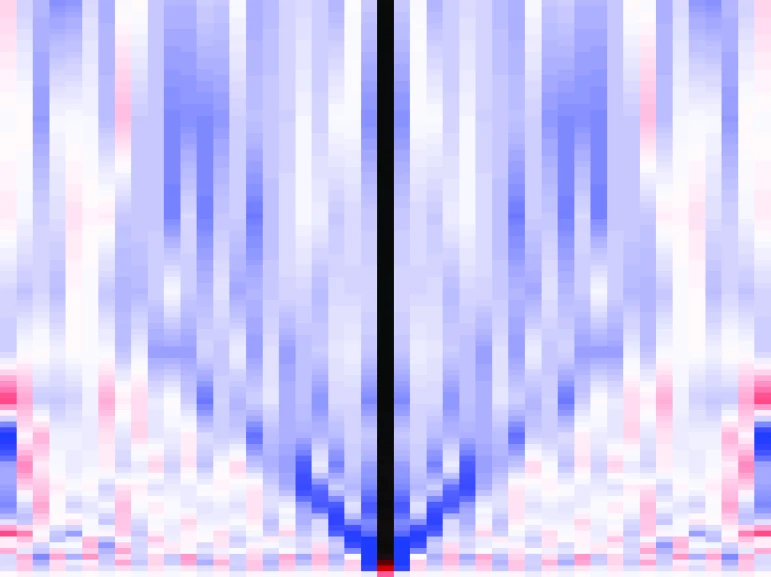
A snowdrift grows by strict rules: falling snowflakes form bumps, those attract more snow, and the bumps amplify. The same mathematics describes city growth, patterns on bark, ripples on water, and clusters of cosmic dust. Physicists call this uniformity universality.
Scientists created a 'quantum snowdrift'—a cloud of cold atoms trapped in laser beams. Using a method similar to photometry (measuring brightness to count particles), they tracked how bumps grow on this snowdrift. It turned out that the buildup of disorder, or entropy, and the saturation moment exactly replicate the classical scenario.
The boundary between the quantum and familiar world is blurring: even atoms 'sculpt' shapes familiar from snowy yards. Surprisingly, this universal scale was first noticed not in nature, but in a 1980s computer model of falling pixels. The ideas of Satyendra Nath Bose and Albert Einstein about unusual states of matter, as well as the work of Ludwig Boltzmann on the birth of order from chaos, find a direct continuation here.
Original abstract
as written by the authors arXiv:2603.09060
Fluctuations in the growing surfaces of classical systems can exhibit universal scaling behavior, known as Family-Vicsek (FV) scaling. Although this phenomenon was originally discovered in classical stochastic models, recent theoretical studies have demonstrated the presence of FV scaling in quantum many-body systems as well. Here, we observe the universal FV scaling in a one-dimensional Bose gas in an optical lattice. By monitoring the fluctuations of particle number in half of the system, which corresponds to the surface roughness, we extract all scaling exponents and demonstrate that the entire relaxation-from the growth of quantum fluctuations to their saturation-is captured by a single universal scaling function. Our results demonstrate that universal scaling laws of classical surface growth extend to quantum many-body systems, establishing a unified framework for nonequilibrium universality across classical and quantum systems.
The Family-Vicsek scale was first noticed in computer simulations of random particle deposition in the 1980s.