Dust in Galactic Winds: How to See the Invisible express
At the center of every large galaxy, including our own Milky Way, resides a supermassive black hole. It doesn't just sit there — sometimes it pulls in gas and dust, and part of that material is blasted back out in powerful outflows. These outflows, or "winds," carry material far from the center and affect the entire galaxy. But until now, astronomers couldn't say for sure whether dust is present in these winds and how it moves.
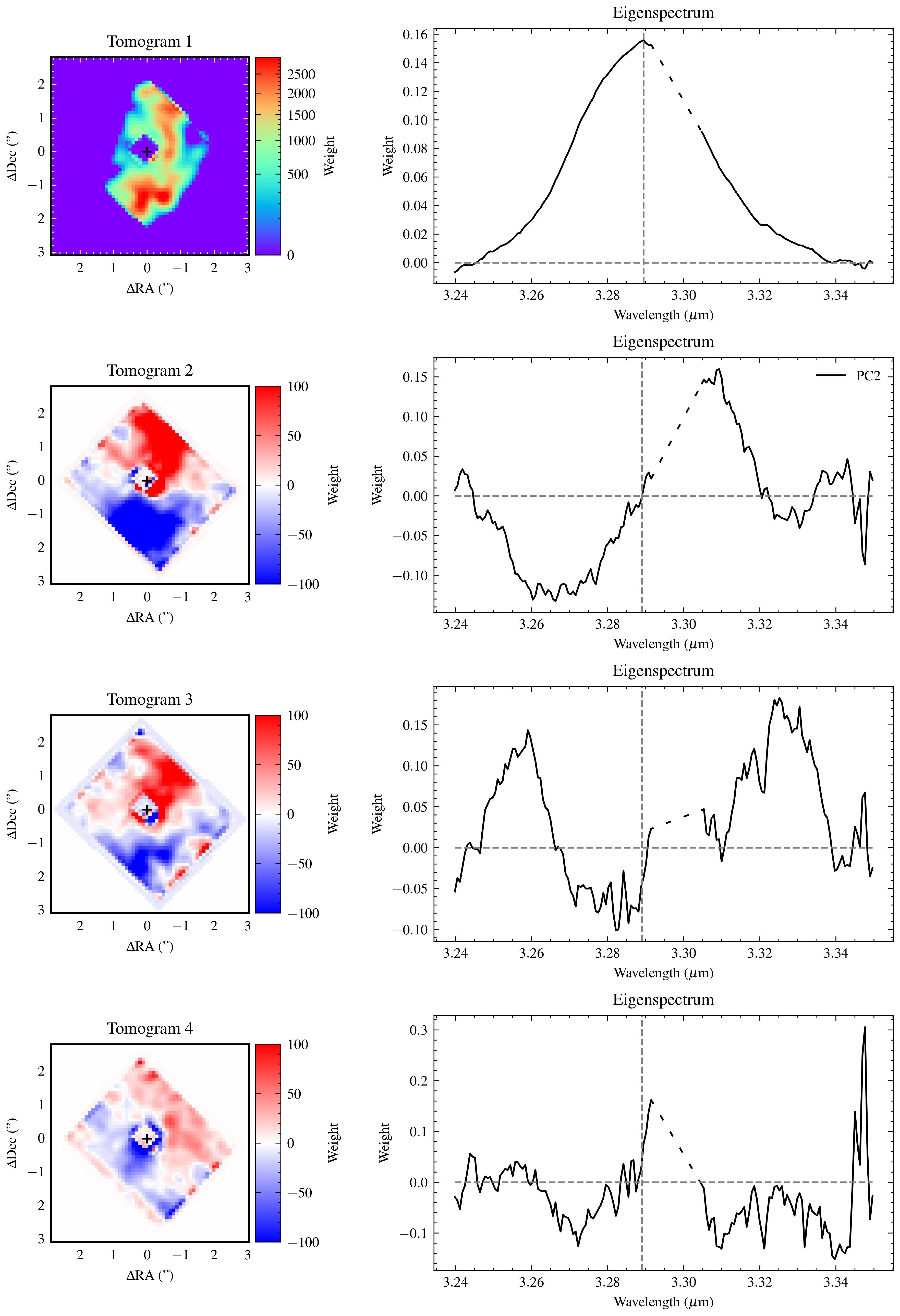
The James Webb Space Telescope has allowed us to peer into this invisible realm for the first time. Scientists used its infrared instruments to examine ten nearby galaxies with active nuclei. They looked for signs of polycyclic aromatic hydrocarbons — the smallest dust grains in the interstellar medium, akin to tiny soot flakes. These molecules glow in the infrared, but their signal is very faint and diffuse. To isolate it, they applied a method similar to separating voices in a noisy room: computer analysis picked out the desired "notes" from the general hum.
The result was surprising: the dust moves together with the gas ejected by the black hole. In two galaxies — NGC 5728 and NGC 7582—they could simultaneously see both the rotating disk around the center and the outflow emanating from it. Moreover, the dust in this outflow travels at the same speed as the ionized gas heated to millions of degrees. It's as if light dust particles and heavy rocks were flying at the same speed in a hurricane — meaning the wind is truly powerful.
Why does this matter? Dust is the building material for new stars and planets. If black holes eject it from the galaxy, they can halt star formation. Now astronomers have a tool to measure this process directly. Next time you look at the night sky, you might recall: even in the darkest corners of galaxies, invisible work is underway — dust travels on the wings of a black hole.
The dust grains in question are so tiny that a million of them lined up would barely cover the thickness of a human hair.