Claudio Ricci

5 articles · 30 co-authors · latest: 2026-07-27
90 citations · h-index 5 · 36 papersData: Semantic Scholar

We have retold 5 papers by this author. 2 of them with a full read. most often about: gravitational waves, active galactic nucleus, cosmic dust. 30 co-authors across our retellings.

Links in the knowledge graph
Galaxies2026-01-061 minarXiv:2601.02865express
Dust Beaten by Invisible Waves
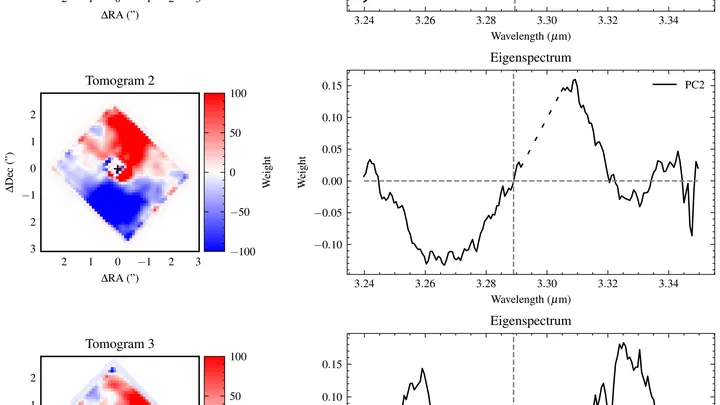
At the center of nearly every large galaxy sits a supermassive black hole. It pulls in gas and dust, and a bright disk swirls around it. But the James Webb Telescope looked further out — into a region where the black hole's light is weaker, yet the dust still glows. Astronomers examined eight galaxies.
Galaxies2026-03-122 minarXiv:2603.12200express
Dust in Galactic Winds: How to See the Invisible
At the center of every large galaxy, including our own Milky Way, resides a supermassive black hole. It doesn't just sit there — sometimes it pulls in gas and dust, and part of that material is blasted back out in powerful outflows. These outflows, or "winds," carry material far from the center and affect the entire galaxy.
High Energy2026-04-172 minarXiv:2604.16688express
Black Hole's Heartbeat Steadies
At the heart of galaxy 1ES 1927+654, a black hole behaves like a lighthouse with a faulty mechanism. Every six and a half minutes, it releases a burst of X-ray light, a rhythm astronomers have been tracking since 2022. At first, the beacon's tempo wandered — speeding up and slowing down, with intervals ranging from one beat every eighteen minutes to one every seven.
The Pulse of a Black Hole: Birth of a Jet in X-ray Echo
For years, silence reigned in the heart of galaxy 1ES 1927+654: the accreting gas merely whispered in X-rays, leaking slow winds. But in 2022–2025, the picture changed dramatically. Spectra taken by XMM-Newton and Swift lit up with emission lines — a narrow peak at 0.56 keV, likely from OVII oxygen, a broader feature near 1 keV, and a powerful iron band in the 6–7 keV region.
Galaxies2026-07-272 minarXiv:2607.24911
Breath of a Quasar: How a Black Hole Controls a Cluster
295 000 meters per second. Not even particles in solar coronal ejecta move that fast. But at the center of the galaxy cluster H1821+643, hot gas does exactly that. The quasar at its heart takes a breath, and its breath stirs everything around for 60 thousand light-years.