Machine-Made Cool Metals express
The transistor in your phone works like a faucet: open it and electrons flow, close it and they stop. But an ordinary metal faucet always leaks a little: even when closed, current seeps through. That drains the battery and heats up the chip.
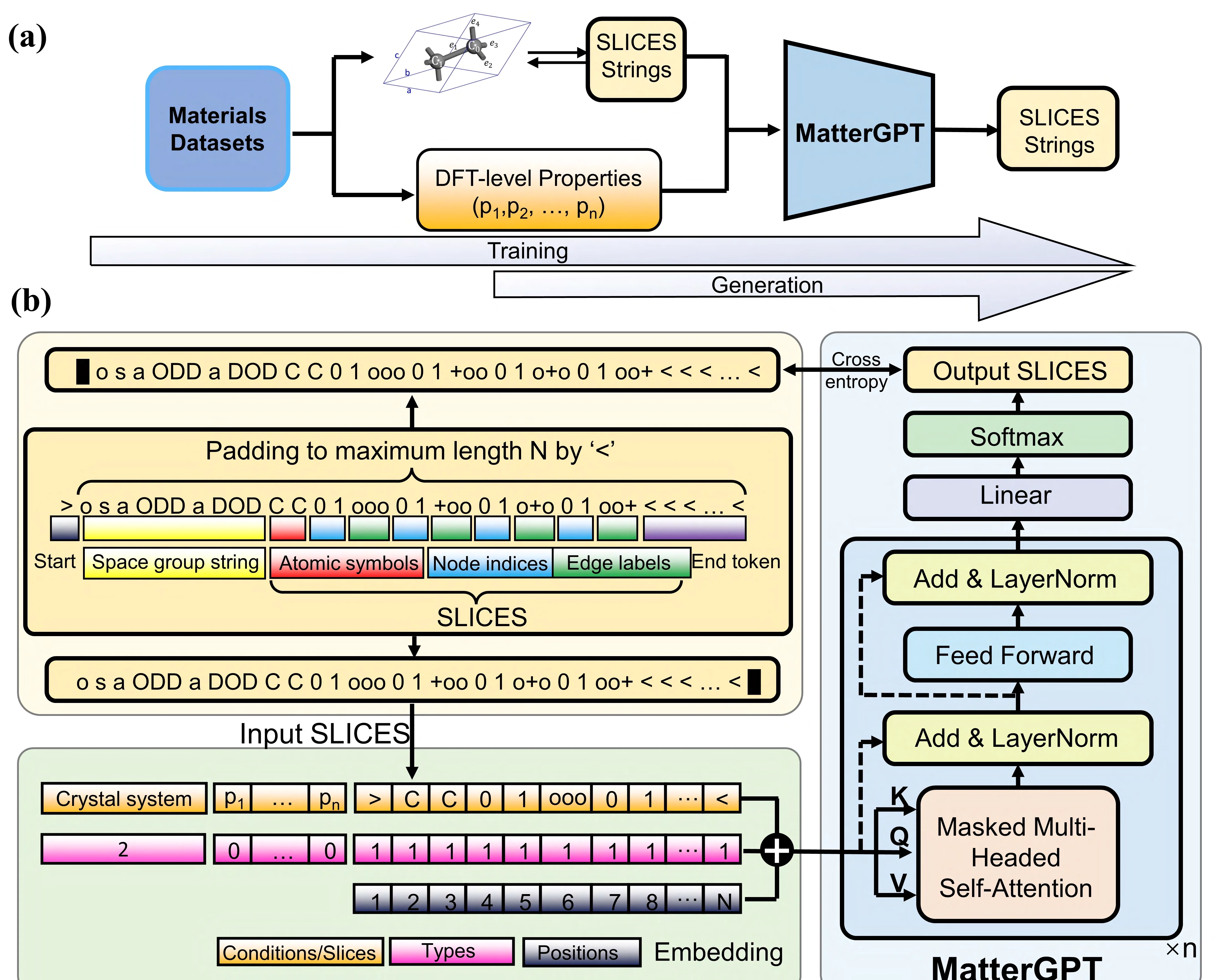
For a long time, such materials were sought by hand, sifting through known compounds. They found 252 of them. But a database only holds what's already been discovered. The neural network MatterGPT learned to assemble new crystals from 'letters'—special strings describing the arrangement of atoms. It was shown 26,309 examples and given a goal: stability and a gap between 50 and 500 millielectronvolts (that's hundreds of times less than the energy of a single photon of visible light).
The machine produced 148,506 options. Almost all could be assembled into three-dimensional structures. After filtering for symmetry and novelty, 257 candidates remained that aren't in any database. For several, atomic vibrations were checked — the material doesn't fall apart. So these metals can be synthesized.
In this way, the neural network expanded the map of cool metals beyond the catalog. Now engineers have a whole warehouse of new 'leak-proof faucets'—all that's left is to choose which ones to cast in the factory.
Original abstract
as written by the authors arXiv:2603.13920
Cold metals are a class of metals with an intrinsic energy gap located close to the Fermi level, which enables cold-carrier injection for steep-slope transistors and is therefore promising for low-power electronic applications. High-throughput screening has revealed 252 three-dimensional (3D) cold metals in the Materials Project database, but database searches are inherently limited to known compounds. Here we present an inverse-design workflow that generates 3D cold metals using MatterGPT, a conditional autoregressive Transformer trained on SLICES, an invertible and symmetry-invariant crystal string representation. We curate a training set of 26,309 metallic structures labeled with energy above hull and a unified band-edge distance descriptor that merges p-type and n-type cold-metal characteristics to address severe label imbalance. Property-conditioned generation targeting thermodynamic stability and 50-500 meV band-edge distances produces 148,506 unique candidates; 92.1% are successfully reconstructed to 3D structures and down-selected by symmetry, uniqueness and novelty filters, followed by high-throughput DFT validation. We identify 257 cold metals verified as novel with respect to the Materials Project database, with gaps around the Fermi level spanning 50-500 meV. First-principles phonon, electronic-structure, and work-function calculations for representative candidates confirm dynamical stability and contact-relevant work functions. Our results demonstrate that SLICES-enabled generative transformers can expand the chemical space of cold metals beyond high-throughput screening, providing a route to low-power electronic materials discovery.
A gap of 50 millielectronvolts is the energy an electron gets from a voltage of just 0.05 volts. For comparison: a coin cell battery provides 1.5 volts.