Imagine a stream of water hitting a filter mesh. Only drops of a certain size slip through — the rest are broken up and rejected. Similarly, a digital filter lets through vibrations (frequencies) of a selected range, damping the others. The algorithm acts as a mathematical sieve: it multiplies each frequency by a transmission coefficient — from full approval to total rejection.
History
The mathematical foundations were laid by Jean-Baptiste Joseph Fourier, who showed in 1807 that any periodic signal can be decomposed into a sum of sinusoids. The idea of spectral decomposition became a cornerstone. In the 1930s, with the advent of radio engineering, engineers such as Harry Nyquist and Claude Shannon formalized criteria for sampling and reconstructing signals. With the rise of digital computers in the second half of the 20th century, filtering methods became purely computational, giving rise to powerful algorithms like the fast Fourier transform (Cooley and Tukey, 1965).
How it works
Principle of convolution: the output signal y(t) is obtained as a sum of weighted past values of the input x(τ), where the weights are given by the impulse response h(t). In the frequency domain, this is equivalent to the product of complex spectra Y(f)=X(f)·H(f), where H(f) is the filter's frequency response. By shaping H(f), desired frequencies are attenuated or amplified. For example, a low-pass filter has H(f)≈1 for f<f_c and H(f)≈0 for f>f_c. Physically, in analog electronics this is implemented with RC circuits, digitally — with difference equations.
Filters are everywhere: in Bluetooth headphones, active noise cancellation generates counter-sound to quiet the hum of an airplane. This is not a brute-force filter, but a clever one.
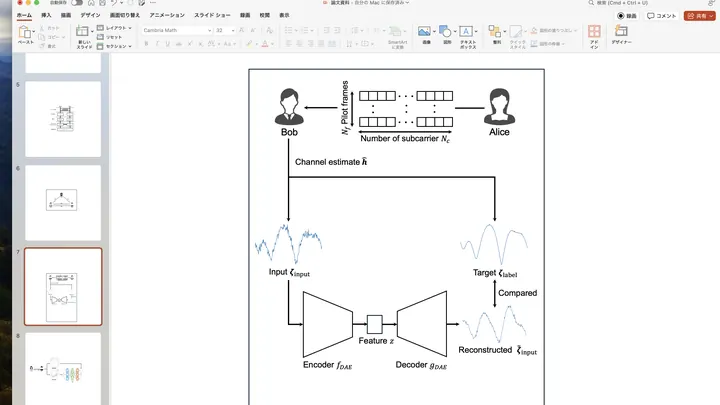
When two phones try to create a shared secret key from random properties of radio waves, interference makes their measurements imprecise. It's like two people looking at a reflection in a fogged-up window: each sees a blurry silhouette, and there's no way to make out a common picture.
A human effortlessly picks out the desired voice from the clamor of a party. For a computer, the same task is still at the edge of its abilities. Previous programs trained on sterile recordings, free of echo or the clinking of appliances.
A traditional filter works like a long chain of people passing a message around: each waits for the previous one to finish. That's slow. Engineers applied a clever method — cyclic reduction. They rearrange data so that dependencies between samples become not long chains but small groups.
Traditional hearing aids resemble a chef who cooks from a recipe blindly. They analyze the sound chaos from the microphone and amplify speech based on it. In a noisy café, this approach often errs. The new system behaves like an experienced cook: first processes the signal, then samples the result.
Human hearing is wired so that the brain prioritizes familiar patterns — a friend's voice, the patter of rain, a car horn. But a new system works on a different principle: it registers any sound burst, even one never encountered before.
In a noisy room, a person picks out a desired voice thanks to two ears capturing the difference in sound arrival. A computer with several microphones does the same: it gets spatial cues — where each voice is coming from.
Previously, these cues were used to focus on one direction, like a flashlight beam.
Passive sensors communicate by reflecting radio waves, like an echo. The energy savings are clear, but many reflections turn into a jumbled mess. It's like a choir where each singer repeats their own part without a conductor.
A new approach assigns each sensor a specific rhythm — a digital code.
Active noise cancellation creates 'anti-sound' to neutralize noise. But ordinary systems are blind: they don't know where the sound is coming from. In rooms with an echo, it's like boxing with a blindfold on — you're canceling blindly.
Searching online is a lot like sifting flour for baking: white particles can hide dark specks of dirt. This data contamination is an invisible impurity that spoils the outcome. C3R operates like a smart sieve: it not only filters out information junk but also knows when to stop if there's too much trash. Rather than risk errors, the algorithm honestly declines to answer.
A typical cardioid microphone, like an ear, hears best from the front, but its readings blur when sound comes from the side. The solution is to gather several such 'ears' into a sphere. You get a sound ball that picks up signals from all directions. By comparing measurements, the system breaks down errors into simple components — much like spectroscopy splits light.
Cleaning speech from noise is like tuning an old TV: twist the contrast knob too far, and faces become unnatural. Researchers separately adjusted the 'volume' and 'time shift' for each frequency of sound, as if splitting it into a rainbow — a method known as spectroscopy. It turned out the key knob is volume, not phase synchronization.
The standard way of digitizing speech: taking volume readings thousands of times per second. It's like tasting broth with a teaspoon: each sip is watery, with almost no detail. The data stream swells, though the substance is minuscule.
Scientists proposed first "simmering down" the audio signal.
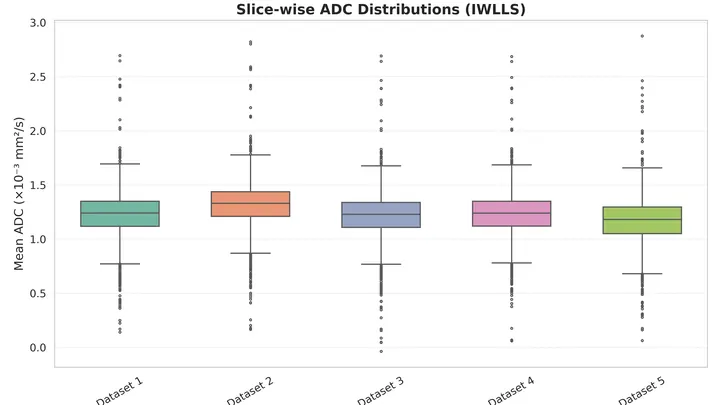
Prostate MRI scans often look like photos taken through a dirty window: noise, blurred edges, curvature from field imperfections. Scientists checked what happens if you 'wash' that window: remove the excess, correct the distortions, and accurately align different types of scans.
An electron microscope is a giant pipe organ: instead of pipes (electromagnetic lenses, instead of air) a stream of accelerated electrons. It once merely painted mute frescoes of the atomic world, condemning scientists to grueling decipherment.
If you clap your hands in an empty room, the echo will tell you about its size and shape. Every object (a chair, a book, a person) adds its own signature to this echo: sound reflects off it in a particular way. The authors of the paper have figured out how to completely rewrite this acoustic signature. They surrounded a region of space with a closed surface of microphones and loudspeakers.
A rock concert blares at full volume, and you're trying to catch your friend's whisper. That's roughly how radio detectors feel when they pick up signals from cosmic dust particles. A particle slams into the atmosphere and spawns an air shower, a cascade of millions of secondary particles, and this shower emits a short radio pulse.
An X-ray tomograph is like a carpenter who examines a log from all sides to see where the void is inside. It takes dozens of flat shadow images, rotating the source and detector around the object. Then a 'reconstruction' program glues these shadows into a 3D model. The quickest reconstructor is the FBP algorithm (filtered back projection).
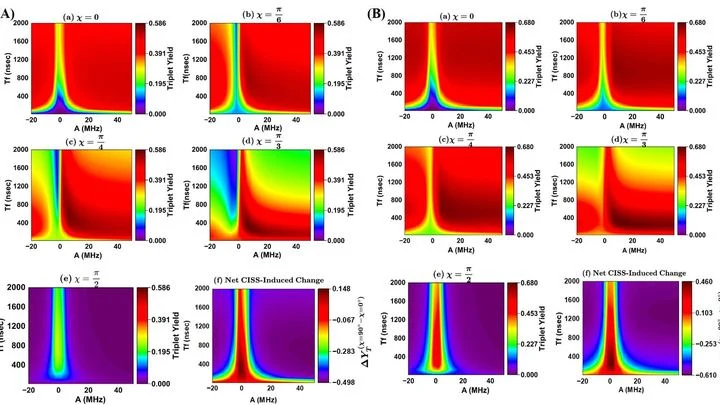
Under sunlight, molecules inside bacteria, like the beaters of a kitchen mixer, capture energy and spin electrons in the right direction. But sometimes the spin gets disrupted — 'stuck' triplet particles appear. It's as if the beater momentarily froze and then jerked backward, splashing hot liquid and scalding the walls.
Any light measurement runs into a fundamental limit: photons hit the camera sensor unevenly. This natural ripple (shot noise) blurs fine details, like trying to pick out a quiet instrument in an orchestra through the noise of the hall.
A vast hall with a thousand doors, and only one leads to the stars. The rest are locked, and the keys aren't just hidden: they're wrapped in other keys and tangled into a knot. That's the Great Filter in a new reading: not a chain of failures but a tangled hierarchy where each step depends on the previous one nonlinearly.
Imagine a river that doesn't flow in an open channel but through the inside of a sponge, with its currents shifting from place to place. That's a good way to think about the brain's glymphatic system: a network of ultra-fine channels around blood vessels, through which cerebrospinal fluid seeps into the tissue and washes away the waste that has piled up during the day.
The Taiji detector, planned for launch into space, will pick up the trembling of space caused by collisions of enormous black holes. But its data is frequently marred by random bursts, like static crackling in a radio receiver.
Particle detectors such as resistive plate chambers (RPCs) work like sensitive traps: when a charged particle flies through, it generates an electrical signal. But sometimes the chamber fires a false hit, as if an invisible hand pressed a doorbell. These spurious signals muddy the picture and make it harder to pinpoint the particle's path.
You can launch sound in a crystal at a frequency so high that the human ear can't hear it, and make that sound run in circles, like a train on a loop track. Engineers took a thin film of silicon nitride, deposited it on a lithium niobate substrate, and carved waveguides for sound waves into it.
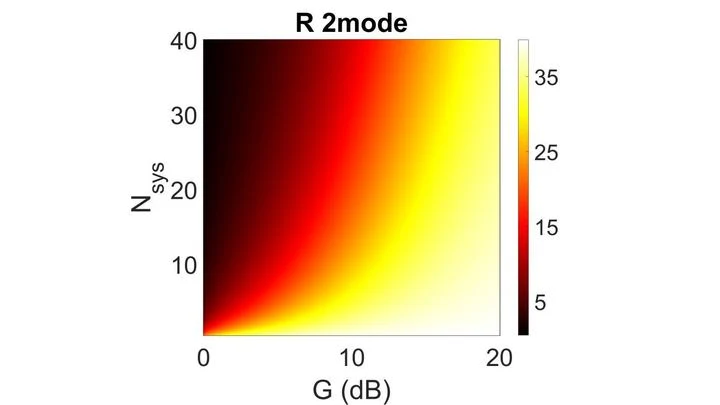
A quantum bit (qubit) is like a barely discernible whisper in a hum of voices. A regular amplifier makes the whisper louder, but along with it, the hum as well, making it harder to hear the essence. Physicists have created a clever device that generates two identical signal-whispers at different frequencies — the original and its echo.
The receiver doesn't catch radio waves but submillimeter light — the radiation emitted by cold clouds of gas and dust in distant galaxies. Inside, there's an array of tiny resonators, each tuned to its own frequency, like the strings of a grand piano tuned to notes.
Deep inside a mountain, under layers of rock, lies a germanium crystal the size of a fist. It waits for a rarest of events: an atomic decay that happens once in billions of years. But inside the crystal, something is always ticking — cosmic rays, traces of radioactivity, thermal noise.
A laser beam hits the skin, and tissues respond with a barely audible ultrasonic echo. From that echo, doctors can see blood vessels and tumors without making a single incision. But before the picture appears on the screen, the signal has to be cleaned of noise, just as a cook skims the foam off a broth to make the soup clear.
Optical fiber transmits light, but along the way it jitters and dims. To ensure that two parties at opposite ends of the line get the same set of random numbers for encryption, the receiver uses a digital corrector, like noise-canceling headphones that subtract the street hum but sometimes also eat the quiet notes of the music.
Light in a microscope doesn't arrive as a steady stream but like buckshot from a bag: sometimes more photons, sometimes fewer. This random scatter is the shot noise. It sets a limit: faint signals from tiny objects get lost in the ripple.
Scientists have found a way to calm this buckshot.
A tiny lithium niobate comb vibrates at a frequency of 300 million times per second. Each tooth is carved from a crystal plate as thin as a human hair, with metal electrodes deposited on its sidewalls. The sound wave bounces inside the tooth like an echo in a narrow stone canyon, unable to escape.
Light is like a many-voiced choir: color, direction of oscillation, and instantaneous changes all intertwine. An ordinary camera hears only one voice, while the rest are lost. Scientists have built a camera that listens to the entire choir at once, and from a single image understands what is happening.
A quantum computer is like an orchestra that can only perform in complete silence. The slightest noise, and the delicate melody falls apart. For quantum devices, heat is that noise: even faint infrared radiation from nearby components heats up the qubits and erases their quantum states.
Detecting a faint signal against a noise background is like trying to hear a distant bell in a storm. Ordinary amplification only makes the din more deafening. Quantum error correction solves the problem in an unexpected way.
Light traveling through an optical fiber is like a crowd in a narrow corridor: each photon takes its own path, and if the paths get mixed up, you end up with mush at the exit.
Measuring a particle’s energy at the Large Hadron Collider is like trying to catch a whisper in a roaring crowd. When protons collide, a flurry of particles is born, their signals blending into a cacophony. Old-school methods, like a noise-clogged ear, systematically underestimate the energy.
Scientists built a neural network that works right inside the detector.
An old aviation instrument sometimes sticks: the needle catches on the scale and doesn't move, even though the plane is already changing altitude. Engineers found a simple solution: add a slight vibration. The shaking doesn't hinder; on the contrary, it helps the needle break free and show the truth.