Machine-Made Cool Metals express
The transistor in your phone works like a faucet: open it and electrons flow, close it and they stop. But an ordinary metal faucet always leaks a little: even when closed, current seeps through. That drains the battery and heats up the chip.
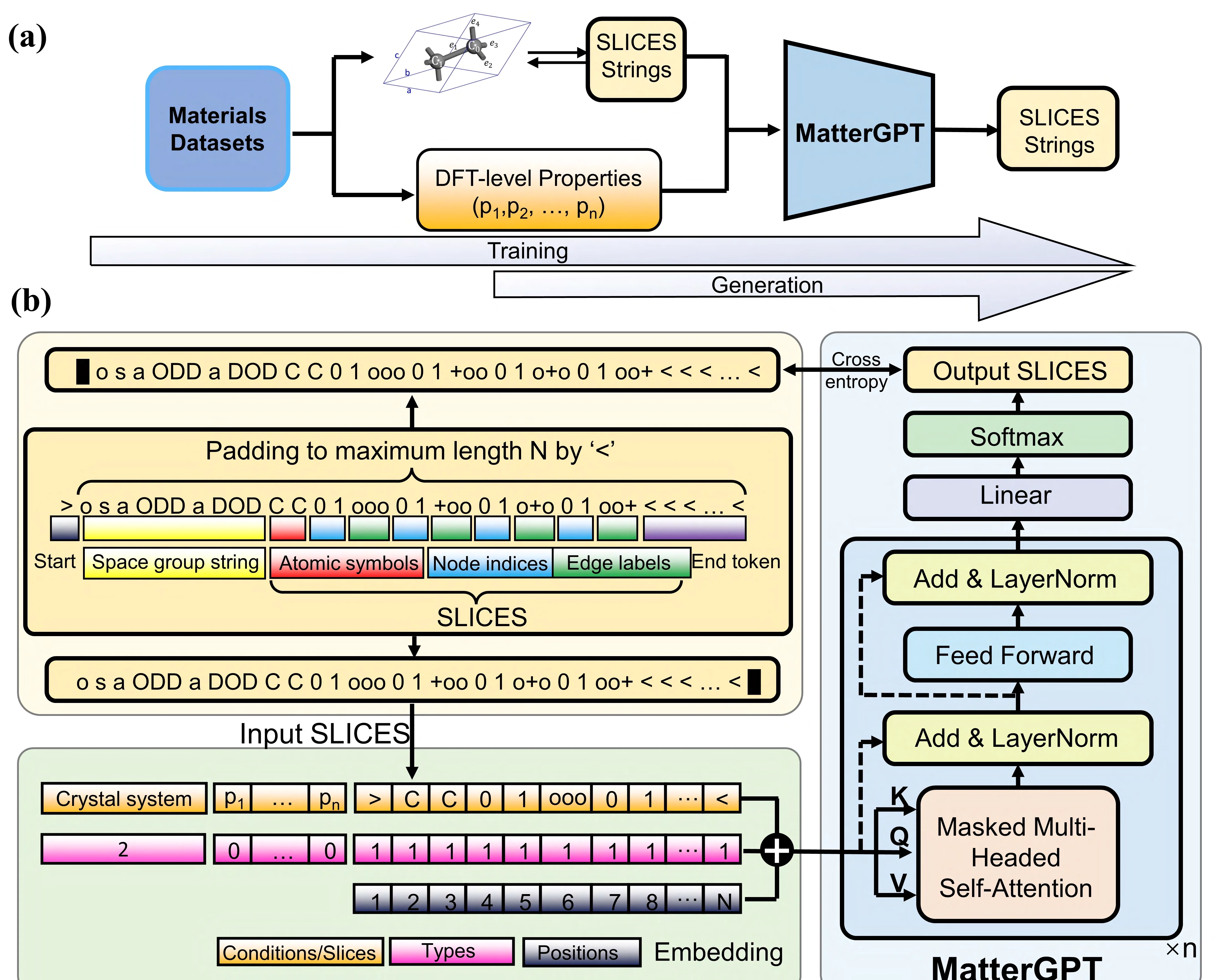
For a long time, such materials were sought by hand, sifting through known compounds. They found 252 of them. But a database only holds what's already been discovered. The neural network MatterGPT learned to assemble new crystals from 'letters'—special strings describing the arrangement of atoms. It was shown 26,309 examples and given a goal: stability and a gap between 50 and 500 millielectronvolts (that's hundreds of times less than the energy of a single photon of visible light).
The machine produced 148,506 options. Almost all could be assembled into three-dimensional structures. After filtering for symmetry and novelty, 257 candidates remained that aren't in any database. For several, atomic vibrations were checked — the material doesn't fall apart. So these metals can be synthesized.
In this way, the neural network expanded the map of cool metals beyond the catalog. Now engineers have a whole warehouse of new 'leak-proof faucets'—all that's left is to choose which ones to cast in the factory.
A gap of 50 millielectronvolts is the energy an electron gets from a voltage of just 0.05 volts. For comparison: a coin cell battery provides 1.5 volts.