Simple

Supernova Exhaled Carbon Monoxide ⚡ экспресс

Original: "Near-Infrared and Optical Observations of SN 2024rbc: The First Early Detection of CO and Dust in a Type Ib Supernova"
arXiv:2603.23877 · 2026-03-25 · CC BY 4.0 · ⏱ 1 min · High Energy Galaxies Stellar
For the first time, the glow of carbon monoxide was seen in the debris of a star that shed its hydrogen.
Abstract

In the cosmic fireworks of supernova 2024rbc, astronomers caught a first-ever glimpse of carbon monoxide—like smoke from a titanic blast. This helps uncover how dust grains are born, eventually forming new stars and planets. What other secrets do the debris of these colossal disasters hold?

Links in the knowledge graph 1

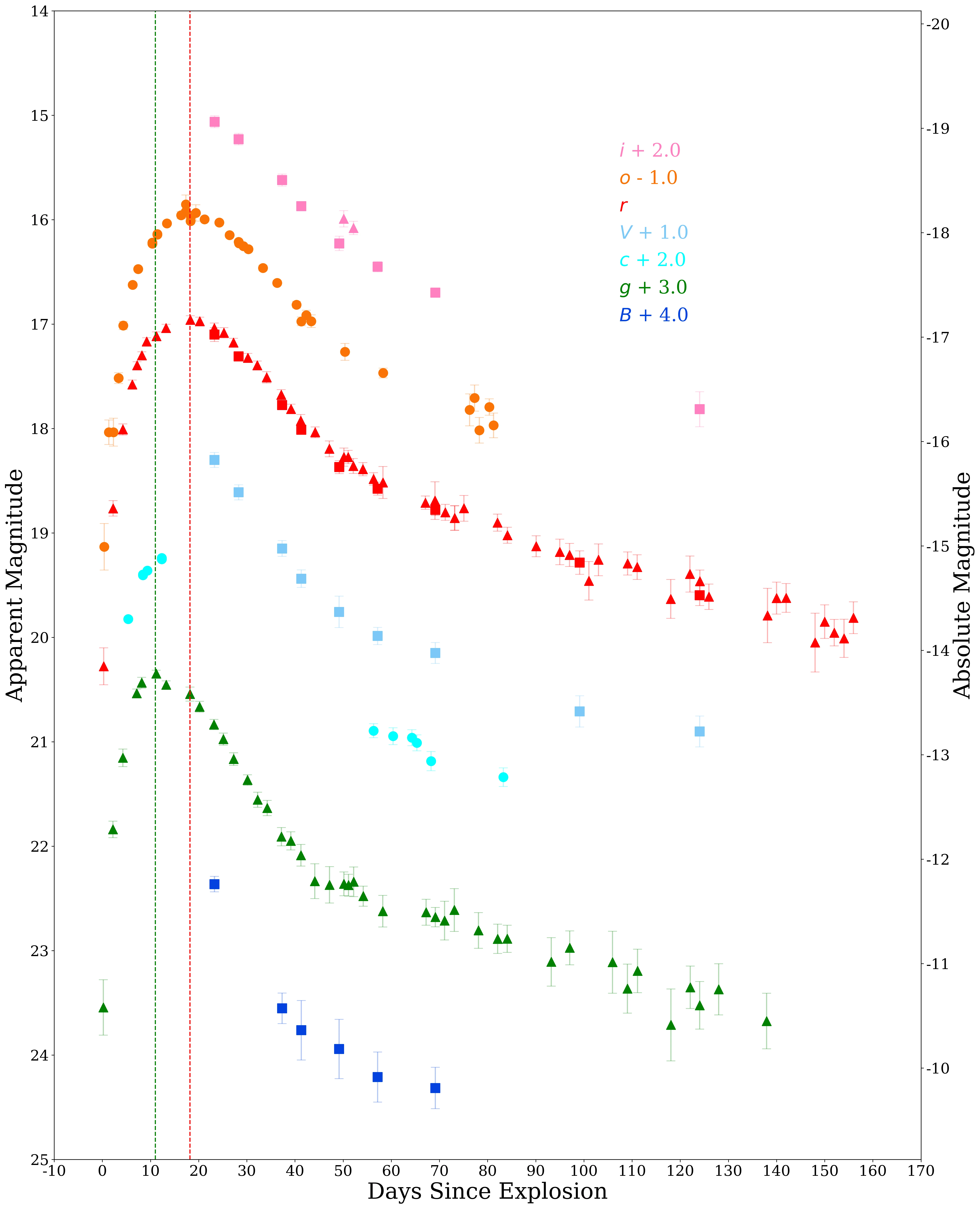
When a massive star runs out of fuel, it sheds its hydrogen envelope and explodes—like a final, desperate exhale. That’s exactly the kind of supernova (type Ib) astronomers observed. 62 days after the blast, in the cooling debris, they caught a faint infrared glow: it turned out to be the signature of carbon monoxide (CO). The material was hurtling at a terrifying 6,000 kilometers per second—fast enough to cover the Earth–Moon distance twenty times in an instant. Because of this speed, its spectroscopic fingerprint was blurred into a broad hump. Around it, cosmic dust glowed at 637°C, and helium lines confirmed the explosion’s class.

Carbon monoxide is synonymous with car exhaust and poisoning. But here, in this cosmic exhale, it kick-starts the birth of solid dust grains. A minuscule impurity (just 0.0005 solar masses) acts as a seed, without which planets would never have formed. From the same kind of dust, 4.5 billion years ago, our own Earth was molded.

The breath of dying stars—that's what the world is made of.

🎯 The amount of carbon monoxide in SN 2024rbc is so vast that its mass exceeds the weight of Earth's entire atmosphere by billions of times. Yet compared to the star's mass, it's just a trace impurity.

🎬 The phrase 'we are all made of stardust' is not just a metaphor. In the movie 'Interstellar,' this idea resonates with particular poignancy.

Scientists
Christian DopplerD. B. McLaughlinDidier QuelozMichel MayorR. A. RossiterJames Clerk Maxwell
Tags
supernova spectroscopy carbon cosmic dust helium
Laws
Doppler effectMaxwell's equationsPlanck's lawPlanck–Einstein relationWien's displacement lawRydberg formula
Original: arXiv:2603.23877 · CC BY 4.0 · bridge42worlds