Zinc oxide film changes shape in a magnetic field express
A piece of zinc oxide film lies on a table. A magnet is brought near, and slowly rotated around the film. The film, thinner than a human hair, begins to change its dimensions: now contracting, now stretching. This property is called magnetostriction — the ability of a material to deform under a magnetic field.
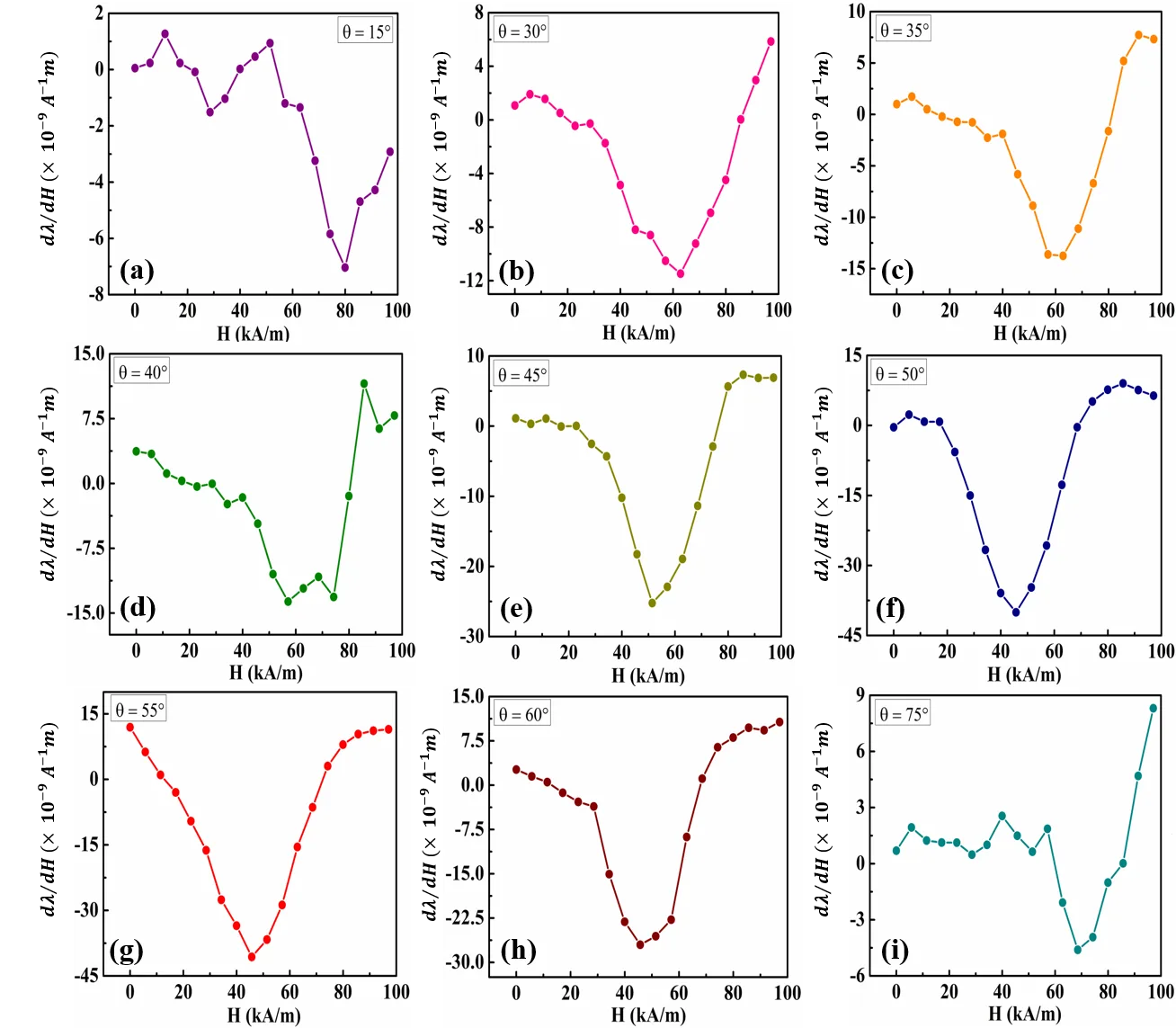
Indian scientists measured this effect using a homemade optical device — a cantilever magnetometer. A light beam reflects off the film mounted on a thin cantilever, and the slightest bending of the cantilever is detected by the shift of the beam. It turned out that as the magnetic field rotates from 0 to 90 degrees, the film behaves differently: at some angles it only stretches, at others only contracts, and at some it first does one, then the other. This switching is related to the internal crystal structure of zinc oxide.
The practical benefit is clear: such a film could be used to make tiny sensors that respond to the direction of a magnetic field, or microactuators controlled by rotating a magnet. All of this is useful in micro- and nanoelectronics, where compactness and precision matter.
Original abstract
as written by the authors arXiv:2603.27246
We report the investigation of magnetostrictive property of polycrystalline ZnO film at room temperature on rotating a magnetic field in the plane of the film from 0 deg to 90 deg by an indigenously developed optical cantilever beam magnetometer (CBM) setup. In this study, the film exhibits bipolar (tensile & compressive) and unipolar (tensile/compressive) nature of magnetostriction with the angle of rotation of in-plane magnetic field. Moreover, we observe switching behavior of bipolar and unipolar magnetostriction as the applied field is rotated in the plane of the film. The switching of magnetostriction is attributed to the crystal anisotropy of the material. The appearance of bipolar and unipolar magnetostriction has made the ZnO film a suitable candidate for the fabrication of sensors as well as actuators applicable in micro and nano-electronic devices.
Zinc oxide is the same white powder used in sunscreens and zinc ointment.