Nanoelectronics is the branch of electronics where components are engineered at the nanometer scale — roughly the size of a few hundred atoms. At this scale, materials behave differently than in bulk: quantum effects become significant, and the surface-to-volume ratio dominates. This field aims to build faster, smaller, and more energy-efficient devices, from transistors to sensors, by exploiting these nanoscale phenomena.
History
The term gained traction in the late 1990s, building on earlier work in microelectronics and the discovery of carbon nanotubes in 1991. The field expanded rapidly after the isolation of graphene in 2004, which opened new avenues for two-dimensional electronics.
How it works
The core idea is to fabricate structures — such as nanowires, graphene ribbons, or quantum dots — where electrons are confined in one or more dimensions. This confinement alters their energy levels and transport properties, enabling new functionalities like single-electron transistors or spin-based logic. Techniques like electron-beam lithography, self-assembly, and chemical vapor deposition are used to create these structures with atomic precision.
In practice
Nanoelectronics is used in modern processors (e.g., 3-nm nodechips), high-sensitivity biosensors, and flexible displays. It also underpins research into quantum computing and neuromorphic chips.
Fun fact
A single drop of liquid can be used to print an entire electronic circuit at the nanoscale, as demonstrated in recent research.
When an alpha particle tears through a gas, it leaves behind not a continuous track but a chain of individual ionizations: tiny flashes where electrons are knocked off atoms. In a living cell, such flashes damage DNA, and the denser they are packed into a clump, the more severe the damage.
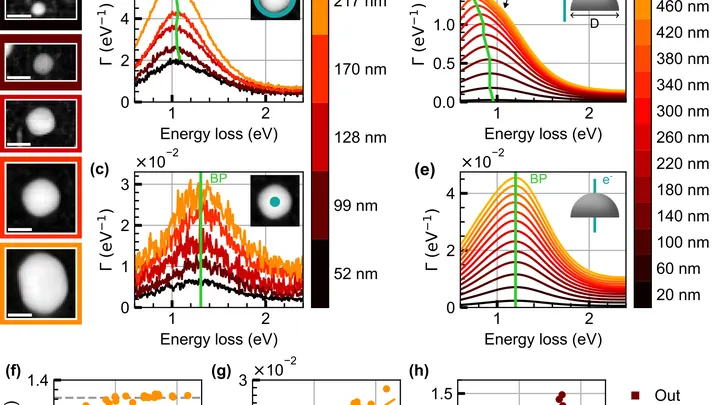
Light passing by a tiny structure changes direction. If the structure is smaller than the wavelength of the light, it acts like a lens and focuses the light into a spot smaller than the wave itself.
The quantum many-body world is a jazz ensemble, where each electron improvises, continuously listening to all the others, and the overall wave function is born from this tense dialogue.
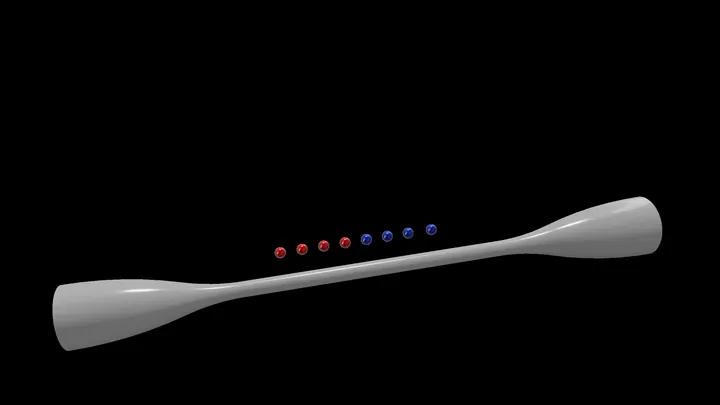
An orchestra without a conductor, where musicians hear each other through a shared wall. That's roughly how the new type of laser works: a few atoms (emitters) sit along a waveguide — a thin track for light on a chip. Light from each atom runs along this track and affects its neighbors.
A typical laser is a cavity where light bounces between mirrors and gets amplified. But you can ditch the mirrors and make light circulate inside a tiny particle smaller than the light wave itself. That's how the new lasers work: nanoparticles of indium phosphide sitting on perfectly smooth gold.
The thinner the ferroelectric film, the stronger the depolarizing field — a dictate of classical physics. Imagine a pencil balancing on a fingertip: the shorter it is, the harder to keep it upright. Nanoscale polarization likewise strives to vanish.
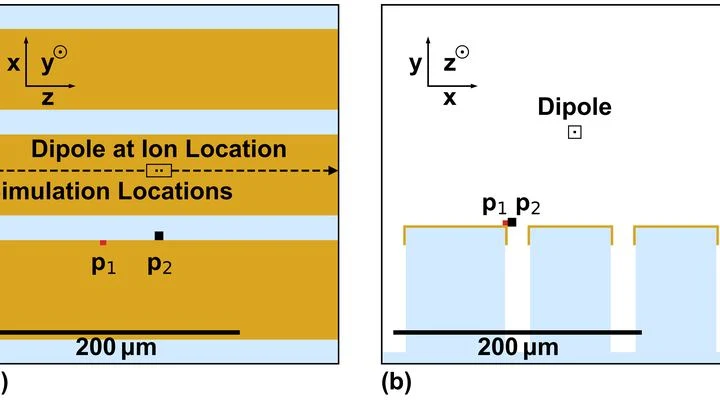
A quantum computer is like an orchestra where each ion is a musician and laser pulses are the conductor's baton. But if someone in the audience rustles, the delicate melody of quantum states goes off key.
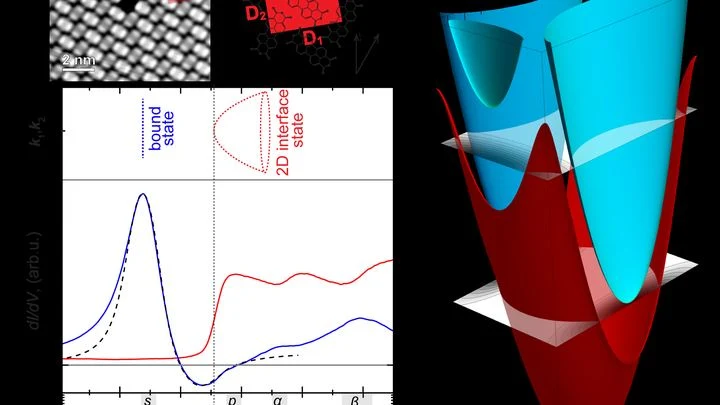
A wafer-thin film of organic molecules was grown on a silicon substrate. In this film, as if on a sheet of graph paper, tiny "pens"—artificial atoms — were laid out with the tip of a scanning tunneling microscope.
Table salt makes food taste better in the kitchen, but in the lab it helps grow crystals just a few atoms thick. Scientists took tin selenide and, with the help of salt, grew ultra-thin flakes from it, so thin they're called two-dimensional. The salt acted as a separator: it kept the flakes from clumping together and made them lie flat on the substrate, like pancakes on a griddle.
Conventional photolithography, used to make chips, hits a fundamental limit: light cannot draw features smaller than its wavelength. Here, they took a different route. First, they made sparse vertical ridges of oxide, then deposited layers of aluminum oxide, each one atom thick, onto them.
In the cold heart of a pure crystal, electrons flow like a viscous fluid — an idea predicted by Lev Landau. But the vortices of this fluid remained invisible, like a painting inferred from the noise of a crowd. Now scientists have created a nanostring: a semiconductor tuning fork with a circular cavity.
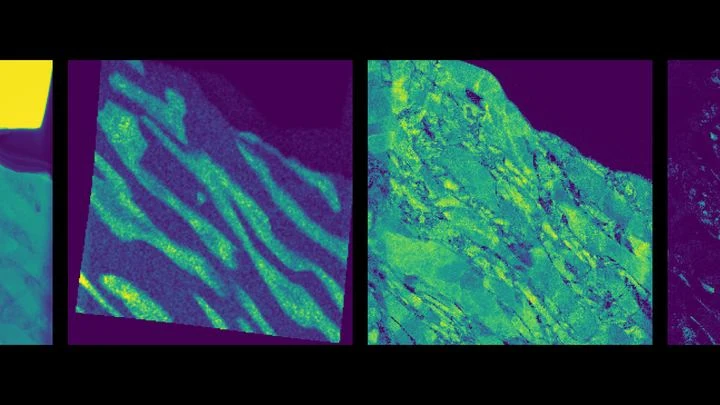
On the surface of a thin film of bismuth iron oxide, you can see neat stripes, like furrows in a plowed field. What lies beneath them has remained a mystery until now.
A tiny gold star melts under the beam of an electron microscope, its points slowly rounding off. In the past, such a process could only be seen in snapshots taken with long pauses, and the probing beam itself would alter the sample.
A modern hospital sensor is like a sensitive microphone in a noisy hall. It picks up a weak signal from the heart or brain, but along with it comes the hum of machines, footsteps, the breathing of neighbors. Separating the desired sound from the interference is a science in itself.
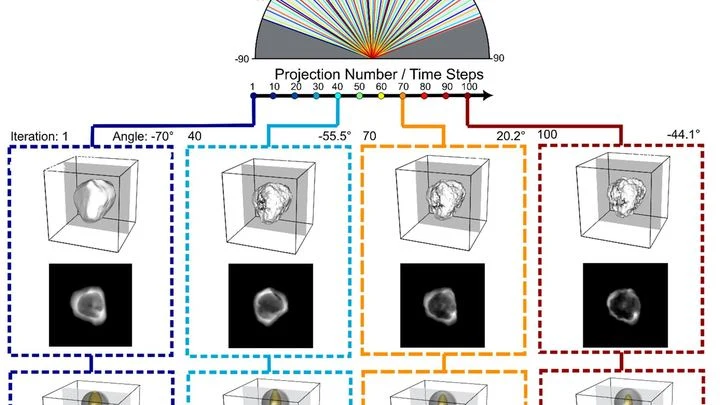
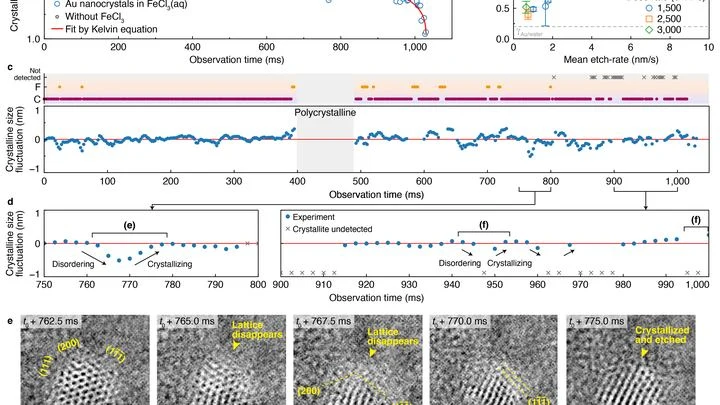
Gold nanoparticles in liquid are like tiny living creatures: they constantly change their internal structure, as if breathing. Scientists managed to peek into this process using an electron microscope that takes snapshots every millisecond, and a neural network that cleans the images from noise.
When two different materials are pressed together and then pulled apart, a spark jumps between them. Anyone who has pulled off a wool sweater in the dark or gotten a shock from a doorknob knows the feeling. For a long time, it was thought that charges simply hop from one surface to another due to differences in material properties.
Sound on a crystal surface is like ripples on water, but traveling through a solid. This ripple is called a surface acoustic wave: it moves a hundred thousand times slower than light, so it can be compressed into very short segments and fit on a tiny chip. Usually, such waves are launched by metallic combs made of aluminum or gold.
Batteries usually have two terminals — an anode and a cathode. Engineers are trying to remove the anode from solid-state batteries (with solid electrolytes) to make them lighter and more capacious. During charging, metal should deposit itself as a layer on the contact, and then vanish completely during discharge. But after a few cycles, capacity drops.
Modern X-ray light sources are like an orchestra without a conductor: electrons in the beam fly every which way, and the radiation comes out blurry. The new idea is to make electrons line up in neat rows with a spacing of a few nanometers. Then the light they emit becomes coherent, like a laser beam.
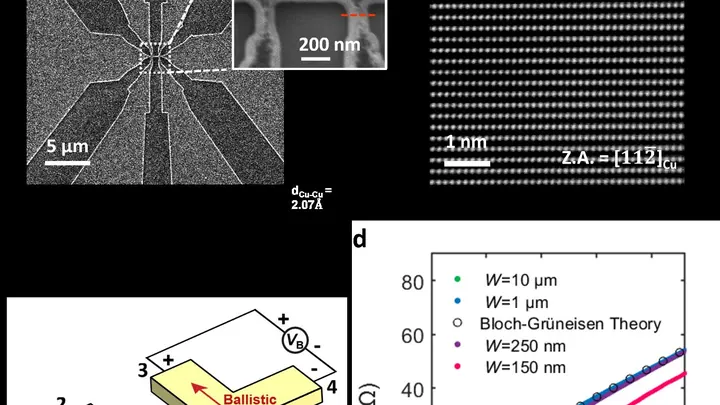
An electron in a metal is usually like a person in rush hour: it constantly bumps into others and loses its way. But if you remove the obstacles, it can fly in a straight line, like a car on an empty night highway. This kind of motion is called ballistic — from the word "ballista," an ancient catapult that hurled a stone without interference.
Light usually travels straight, like a flashlight beam. But it can be twisted, like water in a funnel, creating a vortex in the beam. Such twisted light can carry more data: different vortices don't interfere with each other, just like different radio channels. The challenge was to make a source of such light small enough for a chip.
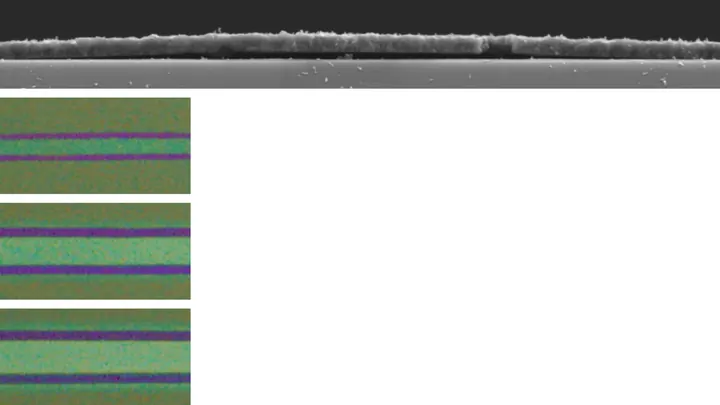
A laser beam passes through glass and touches a thin diamond film. At the point of contact, the film turns into a narrow strip that lifts slightly. We place a second strip next to it, and between them remains an empty corridor. That's the channel: its width can be fifty times its height, like a sheet of paper lying on a table.
A tiny vanadium oxide particle behaves like a window with adjustable transparency: in one state it lets infrared light through, and in another it starts absorbing it. The switch doesn't happen abruptly but smoothly, like turning a dimmer knob to adjust a lamp's brightness.
Steel is not just a piece of iron. Inside it, like in a layered pie, different structures, phases, coexist. In ultra-strong steel for cars, there are three such phases: soft ferrite, strong martensite, and ductile austenite. Medium-manganese steel owes its strength precisely to this trio.
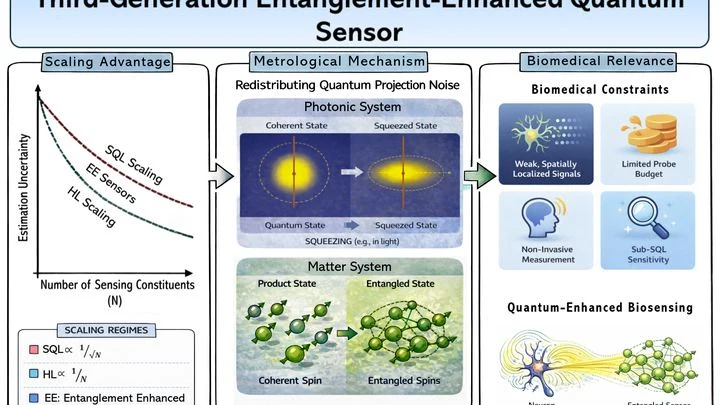
An ordinary sensor is like a scale that always shakes a little on its own. Even in total silence and at zero temperature, every particle jitters — this is quantum jitter, and it limits the precision of any measurement.
Tiny particles that look like flowers can do two things at once: heat up and tell you how hot they are. This isn't science fiction: it's the result of working with nanoparticles made of cobalt ferrite, a magnetic material that responds to magnetic fields.
A printer that prints not with ink but with metal and ceramic is now a reality. Scientists took an ordinary drop of water containing dissolved metal salts and made it deposit copper, zinc oxide, or nickel hydroxide onto a surface — all with precision down to millionths of a meter.
The secret lies in electricity.
A crystal one atom thick is like a sheet of paper you can write on with electricity. Such a material promises to become the foundation for tiny, fast microchips. But before putting it into production, you need to know exactly what it's made of. And that's where the usual formula falls apart.
Inside a living cell, a tiny carbon spinning top whirls — a molecule billionths of a meter across. An ordinary top falls quickly, but this one behaves differently: it can spin in both directions at once, like a quantum coin perpetually frozen mid-fall. This superposition of motions is key to its strange selectivity.
A chain of atoms on a light-guiding chip behaves like a row of pendulums on a shared support: swinging in opposite directions, they barely transfer energy to the air and freeze for a long time.