The Cloud That Falls Into Itself express
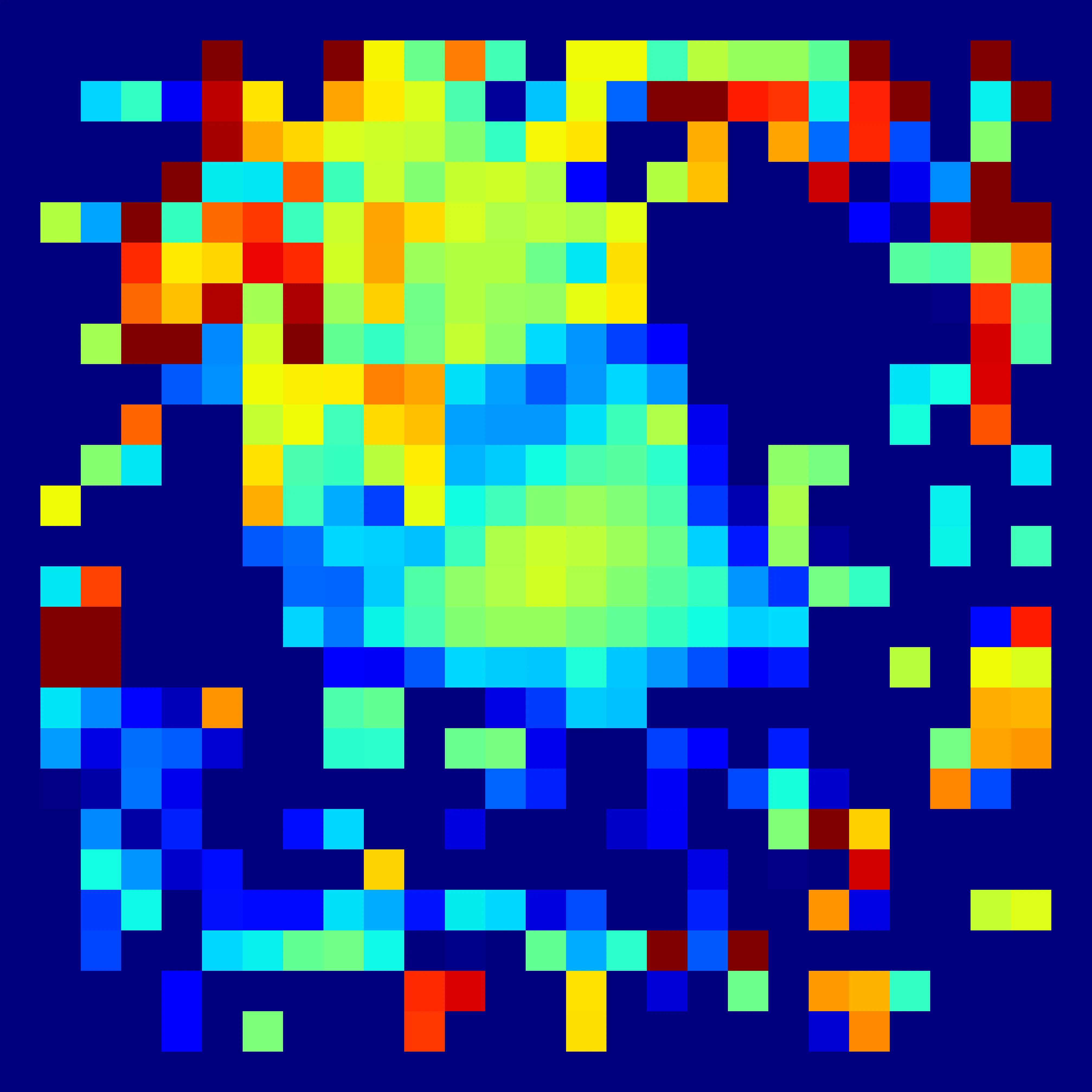
In a dark cloud where no star has yet ignited, gas begins to pull together toward a common center. This is how the most massive stars in the Galaxy are born: those tens of times heavier than the Sun. Astronomers pointed radio telescopes at the cloud SDC335.579-0.292 and saw gas molecules lining up into streams falling inward.
The infall speed turned out to be modest, just 0.6–1.6 kilometers per second. For comparison, a pedestrian walks at about 1.4 meters per second, so the gas moves hundreds of times faster. But the most interesting part is not the speed itself, but how it changes with distance from the center. At the cloud's outskirts, the gas accelerates; closer to the middle, it slows down; and right at the center, it speeds up again. Such a velocity profile suggests that the cloud is not simply contracting as a whole, but on intermediate scales it breaks into clumps and filaments.
If the gas were falling uniformly, the molecular emission lines would look symmetric. But in the observations they are distorted: some gas moves toward us, some away, and this distortion was mistaken for turbulence. The new analysis shows that what actually hides within the telescope beam is ordered infall disguised as chaos.
This is how a giant star is born: first the cloud slowly contracts, then clumps appear within it, and only then does material rush toward the center. This scenario explains why massive stars are often surrounded by dense clusters and filaments of gas.
Original abstract
as written by the authors arXiv:2603.30029
There is increasing evidence for global collapse of clumps over parsec-scales in massive star formation regions. Such collapse may result in characteristic molecular line emission profiles but the spatial variation of such lines has rarely been quantitatively examined. Here we explore the infall properties using the spatially-resolved HCO$$^+$$ J=1--0 and H$$^{13}$$CO$$^+$$ J=1--0 maps of the massive infrared dark cloud (IRDC) SDC335.579-0.292. We compare the observations with the analytical Hill5 model and radiative transfer models. This shows that the best-fit infall velocity towards the cloud centre to be well-constrained to $$-0.6$$ to $$-1.6$$ km s$$^{-1}$$ and the mass infall rate between a few $$\times10^{-3}$$ and $$10^{-2}$$ M$$_{\odot}$$yr$$^{-1}$$. The comparison also highlights some limitations of the Hill5 method. We demonstrate that the width of optically thin spectral lines, which are usually interpreted as resulting from turbulent motions, are in fact dominated by unresolved, ordered infall motions within the beam. Our results suggest a complex collapse situation where there is a minimum in the infall velocity at $$\sim2\times10^{18}$$ cm (0.7 pc) with the infall velocity increasing at both smaller and larger radii. The parsec-scale infall with an inverted velocity profile indicates that the accretion in this massive star-forming cloud should have intermediate scales, at which fragmentation or filament formation has to occur before material flows onto the cloud centre.
The infall speed of gas in this cloud is about 1 km/s. In an hour, such a flow covers the distance from Moscow to Saint Petersburg.
In Fred Hoyle's novel "The Black Cloud," a sentient gas cloud controls the motion of matter — here, the cloud organizes its own fall toward the center, obeying gravity.