Di Li

7 articles · 30 co-authors · latest: 2026-06-01
54 citations · h-index 4 · 16 papersData: Semantic Scholar

We have retold 7 papers by this author. 2 of them with a full read. most often about: Gamma radiation, supernova remnant, fast radio burst. 30 co-authors across our retellings.

Links in the knowledge graph
The Quiet Supernova: Why Pa 30 Is Silent in Radio
In 1181, Chinese and Japanese astronomers recorded the appearance of a 'guest star', a bright object that shone for six months in the constellation Cassiopeia and then vanished. Today, that spot hosts Pa 30: a nebula with a hot central source ejecting material at 16,000 km/s.
High Energy2025-10-081 minarXiv:2510.07002express
Artificial Intelligence Unravels the Mysteries of Cosmic Radio Bursts
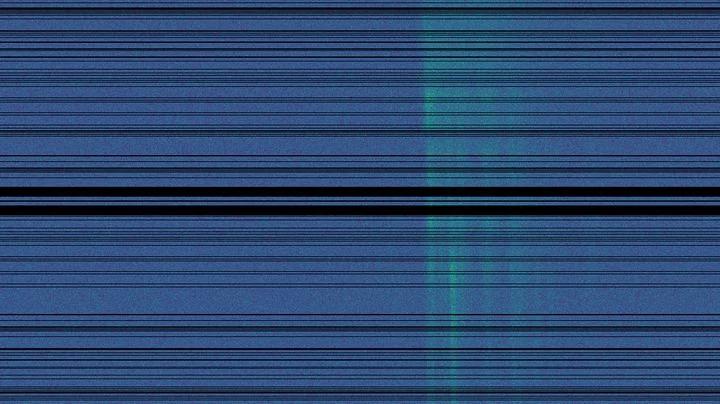
Fast radio bursts are millisecond-long cosmic signals. Previously, searching for them was like blindly tuning a radio dial. The EDEN neural network sees the entire frequency spread and recognizes the burst pattern like a musician reads notes. On source FRB 20121102A, it found 5,927 bursts — three times more than before.
High Energy2026-01-071 minarXiv:2601.03950express
Radio signal from space rang like a bell: rhythmic fading detected
Short, powerful bursts of radio static from deep space have long puzzled scientists. Their source is believed to be the ultra-dense cores of dead stars, where magnetic fields are unimaginably strong.
High Energy2026-03-141 minarXiv:2603.13815express
A Long-Lived Pulsar with a White Dwarf Companion
A spinning top that whirls so fast it completes 220 rotations in a single second: that's exactly what China's FAST radio telescope has caught. This is the pulsar PSR J1810-0623, a neutron star the size of a city but with more mass than the Sun.
Galaxies2026-03-312 minarXiv:2603.30029express
The Cloud That Falls Into Itself
In a dark cloud where no star has yet ignited, gas begins to pull together toward a common center. This is how the most massive stars in the Galaxy are born: those tens of times heavier than the Sun. Astronomers pointed radio telescopes at the cloud SDC335.579-0.292 and saw gas molecules lining up into streams falling inward.
Galaxies2026-04-062 minarXiv:2604.04501express
Chaos Reigns in the Thick of Stellar Filaments
In cold clouds of interstellar gas, long, dense filaments stretch out. Inside them, like overcrowded incubators, future stars are maturing. For a long time, it was thought that within such filaments, everything was governed by gravity: matter smoothly flows toward the centers, where density increases and eventually a star ignites.
A Polygraph for Flashes: How the Pincus–Lyapunov Diagram Uncovers FRBs
Since their discovery in 2007, fast radio bursts (FRBs) have teased astrophysicists with their elusive nature. These millisecond signals arrive from distant galaxies and carry colossal energy: for an instant, they radiate as much as the Sun does in a month.