Grain Boundaries: How Metal's Seams Alter Its Magnetic Character express
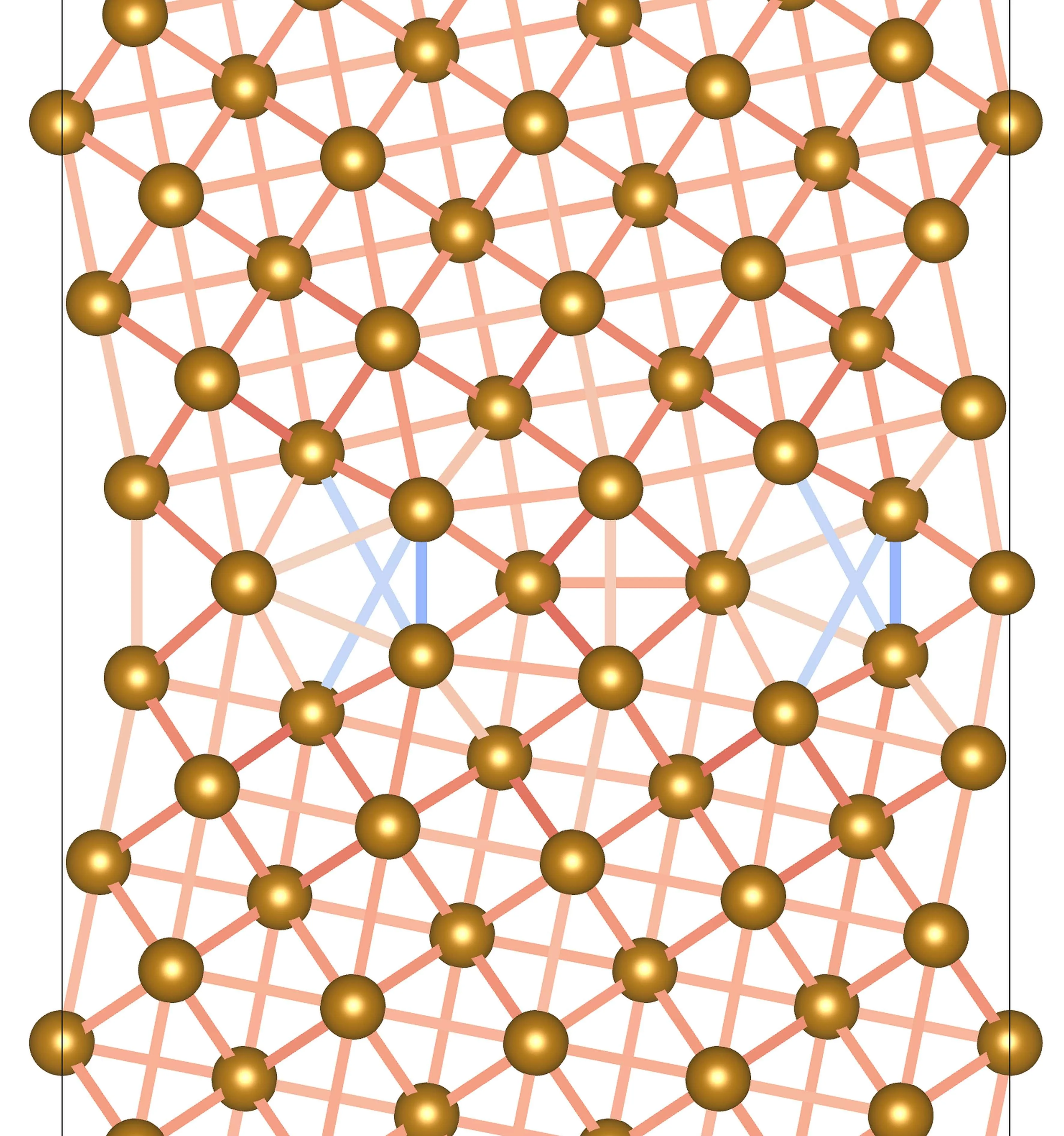
An iron crystal is like a mosaic of tightly packed grains. Where one grain meets another, a boundary forms — a narrow seam with disrupted order. It is in these seams that surprises for magnetism hide.
Scientists calculated how iron atoms interact with each other at three types of such boundaries. It turned out that at the seam itself, magnetic couplings can flip: instead of aligning in one direction, the spins of neighboring atoms start pointing opposite ways. This is like a crowd where people usually walk in one direction, but in a narrow passage someone turns around and disrupts the flow.
When phosphorus atoms get into such a seam, they alter the magnetic picture even more. Phosphorus acts like a pebble in a gear: it suppresses the flipped couplings and redistributes interactions around itself.
But how significant is this for the whole piece of iron? The researchers ran computer simulations and saw that even with a noticeable number of boundaries, the Curie temperature, the point where iron loses its magnetization, drops only slightly. The bulk of the metal remains untouched, and it is this bulk that dictates the overall magnetic character.
So the seams in the iron mosaic do affect magnetism, but only locally. To noticeably weaken a magnet, you would have to artificially create boundaries almost everywhere — something that doesn't happen in real materials.
The Curie temperature for pure iron is about 770 °C. That's hotter than any kitchen oven.