Quantum Judge: A Verdict Without Evidence express
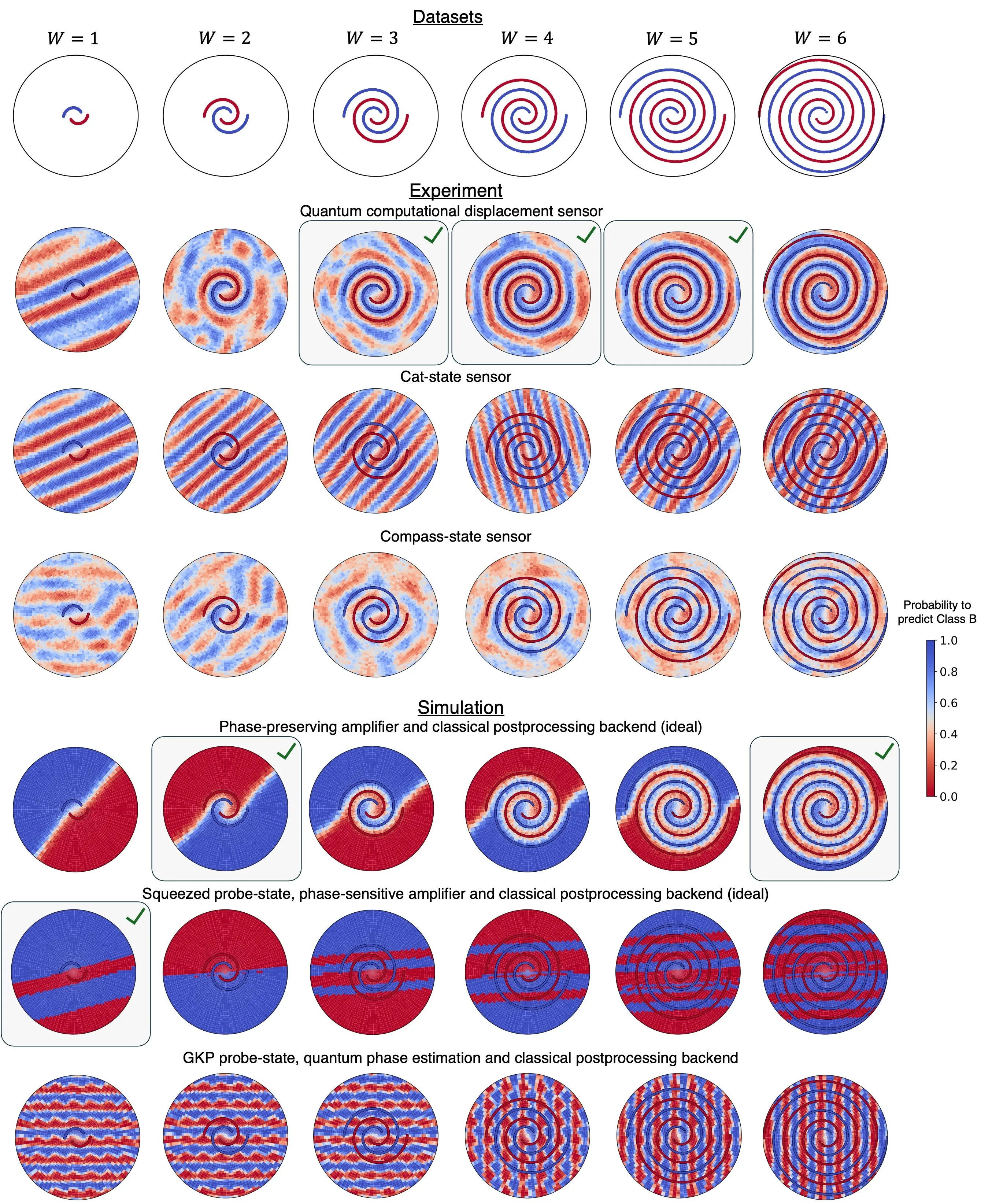
A judge walks into the courtroom but doesn't look at the evidence: he immediately delivers the verdict. That's how the new quantum sensor works: it doesn't measure the signal but directly decides which class it belongs to.
In conventional quantum sensing, it's all like a detective story: first you gather clues (measure the signal), then you analyze them. But the scientists proposed a different path — combining quantum measurement and quantum computation in a single circuit. The circuit, consisting of a superconducting qubit (quantum bit) and an oscillator (resonator), is tuned so that after a single measurement of the qubit, it immediately outputs an answer: "yes" or "no."
The experiment showed: the more layers in the circuit, the more accurate the classification. On certain tasks, the quantum approach outperformed the classical alternative by 15 percentage points. It's as if a judge, skipping the study of evidence, could guess the culprit more accurately than an investigator after a lengthy analysis.
The quantum judge still works on simple tasks with noisy equipment, but it's already clear: sometimes you don't need to know everything to make the right decision.
The circuit was trained on a computer (in silico) and then transferred to a real superconducting device, like a pilot practicing maneuvers on a simulator before the flight.
In the series "The Expanse," detective Miller uses intuition to find a missing girl without direct evidence — similar to how the quantum sensor delivers a verdict without fully measuring the signal.