Sulfur in Icy Pockets express
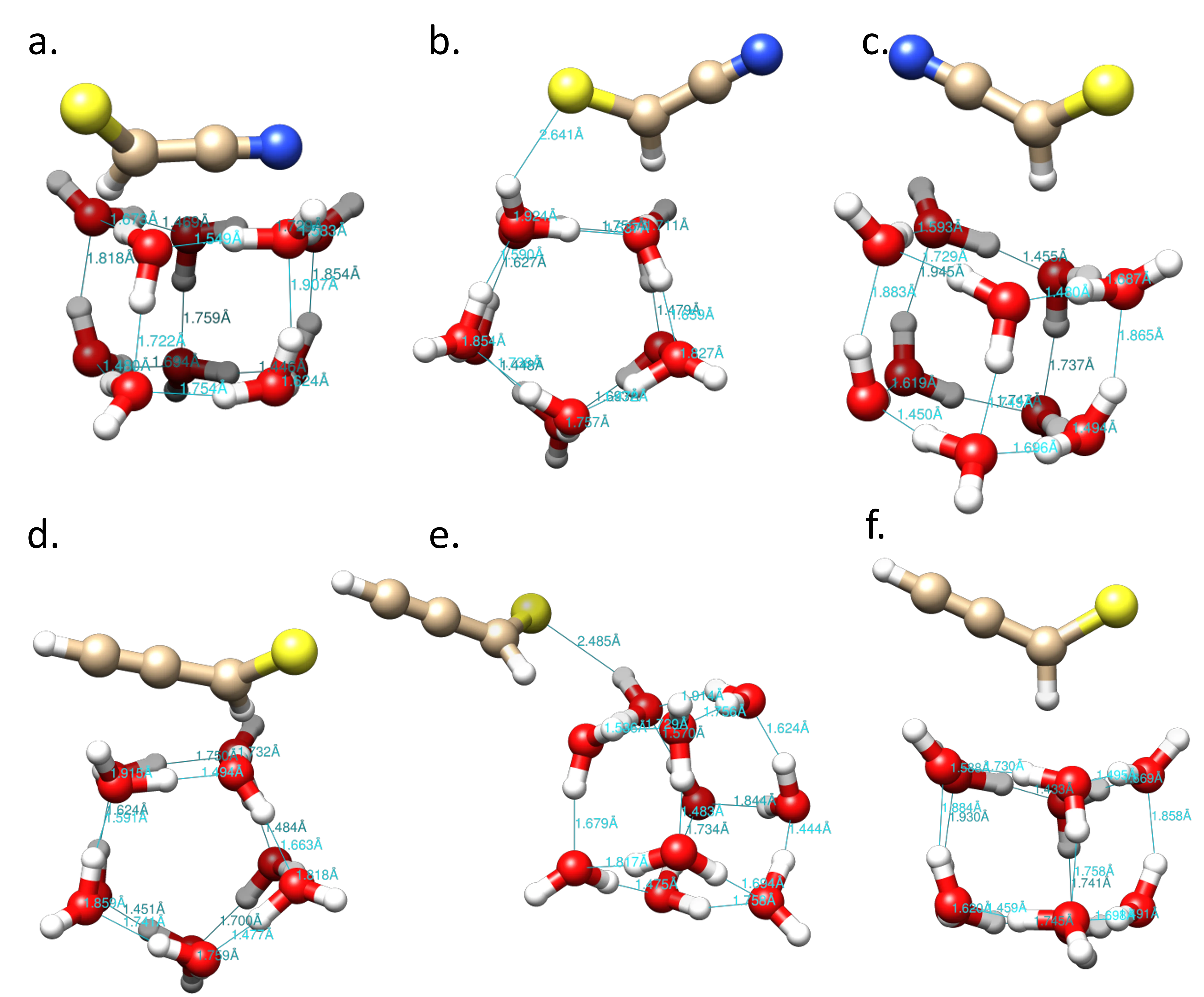
In a cold cloud of gas and dust that astronomers call TMC-1, two sulfur-bearing compounds were recently found: one smells like bitter almonds, the other like rotten eggs. But such a cloud contains less sulfur than it should. Where does it go? It seems to hide in tiny icy pockets on the surface of dust grains.
Space ice is not like a skating rink. It is fluffy, like snow, and full of crevices and hollows. A molecule that lands in a deep hollow sits there firmly, like a key in a lock. To pull it out, you would need to heat the ice to a temperature at which lead melts. But here's the catch: it is precisely in such shelters that the molecule is most vulnerable to ultraviolet starlight.
This creates a paradox: a deep pit protects the molecule from evaporation but makes it a target for light. So sulfur does not gradually escape from the ice into the gas, as expected; instead, it is partially destroyed right in its hiding place. That explains why there is so little of it in the gas.
The same mechanism may work for other substances important for the origin of life. Icy pockets are not just storage: they are places where chemistry takes its own path.
Original abstract
as written by the authors arXiv:2604.17536
The recent detections of thioformyl cyanide (HCSCN) and propynethial (HCSCCH) in TMC-1 provide critical insights into the interstellar sulfur inventory, yet their sequestration and survivability on dust grain mantles remain poorly constrained. Here, we present a computational study of the site-specific adsorption of HCSCN and HCSCCH on amorphous solid water (ASW), modelled via water clusters (H2O)n, n = 6-16, at the wB97X-D/def2-TZVP level of theory, corroborated by QTAIM topological analyses and TD-DFT vertical excitations. Our results reveal a highly heterogeneous binding environment, with desorption energies spanning 1500 to 4900 K. Strongly bound cavity sites induce significant Stark shifts in the C=S stretching modes. Crucially, while the ice matrix exerts a negligible solvatochromic shift on UV transition wavelengths, deeply bound CN-cavity configurations exhibit a pronounced hyperchromic enhancement of the oscillator strength. Implementing these site-specific parameters into the UCLCHEM gas-grain code demonstrates that these species undergo a gradual thermal desorption profile rather than a singular sublimation event. Furthermore, the hyperchromic effect establishes a Survival Paradox: while deeply trapped populations are thermodynamically shielded against thermal desorption, they simultaneously possess enhanced UV absorption cross-sections, rendering them vulnerable to photodissociation by the interstellar radiation field prior to sublimation.
The temperature at which molecules evaporate from icy pockets reaches 4900 degrees — hotter than the surface of the Sun.