A Thin Film with Two Electron Streams express
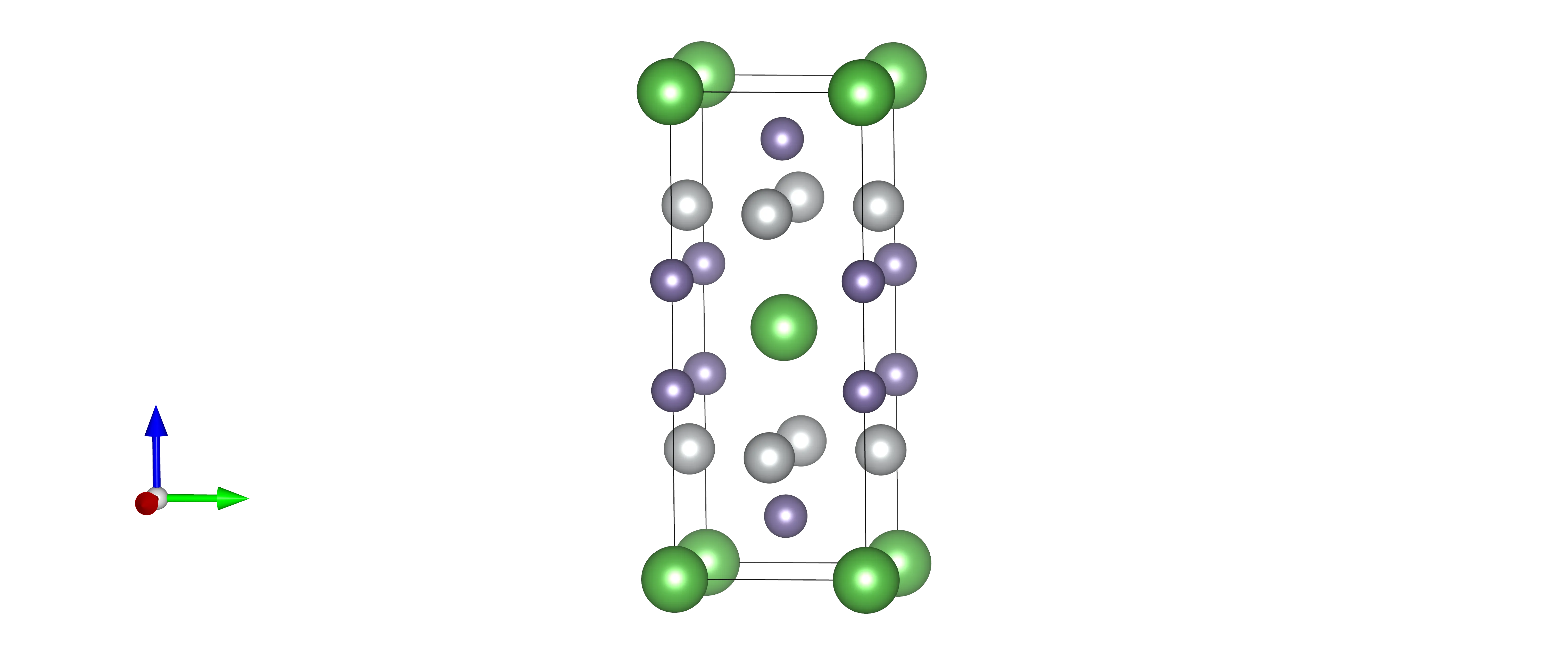
A crystal that looks like a stack of pancakes was placed on a smooth substrate of magnesium oxide. The result was a film only a few hundred atoms thick. When they ran a current through it and switched on a magnet, the resistance jumped by nearly a quarter—22.5% in a 9-tesla field.
Inside the film, electricity is carried by two streams of particles. One stream is fast and light, like motorcyclists on an open highway. The other is slow and heavy, like trucks stuck in traffic. The magnetic field bends their paths differently, so the resistance changes more than it would if there were only one stream.
When the magnet was tilted, the resistance didn't behave uniformly. Along one direction it changed more, along another less. But at certain angles, sharp dips and spikes appeared. These features repeated at all fields and temperatures, like fingerprints that don't depend on how hard you press.
This behavior resembles light playing on layered mica: the layers reflect differently, and the pattern depends on the tilt. In our case, the crystal layers set a direction along which electrons find it easier to run. And the two streams of particles create a complex resistance pattern that we managed to describe with a simple two-carrier model.
Original abstract
as written by the authors arXiv:2604.20709
ThCr$$_2$$Si$$_2$$-type intermetallics are layered conductors in which crystallographic anisotropy and multiband electronic states often give rise to characteristic magnetotransport phenomena. Here, we report the molecular-beam epitaxy growth of LaAg$$_2$$Ge$$_2$$ thin films on MgO(001) and their magnetotransport properties. The Hall effect and magnetoresistance are captured by an effective two-carrier description with a high-mobility electron band, yielding a positive magnetoresistance of 22.5% at 9 T. Angle-dependent magnetoresistance exhibits a dominant twofold anisotropy and additional reproducible dip/peak features at characteristic tilt angles that are nearly independent of field and temperature. These results extend our understanding of the anisotropic electronic transport in thin-film germanides within the ThCr$$_2$$Si$$_2$$ family.
A 9-tesla field is about 200,000 times stronger than Earth's magnetic field. Such fields are created by superconducting magnets in laboratories.
In the movie Interstellar, magnetic fields near a black hole are so strong they alter the properties of matter. Here, the field is billions of times weaker, but it already makes electrons run differently.