The Quantum Twist Mystery: A New Detector Overturns the Rules express
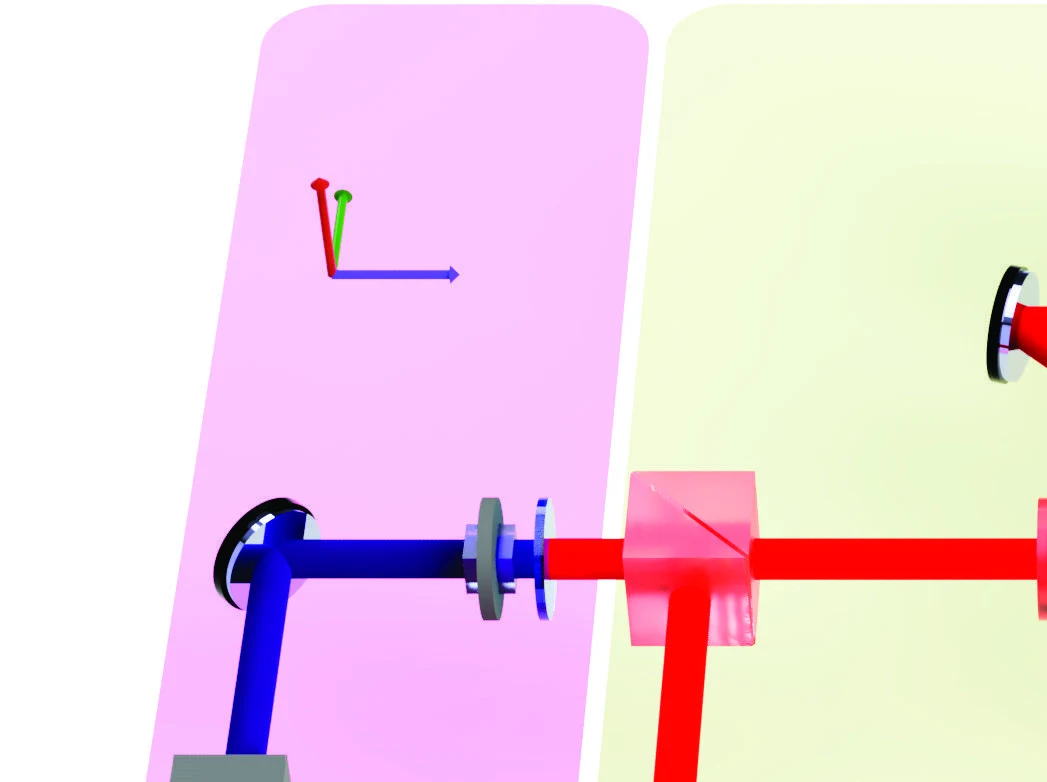
Light isn't just rays; it's waves that can twist like a pair of dancers. Physicists call the total twist the orbital angular momentum, and it was thought to obey a conservation law stemming from symmetries of nature discovered by Emmy Noether. But a new detector, using spectral analysis and brightness measurements, has shown that in special crystals, when photon pairs are born, this law is violated. The cause? A tiny shift of the light beams inside the crystal (a spatial walk-off). Like dance partners who drift apart on a slick floor, the photons lose their collective twirl. The most surprising part is that this even happens in type I crystals, long thought to be perfect. This discovery doesn't just rewrite fundamental physics; it also promises a breakthrough in quantum communications: twisted light can carry far more information than a straight beam.
Twisted light can transmit data hundreds of times faster than a regular laser beam, like a winding mountain road compared to a straight line.