The Cosmic Engine Overheated ✛ ✎ ✦
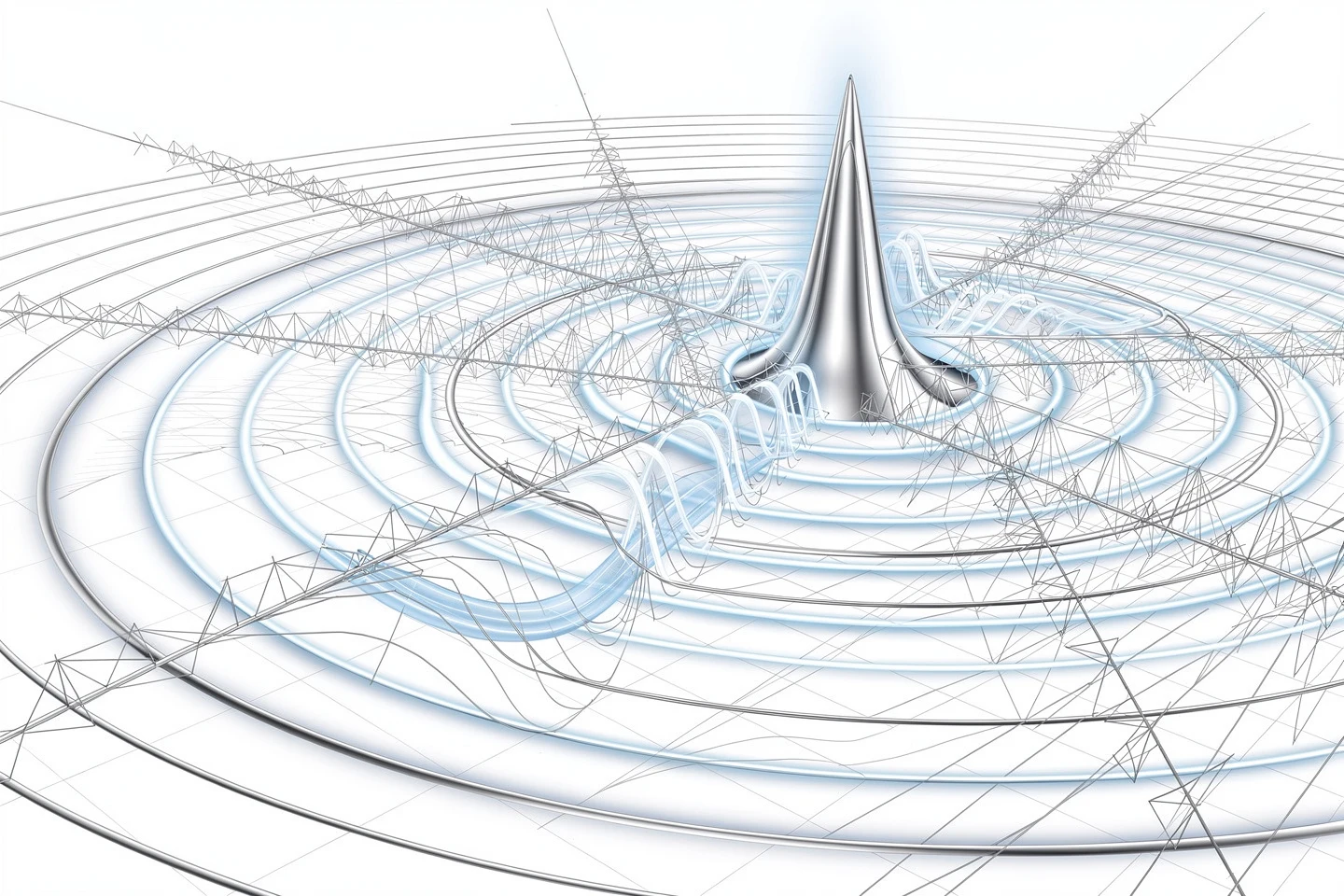
The Universe has gone through two acceleration phases: a fleeting inflation in its infancy (the brainchild of Alan Guth) and the current accelerated expansion driven by dark energy, discovered by Adam Riess through the light of supernovae. Perhaps a single field governs both, like an engine that either roars at full throttle or idles with a quiet hum.
Testing with a computer model incorporating data from the cosmic microwave background and galaxy redshifts revealed that the waves behave like surplus ghost particles, overheating the young cosmos and disrupting the assembly of the first atomic nuclei, which contradicts observations. Their wavelength is comparable to an atomic nucleus, and their energy could have boiled the Universe. The engine has overheated, the model fails. It's now clear: we need to reinvent the universal drive.
These gravitational waves are so short that their wavelength rivals an atomic nucleus, and their energy could have brought the primordial cosmic soup to a boil.
The idea of a chameleon field switching roles in the cosmic drama echoes Isaac Asimov’s novel *The Gods Themselves*, where contact between universes seals their fate.