How a neural network catches a chemical mark on a single molecule express
A chef tastes a sauce and knows: it needs a pinch of salt. But toss that same pinch into a lake, and no one will notice the difference. The same goes for proteins: adding a single hydroxyl group (oxygen plus hydrogen) changes how a molecule works, yet spotting that change among thousands of other atoms is nearly impossible.
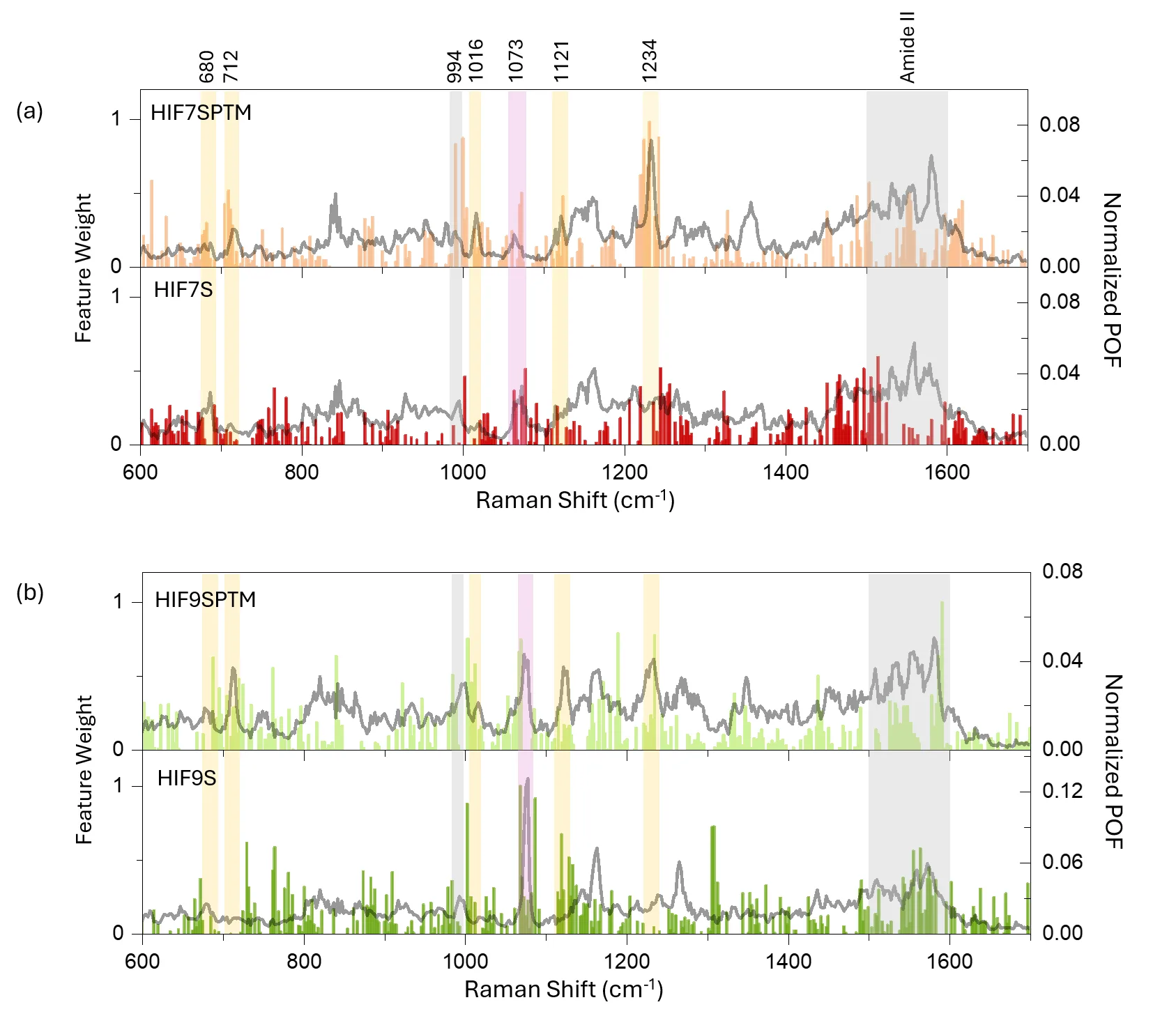
Scientists built a trap for individual molecules — a pore about the size of a virus, into which an electric field pulls peptide fragments. At that moment, a laser hits them, and the scattered light shimmers differently depending on whether the peptide carries that chemical mark (hydroxylation). The difference is subtle, like two shades of gray on a cloudy day. But a neural network comes to the rescue: it scans thousands of such light patterns and learns the recurring features. After training, the program distinguishes a modified fragment from an ordinary one with up to 90% accuracy.
This approach is like reading Braille: fingers glide over barely raised dots, but the brain assembles them into letters. Here, the laser plays the fingers, a convolutional neural network plays the brain, and fleeting spectral changes play the raised dots. The technology promises to recognize ultra-weak chemical signals in single molecules, which is crucial for early disease detection where such signals are the only clue.
Hydroxylation is the very mark that helps cells sense oxygen shortage. When oxygen is low, the HIF protein stops being degraded and triggers the growth of new blood vessels. Tumors often exploit this trick.
In Philip K. Dick's 'Minority Report,' criminals were caught by snippets of thought. Here, snippets of proteins reveal chemical marks — a step toward diagnostics where a molecule tells you about a disease before symptoms appear.