Peptides are short chains of amino acids linked by peptide bonds, typically ranging from two to about fifty amino acids in length. They occupy a middle ground between individual amino acids and full proteins, yet they are not merely smaller versions of proteins — they have their own distinct biological roles. Many hormones, such as insulin and oxytocin, are peptides, as are numerous signaling molecules that coordinate cellular activity, immune responses, and even appetite regulation. Because they are small and often highly specific, peptides can act quickly and be broken down easily, making them ideal for transient regulatory tasks in the body.
History
The term 'peptide' was coined in the early 20th century, and the first peptide hormone, insulin, was sequenced by Frederick Sanger in the 1950s, which earned him the Nobel Prize in Chemistry.
How it works
A peptide forms when the carboxyl group of one amino acid reacts with the amino group of another, releasing a water molecule and creating a peptide bond. The sequence of amino acids determines the peptide's shape and function; even a small change in sequence can drastically alter its activity. Once synthesized, a peptide can bind to specific receptors on cell surfaces, triggering a cascade of intracellular events that change cell behavior. Their short length means they often adopt simple structures, such as loops or helices, which are well-suited for binding to receptor pockets.
In practice
Peptides are used in medicine as hormones, antibiotics, and vaccines, and in research as tools to study protein interactions and cell signaling.
Fun fact
Some peptides, like the antimicrobial peptides found in frog skin, can kill bacteria by poking holes in their membranes, and they are being studied as alternatives to conventional antibiotics.
A protein in a cell doesn't hang motionless like a mannequin in a store window. Its atoms are constantly jiggling, stretching, and bending, like a plucked guitar string that keeps vibrating after you strum it. To understand how a protein works, you need to know how tightly each part holds onto its neighbors.
In the black depths of space, on the surfaces of tiny icy dust grains, a quiet construction is underway. There, where temperatures drop to near absolute zero and harsh radiation abounds, the ordinary amino acid glycine, the simplest protein building block, links up with itself.
In embryonic development, a cell resembles a musician in a vast orchestra: it must play its part, following a conductor — the gradient of signaling molecules. But the conductor is unreliable: morphogen concentrations constantly fluctuate. How then does a cellist not veer into a violin melody?
An engineer tunes an antenna: pull one segment, the frequency drifts; change the angle, the gain drops. Developing therapeutic peptides (short protein chains) works much the same way.
For a long time, we only saw proteins in their final form — like photographs of dancers frozen in a beautiful pose. Programs like AlphaFold learned to predict that pose from a chain of carbon links. But the real magic is how a protein finds this shape faster than you can blink, performing a swift dance.
Long protein threads, their tangled entanglements, and random contacts: this is how the birth of cellular droplets was usually explained. These membrane-less organelles, where important reactions take place, resemble oil drops in water: they arise on their own when molecules separate into phases.
Speech is like an orchestra where every note must sound at just the right moment. The brain turns a thought into a chain of sounds in a fraction of a second, and until now it was unclear how it manages this hierarchy — from individual sounds to syllables to whole words.
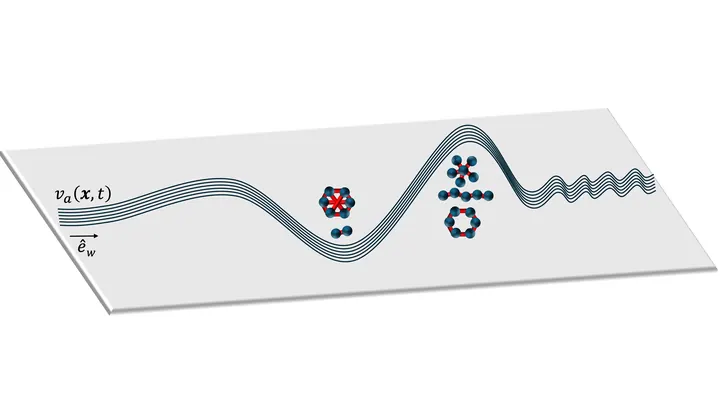
Polymers are long threads of carbon and hydrogen atoms. In living cells, they encounter streams of chemical signals that pulse like the surf. Long chains and closed rings behave like skilled surfers: they catch the wave and glide with it. Short fragments and tight coils, counterintuitively, move strictly against it.
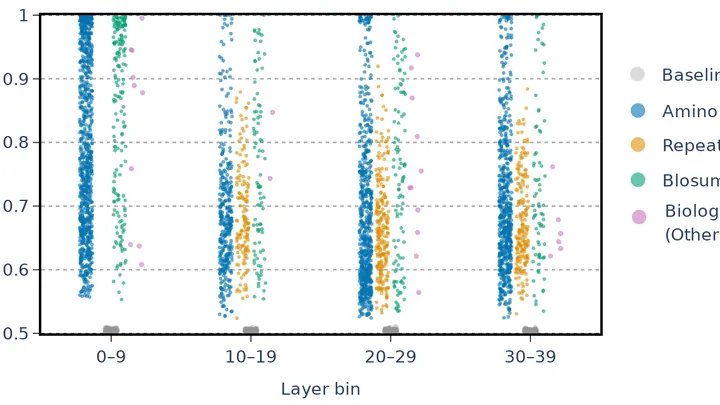
Proteins are chains of amino acids, and they often contain repeated chunks. Sometimes the repeats are exact, like the same phrase said twice. Sometimes they come with typos: a couple of letters swapped, but the meaning is the same. These repeats matter: they help the protein fold into the right shape and do its job.
A drop of ink in a glass of water spreads out on its own. But if the ink were made of tiny motors, they wouldn't just spread: they'd crawl, jostle, and cluster into swarms. Such self-propelled particles are called active. You can assemble them into molecules like beads on a bracelet. And here's the surprise: the order of beads on the bracelet changes everything.
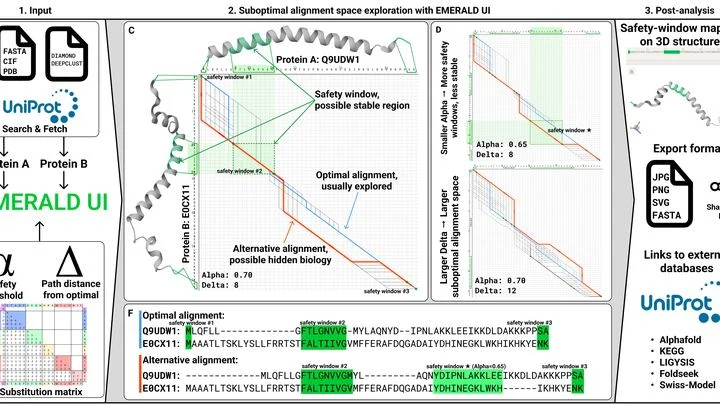
Proteins are the molecular machines of life. They fold into complex three-dimensional shapes, like a sheet of paper into origami. But if you fold the paper a bit differently, you get a different figure. Likewise, a protein can take on several forms, and that determines how it works.
Usually, scientists compare proteins by their sequences — chains of amino acids.