Virtual Universes Reveal the Cosmos with Greater Precision express
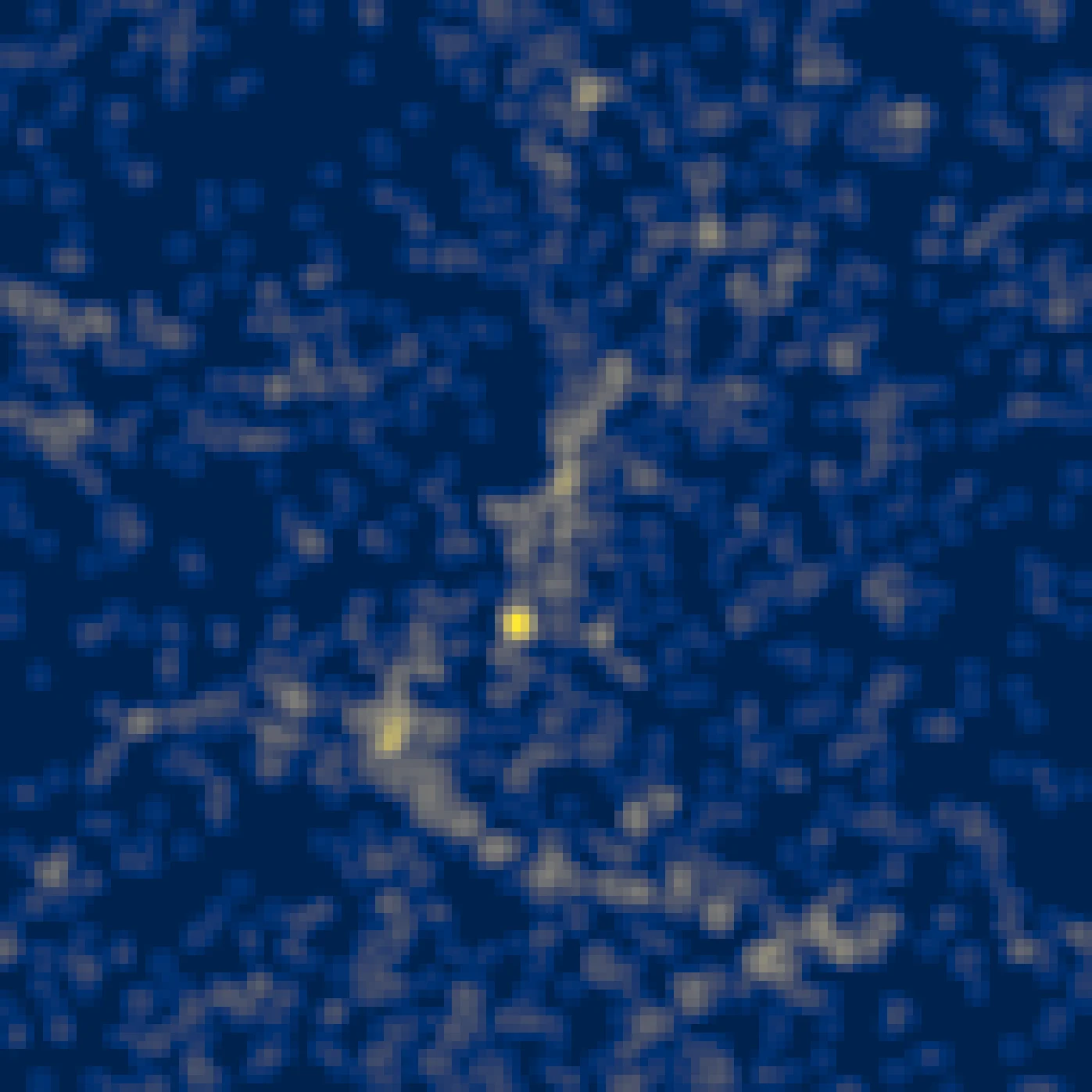
Astronomers build maps of galaxies and listen to the radio whisper of neutral hydrogen. The signal is so faint that even a working TV would drown it out, but sensitive antennas pick it up from the depths of the Universe. To understand how much dark matter it contains and how fast it's expanding, a process driven by the expansion of space, scientists have turned to computer simulations.
The method is like a chef who, by trying different combinations of ingredients, recreates an unknown recipe. Thousands of virtual universes are launched with varying amounts of dark matter and other parameters, until one produces a map indistinguishable from the real thing.
Applying the approach simultaneously to galaxy and hydrogen maps improved accuracy 2–7 times. 3D maps add another threefold gain. This will allow us to peer into the early Universe and see if dark matter holds any new surprises.
The signal from neutral hydrogen comes at a wavelength of 21 centimeters. It's so faint that a working TV could drown it out, but astronomers capture it with sensitive antennas.
In the iconic Matrix trilogy, reality turned out to be a computer simulation. In this work, scientists, on the contrary, use simulations to uncover the true nature of our world.