A pipeline is a sequence of data processing steps that transforms raw observations into final scientific products. In modern physics and astronomy, raw data from telescopes, detectors, or simulations is rarely usable directly; it must be calibrated, cleaned, filtered, and analyzed step by step. The concept is central to fields like radio astronomy, where signals from thousands of antennas are combined and processed, or in computational biology, where protein folding predictions require multiple stages of refinement.
History
The term 'pipeline' in computing dates back to the 1960s, but its application to scientific data processing became widespread with the rise of large-scale experiments in the 1980s and 1990s, such as those in particle physics and astronomy.
How it works
A pipeline typically starts with data acquisition, followed by preprocessing (e.g., removing noise or artifacts), then core analysis (e.g., fitting models or extracting features), and finally post-processing (e.g., visualization or statistical validation). Each step takes the output of the previous one, and the entire chain is often automated. In practice, pipelines are modular: individual steps can be swapped or tuned without redesigning the whole system, which is why they are used in everything from speech compression to neural networktraining.
In practice
Pipelines are used in radio telescope arrays like LOFAR or ALMA to convert raw voltage data into sky images, and in genomics to turn sequencing reads into annotated genomes.
Fun fact
In the LOFAR radio telescope, a pipeline processes data from 32 antennas in real time, effectively creating a virtual telescope with a resolution comparable to a single dish kilometers wide.
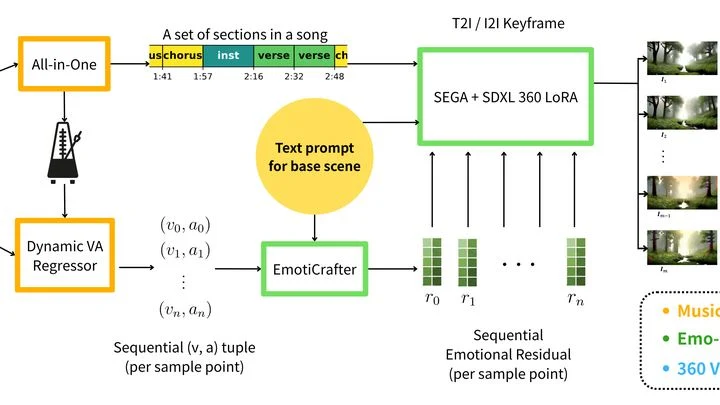
A conductor holds not a baton but a brush, and each stroke gives birth to color and form. New technology works the same way: it transforms a song's mood into a panoramic video that surrounds the listener.
First, the algorithm decomposes the track into emotions, similar to how light is analyzed by spectrum.
In boiling soup, molecules collide chaotically and react. But if you measure how their concentrations change, patterns emerge. This is how carbon chemical networks work — mixtures of molecules that spontaneously 'cook' information, turning each reaction into an elementary computation. Previously they were used only for modeling nature.
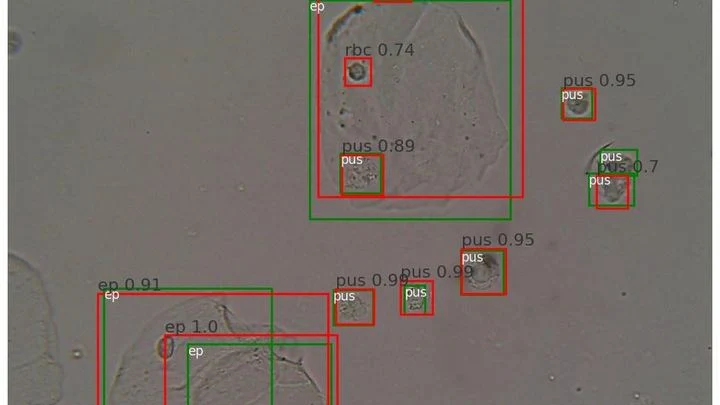
A drop of urine under a microscope isn't a flat puddle but a multi-layered volume. Like a stack of transparent pages: if you focus on one, the neighboring ones blur. The microscope's light only shows one depth layer sharply. To see all the cells, a lab technician had to take a series of snapshots, manually adjusting focus — tedious and slow.
Hybrid perovskites are the rising stars of photovoltaics: their efficiency is growing so fast it feels like we're on the brink of a solar revolution. But these materials, like intricate atomic mosaics, are extremely vulnerable — moisture, heat, and light quickly turn them to dust.
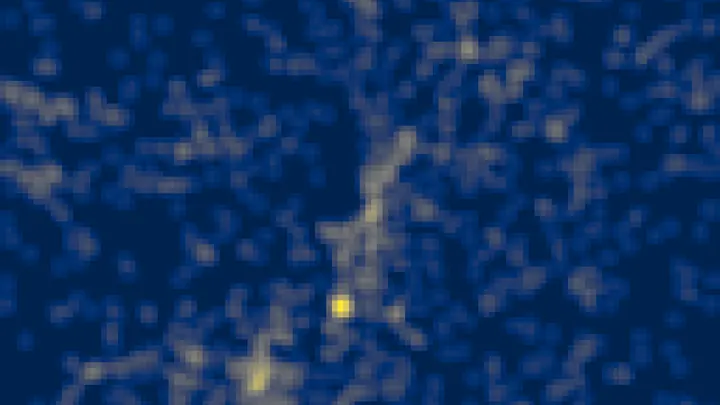
Astronomers build maps of galaxies and listen to the radio whisper of neutral hydrogen. The signal is so faint that even a working TV would drown it out, but sensitive antennas pick it up from the depths of the Universe.
A library of 27,000 books, and every one of them is about concrete. Each contains a mix recipe, temperature, and strength. But the information is scattered across paragraphs, tables, and footnotes. For a human, gathering it all together would take years. The program did it in an hour.
An orchestra where musicians play in different cities, and the conductor hears them with a fraction-of-a-second delay. That's roughly how radio telescope networks like the Very Long Baseline Array work — a dozen antennas from Hawaii to the Virgin Islands catch the whispers of distant galaxies.
To tell one protein from another, you need to describe its shape and composition. There are dozens of such descriptions: molecular length, charge, solubility. But not all are equally useful. A method called Differentiable Information Imbalance (DII) can pick out the most informative features while discarding the rest.
At India's Gauribidanur Radio Observatory, 32 antennas that look like giant TV dishes are listening to the sky. They catch radio waves from pulsars — dead stars that spin at breakneck speed and blink like lighthouses. Previously, signals from these antennas were processed slowly and awkwardly.
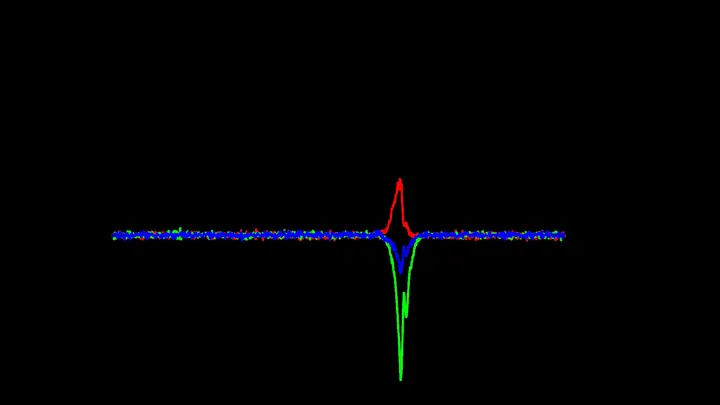
The night sky is dotted with stars, and many of them have planets. But how do you spot a tiny dark disk against the glare of a distant sun? The Kepler telescope spent nine years watching hundreds of thousands of stars, waiting for a planet to pass in front of its star and briefly dim it. That 'wink' is the only way to find worlds like ours.