How to Grow a Perfect Negative Capacitor Without Cracks express
A rubber band that gets thicker the harder you pull it. In electricity, this behavior is called negative capacitance: the more charge accumulates on the plates, the lower the voltage. A regular capacitor works the opposite way — voltage rises with charge. Negative capacitance promises huge energy savings in microchips, but it's hard to achieve in a pure form.
The problem is that in layered films of a ferroelectric and a dielectric (two different insulators), domains spontaneously form — microscopic regions where electric polarization points in different directions. It's as if our rubber band became covered with a network of tiny cracks: the overall behavior degrades, and negative capacitance disappears. Scientists have long sought ways to suppress these domains, but so far all experiments have shown them to be inevitable.
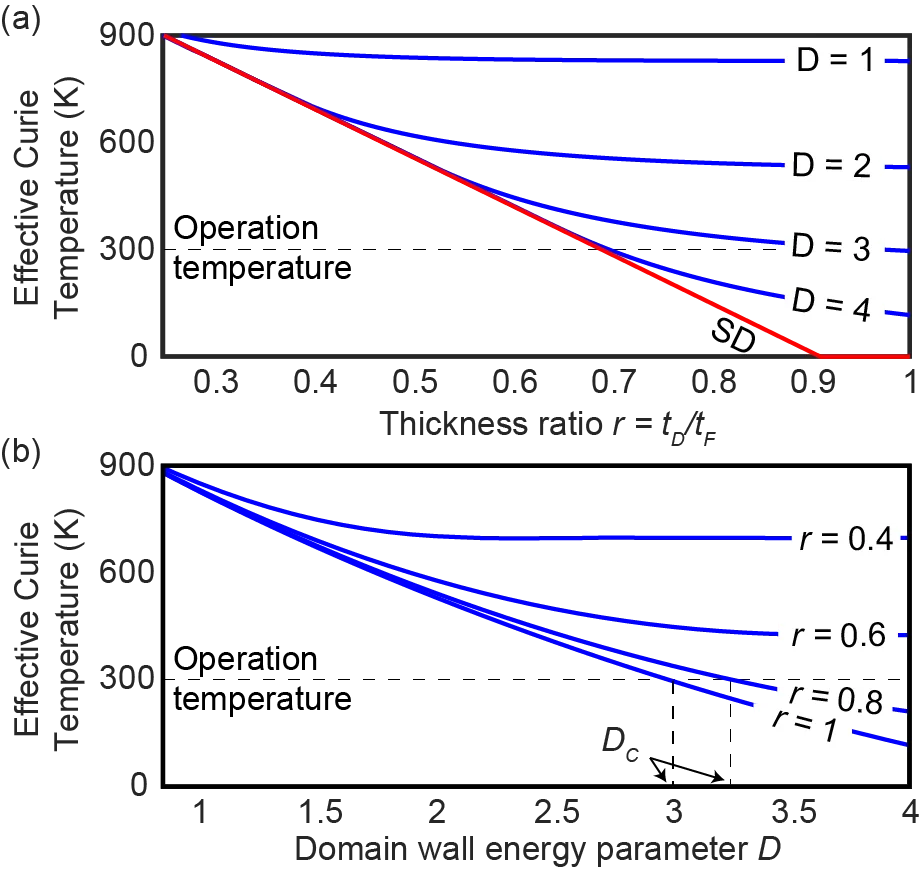
The authors of the new study asked: under what conditions do domains not form at all? They analyzed the system's energy and found a critical value for the parameter governing domain wall energy. If the wall energy exceeds this threshold, the system finds it unfavorable to break into domains and remains in a uniform state with ideal negative capacitance. In simpler terms, you need to make the "cracks" so energy-hungry that the material prefers to stay intact.
The main practical takeaway: to achieve stable negative capacitance, you need to learn to control domain wall energy — through material composition, temperature, or external fields. Then, instead of a "cracked" film, we can grow a perfectly elastic electrical spring. Such structures could become the basis for transistors that switch with negligible energy expenditure and for ultra-dense memory.
Negative capacitance doesn't violate the laws of physics: it's only possible in transient regimes or as part of a larger circuit where the overall capacitance remains positive.