How to See Capillaries in a Living Brain express
Photographing a delicate spiderweb trembling in the wind: that's roughly what it takes to look into the blood vessels of a living brain. Ultrasound localization microscopy (ULM) turns ordinary ultrasound into a tool capable of seeing individual capillaries, but only if you get the settings just right.
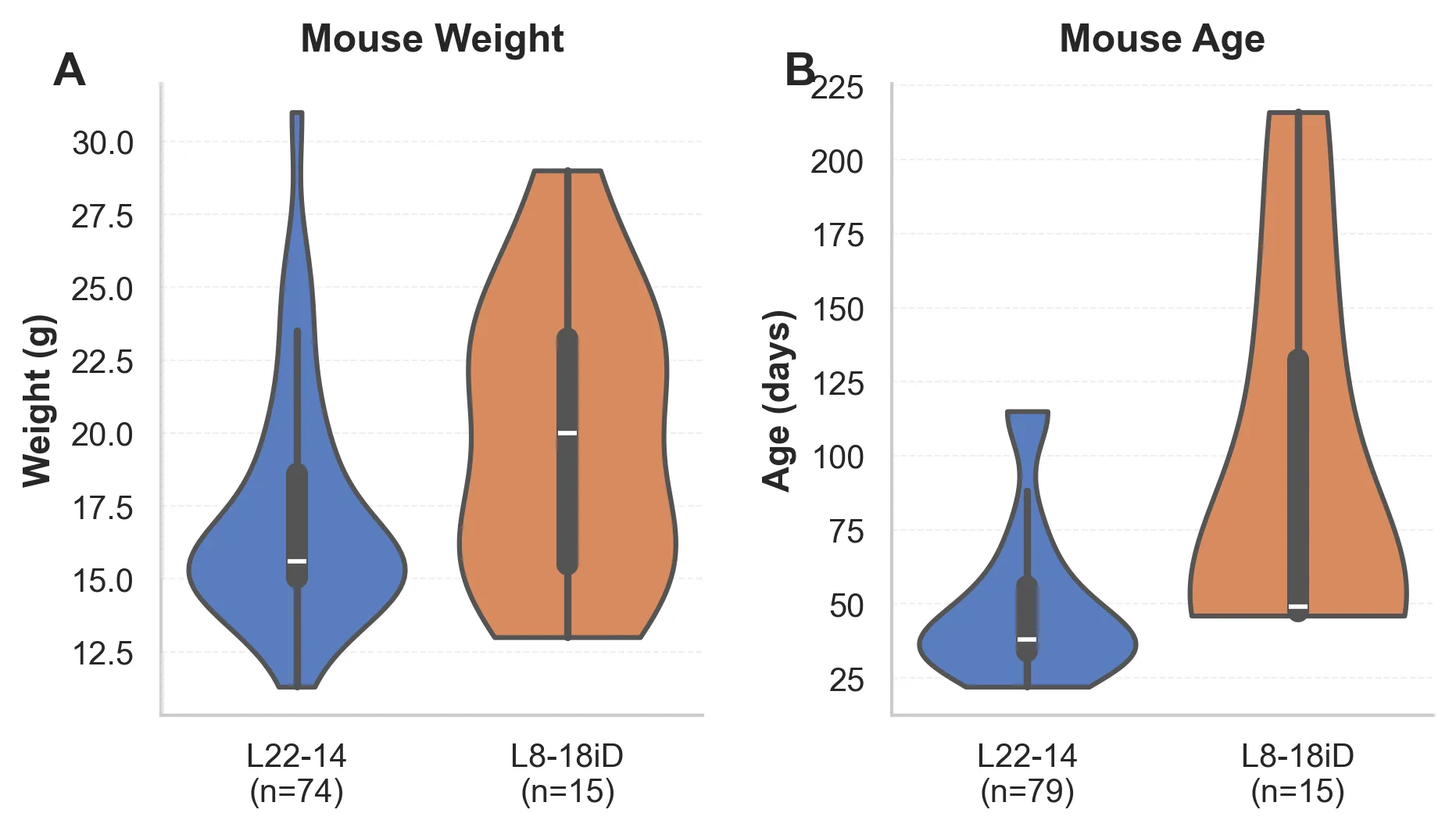
A new dataset called ULMShare is a shared sandbox for engineers and scientists. Inside are 99 recordings of microvessels in mouse brains, obtained through the skull bones. There were 61 mice of different ages and weights, using two types of transducers, different scanning planes, and even different anesthesia methods. All together, it takes up 30 terabytes — roughly 6,000 high-quality movies.
Usually, each lab records in its own way, making comparisons nearly impossible. ULMShare provides a common benchmark: you can take the same recordings and see whose algorithm reconstructs the image better. The authors have already calculated how completely vessels are filled in the images and assessed sharpness using ring correlation (a way to check how well two images of the same spot match in fine details).
Original abstract
as written by the authors arXiv:2606.07851
Ultrasound Localization Microscopy (ULM) enables microscopic imaging of the cerebral microvasculature in vivo, but relies on a multi-stage processing pipeline in which acquisition settings and reconstruction processes strongly influence the final output. Existing public datasets remain sparse, restricting rigorous evaluation and slowing progress in algorithm development, including emerging machine-learning approaches, which by design require large quantities of data to be robust and reliable. We introduce \textbf{ULMShare}, an open-access dataset of 99 whole-brain transcranial ULM acquisitions from 61 healthy mice (36 females, 22 males, 3 unknown; mean age: $$8.2 \pm 5.5$$ weeks; mean weight: $$17.7 \pm 4.2$$ g), for a total of 30TB of raw data. The dataset spans three experimental procedures, multiple injection and anesthesia protocols, two ultrasound probes, and different imaging planes and orientations. Each acquisition includes raw ultrasonic data, detailed metadata, an illustrative reconstruction and the corresponding microbubble trajectories. Alongside the data, we report vascular saturation, Fourier Ring Correlation, and track-length statistics, plus expert visual gradings. ULMShare provides a broad, standardized and publicly available resource for method development, validation, and benchmarking. The full dataset is available on the Federated Research Data Repository and additional resources are hosted on the ULMShare Github repository.
The mice in the experiment weighed on average 17.7 grams — about the same as four teaspoons of sugar.
In the science fiction story "Flowers for Algernon," a mouse's brain becomes the key to unlocking the mysteries of intelligence — here, the mouse brain helps refine a technology that might one day reveal hidden vascular catastrophes in humans.