How Many Mice Does It Take to Understand the Microbiome? express
When you're planning a renovation, you don't buy paint by eye: you measure the wall area. In science, deciding how many samples to collect is a similar guess, but the stakes are higher. Skimp on samples, and your study becomes a lottery: you might miss a real effect, or you might mistake noise for a discovery. Overshoot, and you're wasting tubes, months, and, in animal experiments, lives.
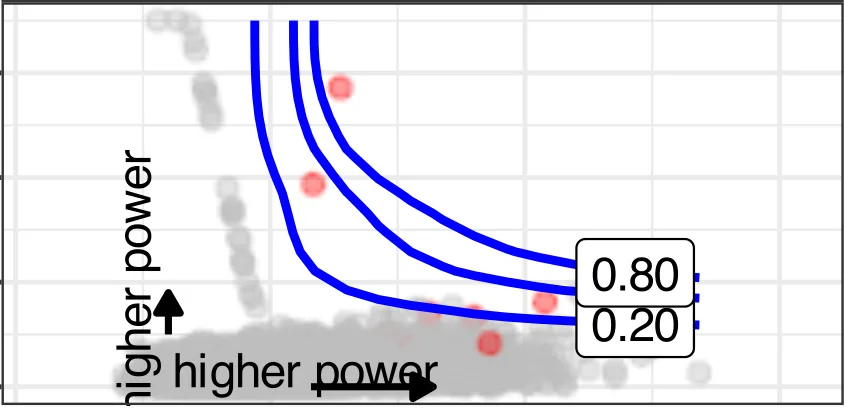
In microbiome research, this problem is especially tricky. Bacterial communities in the gut or on the skin are like a bustling city: some residents are crowds, others are a handful. If you're looking for changes in abundance after a diet or disease, a weak signal easily gets lost in the din. The authors suggest not guessing but calculating: their program, power.nb, acts like a paint calculator for renovation. It takes three numbers (how strong the shift is, how many bacteria of that type are present, and what reliability you want) and gives you the required number of samples.
The conclusion is simple: the microbial city demands a broad census. Without it, we risk studying a mirage for years.
One gram of gut contents contains more bacteria than stars in our galaxy — about one hundred billion.