Striped Ocean: How Rotation Reshapes Heat on Icy Moons express
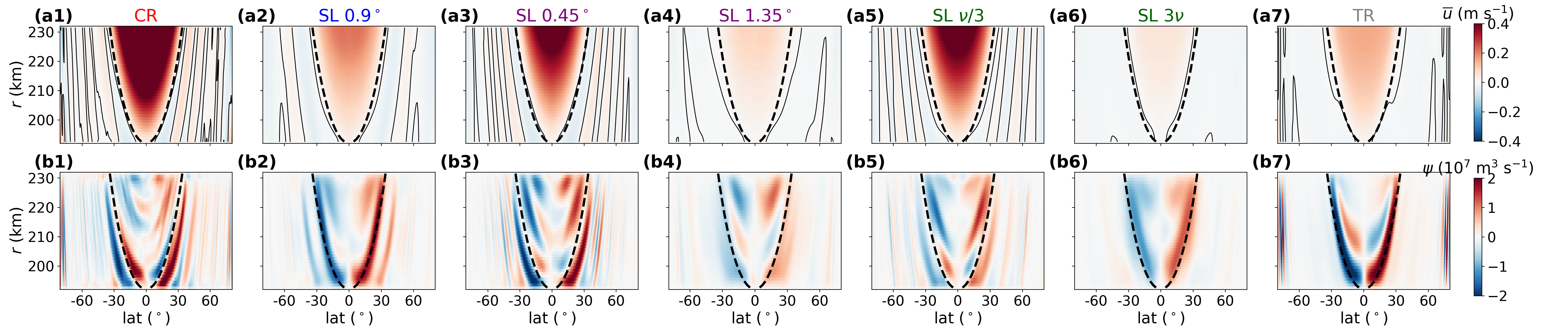
In the deep oceans of icy moons, water is not still. Warm plumes rise from the rocky seafloor, but the planet's rotation twists them into long, slanted rolls stretched along the rotation axis. Previously, this process could not be included in global models: it was too complex. The authors devised a simplified recipe (a parameterization scheme) that captures the key effect: this oblique heat transport from the equator to the poles.
The new scheme was tested against detailed calculations in a spherical shell. It turned out that inside an imaginary cylinder touching the seafloor at the poles, the model accurately reproduces heat transport. Collective behavior of these flows alters the heat flux to the surface as strongly as the bottom heating itself. The model does not yet reproduce the exact temperature at the boundaries, but it captures the overall depth contrast. Now global simulations of oceans on icy moons are more honest, and this approach will work for any rapidly rotating ocean with a tiny Rossby number (a measure of rotation's influence).
The Rossby number is the ratio of inertial forces to the Coriolis force. In the oceans of icy moons, it is so small that rotation completely determines the shape of currents.
In Arthur C. Clarke's '2010: Odyssey Two', Europa's ocean hides life — perhaps such slanted currents distribute nutrients.