Quantum Drones Scan Ruins with Magnetic Vision express
When a building collapses, steel rebar turns into a chaotic magnetic compass. Entropy, a measure of disorder, increases, but it's this very disorder that points to voids where people might be. Drones with quantum magnetometers, devices operating on principles discovered by Schrödinger, detect fields a trillion times weaker than Earth's. To put that in perspective: it’s like hearing a heartbeat through concrete.
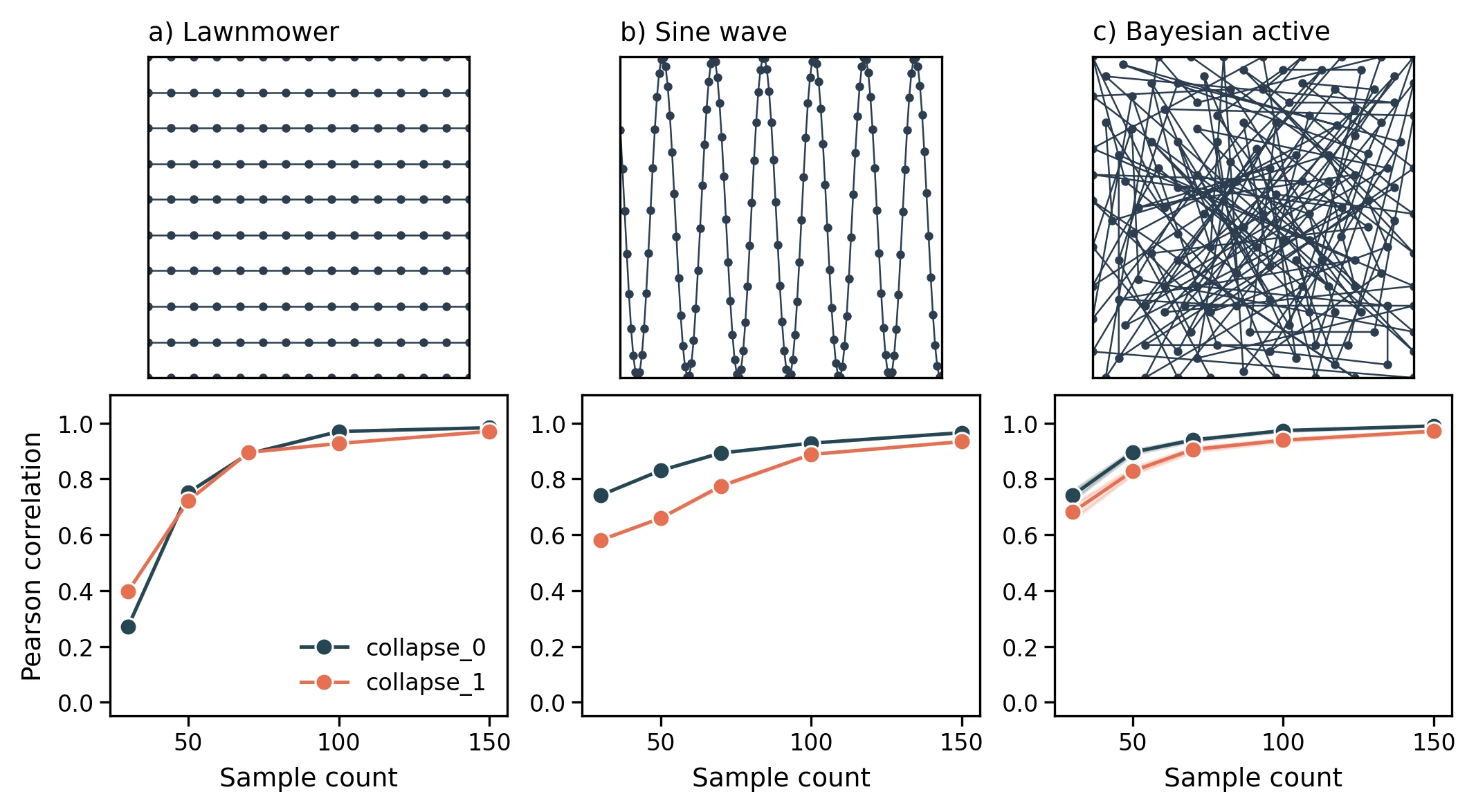
The algorithm, like a skilled cartographer, selectively takes readings at key points. A few hundred measurements suffice to build a 3D map: it shows cavities with water and air. Rebar with carbon additives is strongly magnetized, creating a magnetic relief. This method resembles spectroscopy — an astronomical technique where light is split into colors, only here the magnetic landscape replaces the spectrum. The result is an ultra-precise magnetic map, a safe x-ray for rescue operations.
Original abstract
as written by the authors arXiv:2606.25957
Locating survivors of building collapses within the first 72 hours is a critical challenge in disaster response, and existing sensing modalities provide only partial information about the structure beneath the rubble. This paper proposes drone-based quantum magnetometry as a complementary modality and develops a simulation pipeline spanning rubble physics, sensor-array deployment, and active spatial reconstruction. We use Unreal Engine to generate a steel-reinforced concrete parking-garage collapse and compute the induced magnetic field via a per-triangle dipole approximation, establishing that meaningful magnetic structure is recoverable in the sub-pT to sub-nT range from roughly 1 m above the roofline. Then, we feed sparse multi-sensor samples into a Gaussian Process Regression back-end driven by Bayesian active sampling and validate the pipeline across multiple independent collapse realizations; a three-sensor array optimizes the trade-off between gradient resolution and UAV payload constraints, and active sampling reaches peak structural correlation in roughly $$100$$ samples. Together, these results indicate that quantum-grade sensing could become a useful tool for drone-based structural analysis and potentially void detection in collapsed buildings.
Ordinary magnetometers in smartphones sense fields hundreds of times stronger than Earth's magnetic field, while quantum sensors detect changes a billion times weaker — down to the level of the human heart's magnetic field.
The technology is akin to the tricorders from Star Trek — devices that scan through obstacles for signs of life.