Digital Vision for a Fusion Reactor express
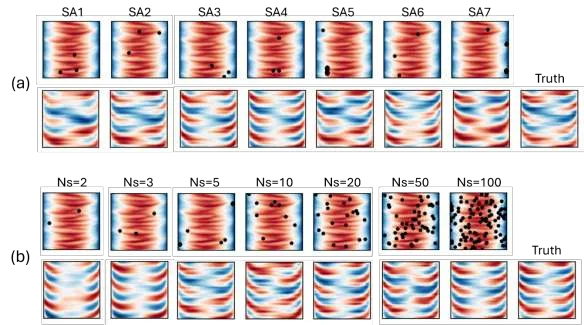
Inside a fusion reactor, plasma rages — a gas heated to millions of degrees. There are no direct windows, and cameras and sensors quickly fail. Engineers see only fragments of information: a few sensors at scattered points. It's like trying to grasp a symphony from the sound of three microphones in a vast hall.
The new machine learning model takes these sparse signals and reconstructs the full picture — all fields, temperatures, and densities at once. First, it compresses the measurement history over time. Think of a translator listening to speech and capturing the meaning, not individual words. Then, from this compressed representation, the model unfolds a detailed three-dimensional map of the plasma.
Tests on high-fidelity simulation data showed that signals from simple density sensors can recover several plasma characteristics at once. This isn't just filling in a picture — the model captures physical relationships between quantities. Such an approach could become the foundation for digital twins of the reactor. They provide real-time insights into what's happening inside and help keep the plasma stable.
Plasma in a fusion reactor is ten times hotter than the Sun's core, and its magnetic confinement is often compared to trying to squeeze jelly with your fingers.
The technology resembles the 'mental scanning' from Peter F. Hamilton's novels, where full consciousness is reconstructed from a few neural signals.