Simulated data are datasets generated by computer models rather than collected from direct physical measurements. They are designed to mimic the statistical properties and underlying physics of real observations, allowing researchers to test analysis methods, validate instruments, and explore scenarios that are difficult or impossible to reproduce experimentally. In physics, simulated data are essential for calibrating detectors, benchmarking algorithms, and estimating systematic uncertainties before a real experiment is run.
History
The practice became widespread with the advent of digital computers in the mid-20th century, particularly in particle physics and astrophysics for Monte Carlo simulations. The term 'simulated data' gained prominence in the 1970s with large-scale experiments like those at CERN.
How it works
A model of the physical system is built from known equations and parameters, then random noise is added to mimic measurement imperfections. The output is a synthetic dataset that looks statistically similar to real data. By comparing results from simulated and real data, scientists can verify that their analysis pipeline is correct and quantify how well they can extract signals from noise.
In practice
Used extensively in high-energy physics, cosmology, and medical imaging to test reconstruction algorithms, calibrate telescopes, and train machine learningmodels before deployment on real data.
Fun fact
The Large Hadron Collider generates more simulated collision events than real ones, with petabytes of synthetic data produced to match every possible physics scenario.
A navigator with a paper chart plots the route before setting sail. If the ocean changes—the current shifts, the wind picks up—the chart stays the same. The ship follows an outdated path, and the crew has to correct the course by hand.
A false vacuum is not just a supercooled liquid, but a quantum hologram, ready to spring to life under the right projection. Its decay is described by the tunneling of a quantum field from a metastable minimum, and the classic calculation via Euclidean instantons is as elegant as a still life under spotlights.
Hybrid perovskites are the rising stars of photovoltaics: their efficiency is growing so fast it feels like we're on the brink of a solar revolution. But these materials, like intricate atomic mosaics, are extremely vulnerable — moisture, heat, and light quickly turn them to dust.
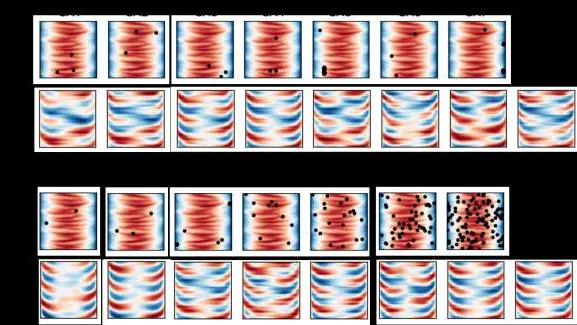
Inside a fusion reactor, plasma rages — a gas heated to millions of degrees. There are no direct windows, and cameras and sensors quickly fail. Engineers see only fragments of information: a few sensors at scattered points. It's like trying to grasp a symphony from the sound of three microphones in a vast hall.
The 120 residents of Montelago are not people but digital characters. Each, besides a name and biography, has three hidden coordinates: trust in municipal authorities, assessment of source credibility, perceived adequacy of information. These numbers are known to the creators but not to the system itself.
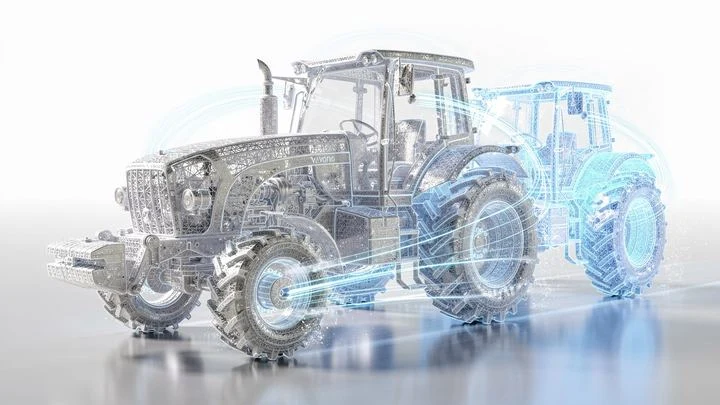
The tractor traces a perfect circle on the stubble. At that same moment, its digital shadow, an exact virtual copy, repeats the maneuver on a computer screen, diverging from the original by only a few percent.
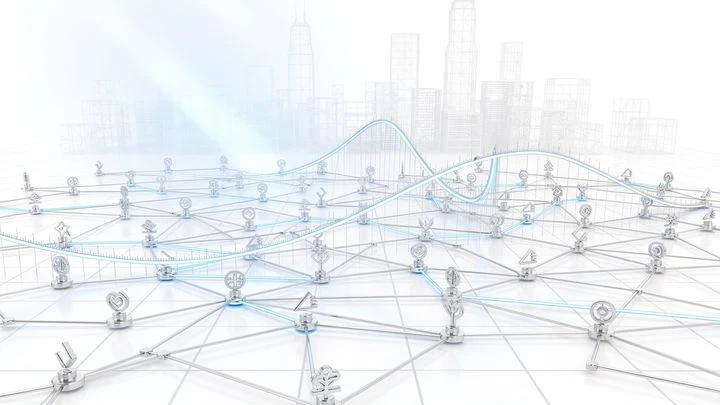
Statistical models are an attempt to stretch a perfect mathematical web over the uneven landscape of data. When a model resists, it emits tension, but we've grown accustomed to ignoring it. Researchers spend hours staring at residual plots, trying to guess where the model is 'coming apart at the seams.' Squealer translates this resistance into sound.
Ordinary neural networks learn from examples, like a person memorizing tunes by ear. But networks with physical laws embedded from the start resemble a musician who knows notes and harmony: they can play a new piece from just a few chords. Instead of mindless memorization, they use equations like energy conservation or motion.
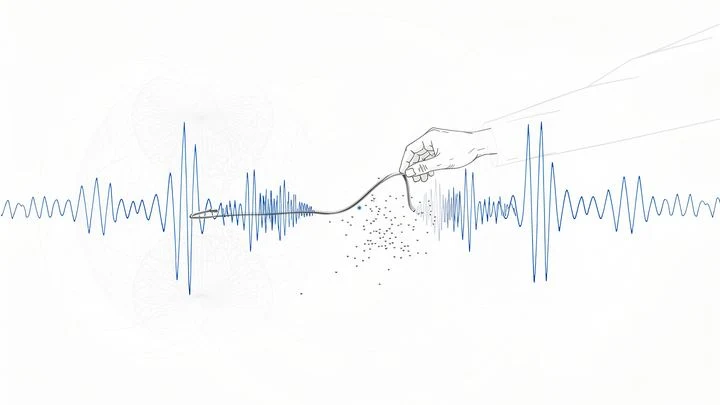
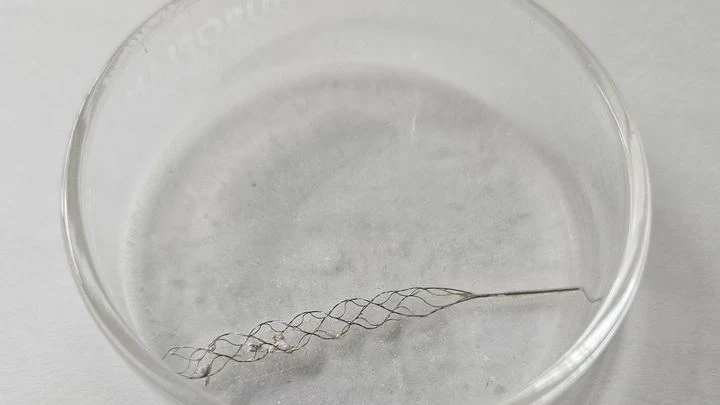
A plumber clears a clog in a narrow, winding pipe — by feel, without seeing inside. That's roughly how a surgeon feels during mechanical thrombectomy, the operation to remove a blood clot from a brain vessel. Time is short, and every move can either save a life or damage the vessel wall.
Your arm lifts a cup from the shelf — a familiar motion you don't notice until muscles tire. Then the trajectory changes: the elbow shifts slightly, the hand trembles. A doctor usually catches these changes by hand, feeling the patient's muscles.
Inside an exploding star, neutrinos race so densely that they start to influence each other. Their quantum states become entangled, like threads in a tight ball where you can no longer tell which is which. Ordinary computers struggle with this task, as the number of possible states grows avalanche-like.
When matter is compressed to pressures of millions of atmospheres and heated to thousands of degrees, it is neither solid nor gas. This warm dense state is like the interiors of giant planets or the moment of a meteorite impact. You can't look inside directly, but you can shine X-rays and see how they scatter off electrons.
Seismologists listen to the Earth the way a doctor listens to a heart. Surface waves from earthquakes travel across the planet, and their speed reveals what lies beneath our feet — solid rock, melt, or water. Usually, this requires building complex physical models.
In a lab, you measure a very weak signal — say, a tiny change in a magnetic field. The instrument trembles from passing cars, from the experimenter's breathing, from wires heating up. This technical noise can't be fully eliminated, and it sets a limit on precision. An ordinary sensor works like a scale that sways with any draft.
A radiation sensor in the city is like a street musician: it has to hit the right notes even when fingers go numb from cold or the instrument is baked by the sun. Usually, such devices are kept in greenhouse conditions, with heating or cooling, otherwise the energy scale (which distinguishes harmless potassium in concrete from dangerous cesium) starts to lie.
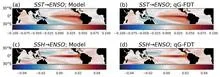
Every few years, the warm current off the coast of Peru shifts, and fishermen come home empty-handed. This is El Niño, the breath of the tropical Pacific, which affects weather from Indonesia to California. Predicting its arrival is as hard as predicting where a stone thrown into a raging river will roll.
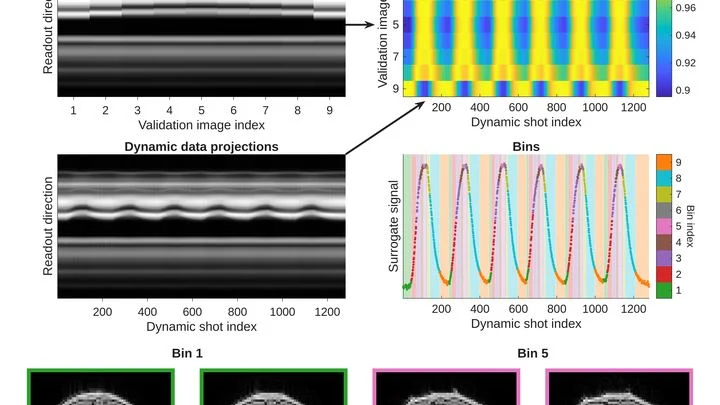
A photographer snaps a runner: to avoid a blurry shot, a short shutter speed is needed. An MRI scanner is like that photographer, but its 'shutter speed' is long — by the time it captures, the muscle has already changed. That's why dynamic MRI (a series of volumetric frames in motion) is a tough challenge: data are scarce, and motion doesn't wait.
Porous zeolite minerals work like tiny sponges with holes of a strictly defined size. Through such holes, molecules of one kind pass while others get stuck: this is the basis for water purification, gas separation, and catalysis in petrochemistry.
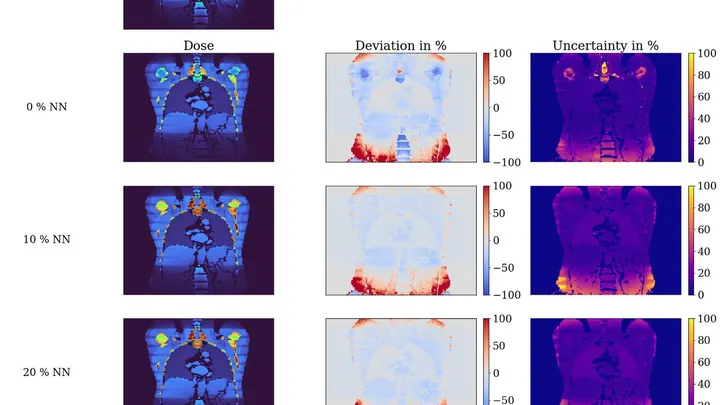
Computed tomography is like an X-ray that takes hundreds of images from different angles and stitches them into a 3D picture of the body. But each image delivers a small dose of radiation, and doctors need to know how much each organ receives. Currently, this is often estimated roughly using average tables rather than for the specific patient.
In the quantum world, particles do not have precise properties until they are measured. The official model refuses to explain what lies behind this uncertainty. But the idea that invisible 'pilots' control particles has been around since the 1920s.
Glasses with flat lenses show a symmetric world: rise and fall, heat and cold look the same. For decades, climatologists have viewed El Niño through such glasses, using linear inverse models. These captured the rhythm of oscillations but missed that the warm phase of El Niño is typically sharper and stronger than the cold La Niña.
Every winter, the Pacific Ocean warms slightly off the coast of Peru, and every summer it cools. This rhythm is set by the gears of the climate machine, but some turn fast, others slow, and still others speed up or stall. Linear inverse models have helped us glimpse these gears in data for decades, but they were blind to seasonal changes in pace.
A translator in a conference room hears not only the words but also the echo of previous phrases still bouncing around the ceiling. If they get distracted by every reverberation, an hour of conversation turns into two. Similarly, a complex system, whether an ocean or a power grid, receives random jolts that do not vanish instantly but drag behind them a tail of memory.