Light Knot on a Chip Helps Quench a Star's Glare ✛
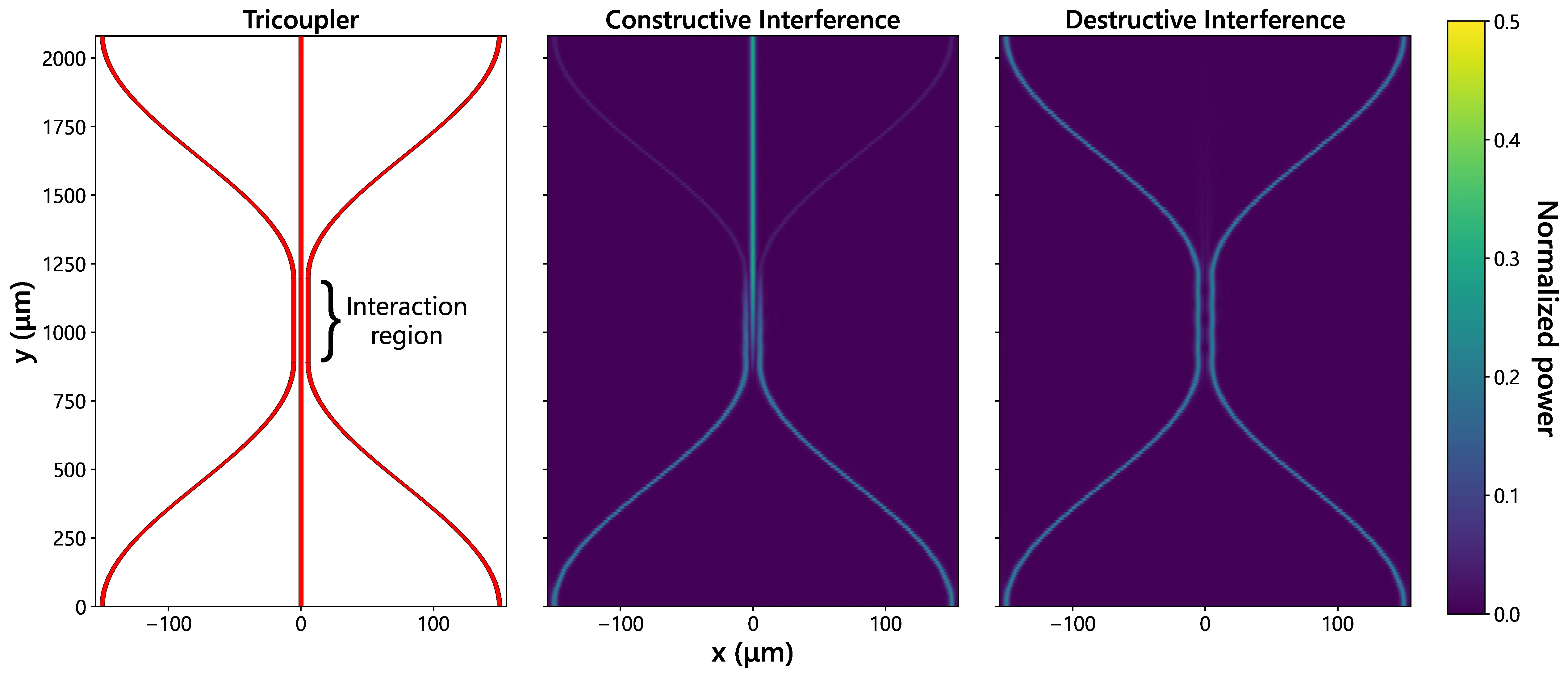
Why are there still no pictures of distant worlds like Earth? It's all about the blinding glare of their parent stars. A planet reflects only a tiny fraction of the light — like trying to spot a firefly in front of a blazing stadium. We need a way to remove the star's light without touching the planet. Enter interferometry — the ability of light waves to combine and cancel each other out.
Imagine a clothesline with a wave traveling along it: if you send a second wave with the crests aligned with the troughs, the rope stays still. That's roughly how a light knot works — a device made of three interwoven waveguides on a chip. The star's light is split into two beams, one is flipped (shifted by half a wavelength), and they are recombined. The result is darkness at the central output, while the planet's light, arriving from a different angle, remains untouched.
The researchers tested this idea on a silicon chip the size of a fingernail. In infrared light, they managed to weaken the star's light by a factor of 250,000 (that's −54 decibels), but only for a single color. To make the knot work for all colors simultaneously, they had to overcome birefringence — the chip's property of guiding light differently depending on its polarization (transverse oscillation). Without filters, the contrast is a thousand times worse, but that's solvable.
Once these challenges are overcome, arrays of such chips could analyze the chemical composition of exoplanet atmospheres — a major step toward finding life.
Interestingly, the on-chip tricoupler resembles an optical version of noise-cancelling headphones: it does not block, but rather extinguishes a wave with a counter-wave, and does this for all colors at once without mechanical readjustment.
The idea of null interferometry echoes the concept of the “stellar shield” in Arthur C. Clarke’s novel The Fountains of Paradise, where a space-based system of mirrors was used to cancel the star's light for observing distant objects.