The Universe's Horizon as a Heat Engine express
Stare long enough into the night sky, and sooner or later your gaze hits a blackness beyond which nothing is visible. This is not just a distant fence: it is the edge of the universe accessible to us, the cosmic horizon. Light from more distant stars simply hasn't had time to reach us. Surprisingly, this invisible boundary behaves almost like a heated skillet: it has a temperature, and it obeys the laws of heat.
The authors of the new study took one of the modified theories of gravity — one where the force of attraction changes slightly over enormous distances due to an additional term in the equations, resembling an exponential (a rapidly decaying curve). In this theory, the horizon also has a temperature and a reservoir of thermal disorder — entropy. But the formula for entropy is no longer just a quarter of the horizon's area, as in textbook black holes, but includes a small addition that depends on the parameter of expansion of the universe. When this parameter is set to zero, everything returns to the good old formula discovered by Bekenstein and Hawking.
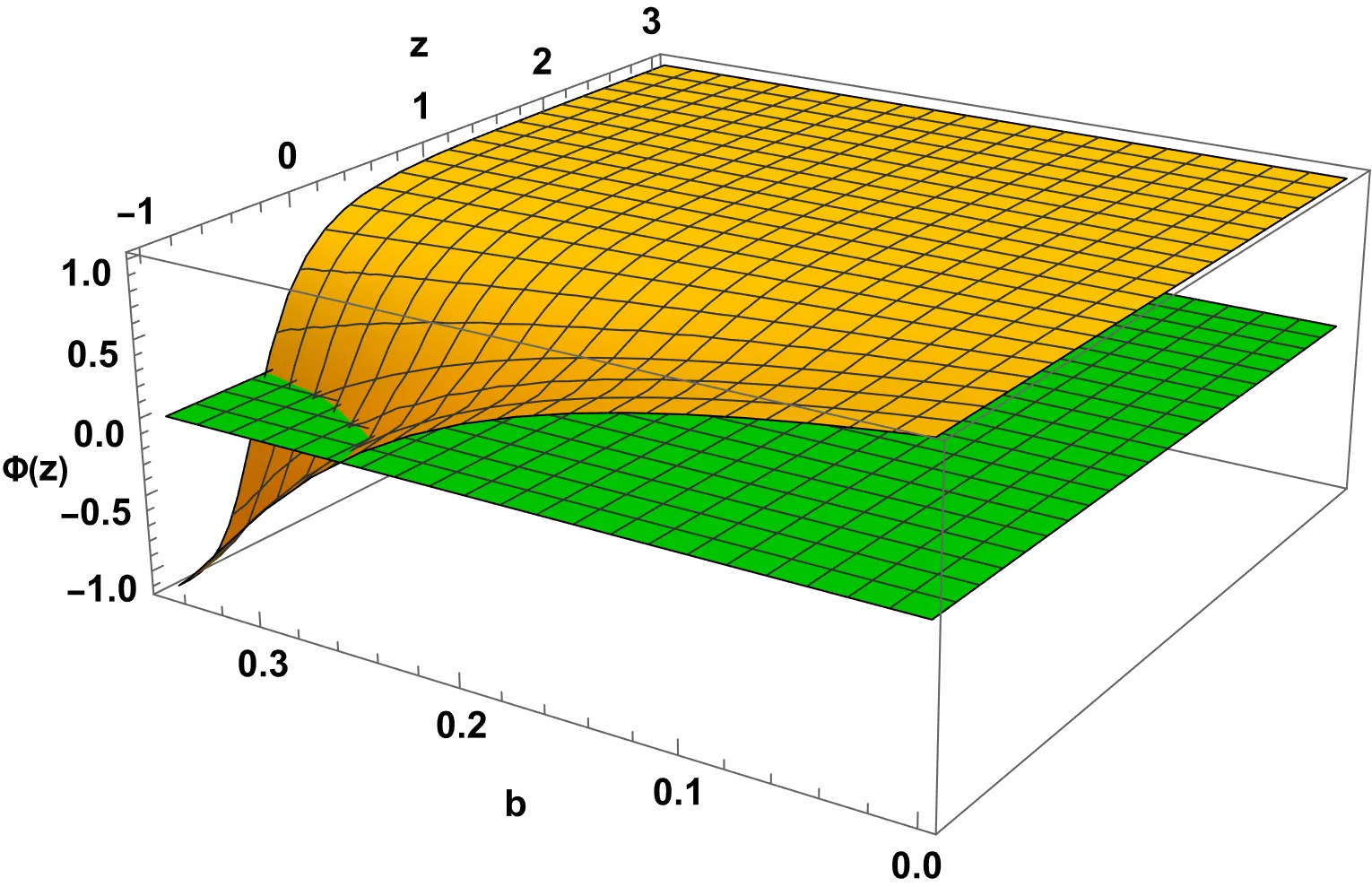
The physicists went further and checked whether the generalized second law of thermodynamics is violated — the rule that the total entropy of the horizon and everything inside it should not decrease. It turns out that for the parameters that best fit observations of distant supernovae and the distribution of galaxies, the law holds across the entire range of redshifts, from the early universe to the present day. But if you artificially increase the deviation parameter from the standard model, to about 0.26, then in the future, at negative redshifts, the horizon would start losing entropy faster than matter gains it. That's like a cup of hot coffee that suddenly heats itself up in a cool room — for the horizon, such a thing is forbidden.
Thus, the thermal properties of the invisible boundary help weed out unsuitable variants of gravity. The horizon, like a sensitive thermometer, shows which additions to Einstein's theory are still permissible and which make the universe 'catch a cold.'
If the cosmic horizon radiated in the visible range, its light would be billions of times fainter than the dimmest nightlight, but theoretically, it emits particles like a black hole.
In Peter Watts' novel 'Blindsight', the cosmic horizon plays the role of a barrier behind which incomprehensible forms of intelligence hide, and the very idea of the horizon as a source of radiation echoes Hawking evaporation of black holes.