The Invisible Star That Occasionally Shouts ✛
Sometimes a person stays quiet all evening, then says one sentence that everyone remembers. The newly discovered neutron star PSR J2108+5055 does the same: it emits nothing most of the time, but occasionally lets out a short radio pulse that breaks all brightness records.
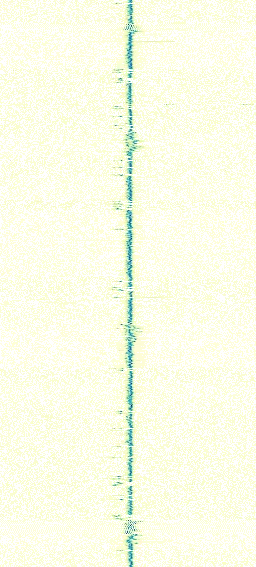
The CHIME telescope in Canada recorded radio signals from across the sky for three years. Among millions of bursts, astronomers found 2275 pulses coming from a single point. They didn't repeat regularly like those from ordinary pulsars: hours, days, and sometimes weeks passed between flashes. By stacking all the pulses together, scientists figured out that the star spins with a period of half a second, but it only "lights up" for a tiny fraction of the time — about one ten-thousandth of a percent.
Why weren't such stars found before? Because previous sky surveys didn't look at any patch of sky long enough. If a telescope listens to a spot for one minute, and the star flashes once a month, the chance of catching it is almost zero. This discovery means our galaxy could be full of such "silent lighthouses," and now we know how to look for them.
The brightest pulse from PSR J2108+5055 would be visible to the FAST telescope from a distance of 1.37 Mpc — the edge of the Local Group. If such a pulsar were in the galaxy Sextans B, its single burst would be recorded as a mysterious extragalactic radio pulse.
In Stanislaw Lem's novel 'His Master's Voice', astrophysicists detect a mysterious neutrino signal that turns out to be not a message but a byproduct of an unknown process. PSR J2108+5055 reminds us of this duality: its pulses at first glance resemble extragalactic fast radio bursts, but their source is an ordinary (by cosmic standards) neutron star in our Galaxy.