Jürgen Kurths

7 articles · 30 co-authors · latest: 2026-01-18
10 citations · h-index 1 · 13 papersData: Semantic Scholar

We have retold 7 papers by this author. 6 of them with a full read. most often about: climate_network, causal_inference, indian_summer_monsoon_rainfall. 30 co-authors across our retellings.

Links in the knowledge graph
Climate Networks Untangle El Niño Types
Picture a giant spiderweb stretched across thousands of points on Earth's surface. Each strand connects two places where air temperatures move in sync: if one node warms, so does the other. You can build this web from data for any given year, then compare how it looked across different years.
Finding the Puppet Masters: How Causality Saves Predictions from Computational Blow-Up
The puppet master pulls the strings, and the marionette dances. In forecasting the future from time series, the puppet masters are the few variables that truly control the system. The rest merely echo their movements, creating an illusion of complexity. The challenge is to find these puppet masters and watch only their fingers, not the whole stage.
The Global Climate Web: How El Niño and Volcanoes Rewire Temperature Connections
Picture a web stretched across every corner of the Earth: each strand is a coincidence of temperature fluctuations at two points. In ordinary years, the web is neatly divided into regional clusters, but when El Niño arrives, the strands break and reweave, linking distant continents.
South Atlantic Pulse Predicts Indian Monsoon Five Months Ahead
Every June, the sky over India fills with moisture, and how much falls determines rice harvests, water reserves, and food prices for a billion people. But predicting the monsoon's strength in advance was like guessing someone's mood from a single photo: too many hidden springs.
The Climate House of Cards: Where Does the Stability Limit Lie?
Imagine a house of cards where each card supports the others. One wobbles, and the neighbors start to lean. Earth's climate system works similarly: ice sheets, ocean currents, tropical forests, all are connected. If one element crosses a threshold, it can drag the rest down with it.
eess.SY2024-06-202 minarXiv:2406.14474
The Ocean Conducts Blackouts: How La Niña Steers the US Power Grid
The Pacific Ocean behaves like a conductor setting the tempo for outages in the American power grid. When the ocean shifts into its cold phase, known as La Niña, lights start going out more often across the US. Researchers traced this connection over 24 years and confirmed that the ocean really does drive the weather, and the weather batters wires and transformers.
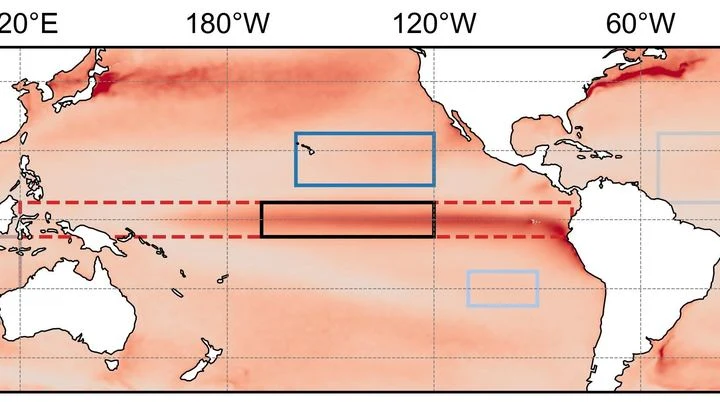
El Niño Can Be Predicted a Year and a Half in Advance
The Pacific Ocean breathes slowly and deeply. Every few years, its warm surface waters shift eastward toward the coast of South America, and then Peru gets drenched while Australia goes up in flames. A year or two later, the water retreats, and the picture flips. This breathing is called El Niño, and until now its rhythm could only be guessed a couple of steps ahead.