Shlomo Havlin

5 articles · 17 co-authors · latest: 2026-01-18
97 citations · h-index 6 · 34 papersData: Semantic Scholar

We have retold 5 papers by this author. 4 of them with a full read. most often about: climate_network, el_nino, chaos theory. 17 co-authors across our retellings.

Links in the knowledge graph
Climate Networks: How El Niño Snaps Invisible Threads
A hammock woven from thousands of cords is stretched between continents. Each cord is a link between two points on the planet: when it warms in one place, it cools in another, day after day. As long as the hammock holds, it keeps the climate in its familiar rhythm. But every few years El Niño arrives, a warm current off the coast of Peru, and the cords begin to snap.
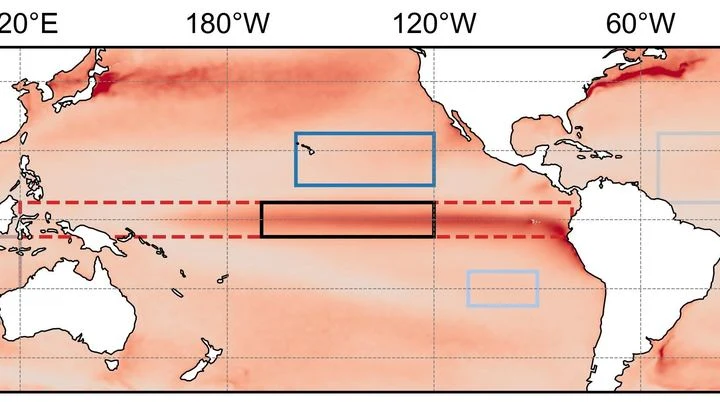
Climate Network: How El Niño Tightens Its Grip and Strikes with Precision
A warm tongue of water stretches along the equatorial Pacific, and within weeks, Peru sees torrential rains while Australia's pastures dry out. That is how El Niño begins: a natural conductor that, at critical moments, makes only a few orchestra members play, but much louder.
El Niño: Predicting Strength and Onset a Year in Advance
An orchestra falls out of tune before a storm, then plays in unison again. In the equatorial Pacific, within a rectangle stretching from 5°S to 5°N and from 120°W to 170°W, water temperatures usually change in concert, like musicians playing the same part. This area is called the Niño 3.4 region.
The Network That Hears El Niño a Year in Advance
The Pacific Ocean resembles a vast brass band, where each musician is a point on the weather map. Usually, they play each in their own way: in one place the air warms, in another it cools, and the overall melody seems like random noise. But every few years, the instruments suddenly begin to sound in unison, and then a wave of droughts, floods, and abnormal heat sweeps across the planet.
El Niño Can Be Predicted a Year and a Half in Advance
The Pacific Ocean breathes slowly and deeply. Every few years, its warm surface waters shift eastward toward the coast of South America, and then Peru gets drenched while Australia goes up in flames. A year or two later, the water retreats, and the picture flips. This breathing is called El Niño, and until now its rhythm could only be guessed a couple of steps ahead.