Solubility is the property of a substance (the solute) to dissolve in a solvent, forming a homogeneous mixture at the molecular or ionic level. It is quantified as the maximum amount of solute that can dissolve in a given amount of solvent under specific conditions (temperature, pressure). In practical terms, solubility governs whether a spoonful of sugar vanishes into tea, but it also determines whether a drug molecule can reach its target in the body.
How it works
Dissolution occurs when solvent molecules surround and separate solute particles (ions or molecules), overcoming the attractiveforces holding the solute together. The balance between solute-solute, solute-solvent, and solvent-solvent interactions dictates the outcome. If the energy released by solvation compensates for the energy required to break solute bonds, the substance dissolves. Temperature and pressure shift this balance, which is why solubility often increases with heat, though gases behave oppositely.
In practice
Solubility is a cornerstone of pharmaceutical formulation: poorly soluble drugs are engineered into salts, nanoparticles, or amorphous forms to improve their bioavailability, ensuring enough of the dose enters the bloodstream.
Fun fact
The solubility of oxygen in water is what allows fish to breathe, but it is so low that a liter of water holds only about 6 milligrams of dissolved oxygen at room temperature.
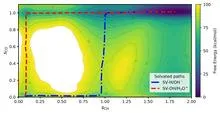
Picture a tiny hole in a sheet of graphene: a single missing carbon atom. It used to be thought that a water molecule splits apart at this defect only on its own, in dry gas. But if liquid water is sloshing all around, everything changes.
Construction is in full swing: neurons are laying down their processes the way bricklayers stack up walls. But an error has crept into the blueprints. The protein tau, which normally serves as scaffolding for the cellular framework, in its mutant form starts dictating the wrong dimensions.
In a city where danger zones pop up and vanish without warning, a malicious GPS is always trying to steer you into a trap. This unpredictable foe operates at every intersection. Yet a mathematical universal framework calculates all possible ploys and charts a path that guarantees safety even amid severe interference.
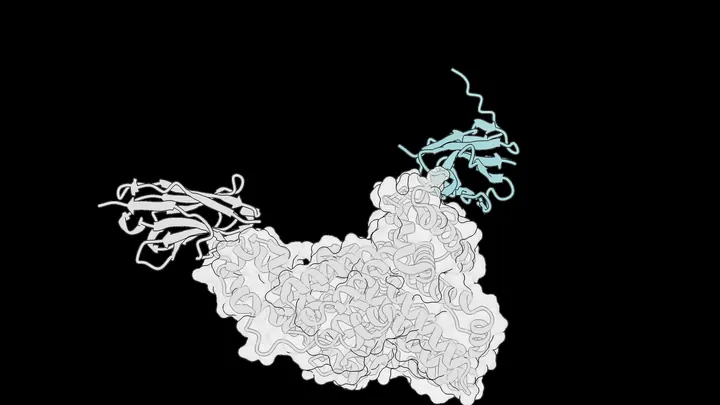
Think of a massive cookbook: each recipe is a protein, and the finished dish is its job in the cell. To whip up a complex treat, you often need to mix several ingredients and let them 'set' into the right shape. Until now, scientist-chefs could only guess how someone else's recipes would fold.