A Cookbook for Proteins express
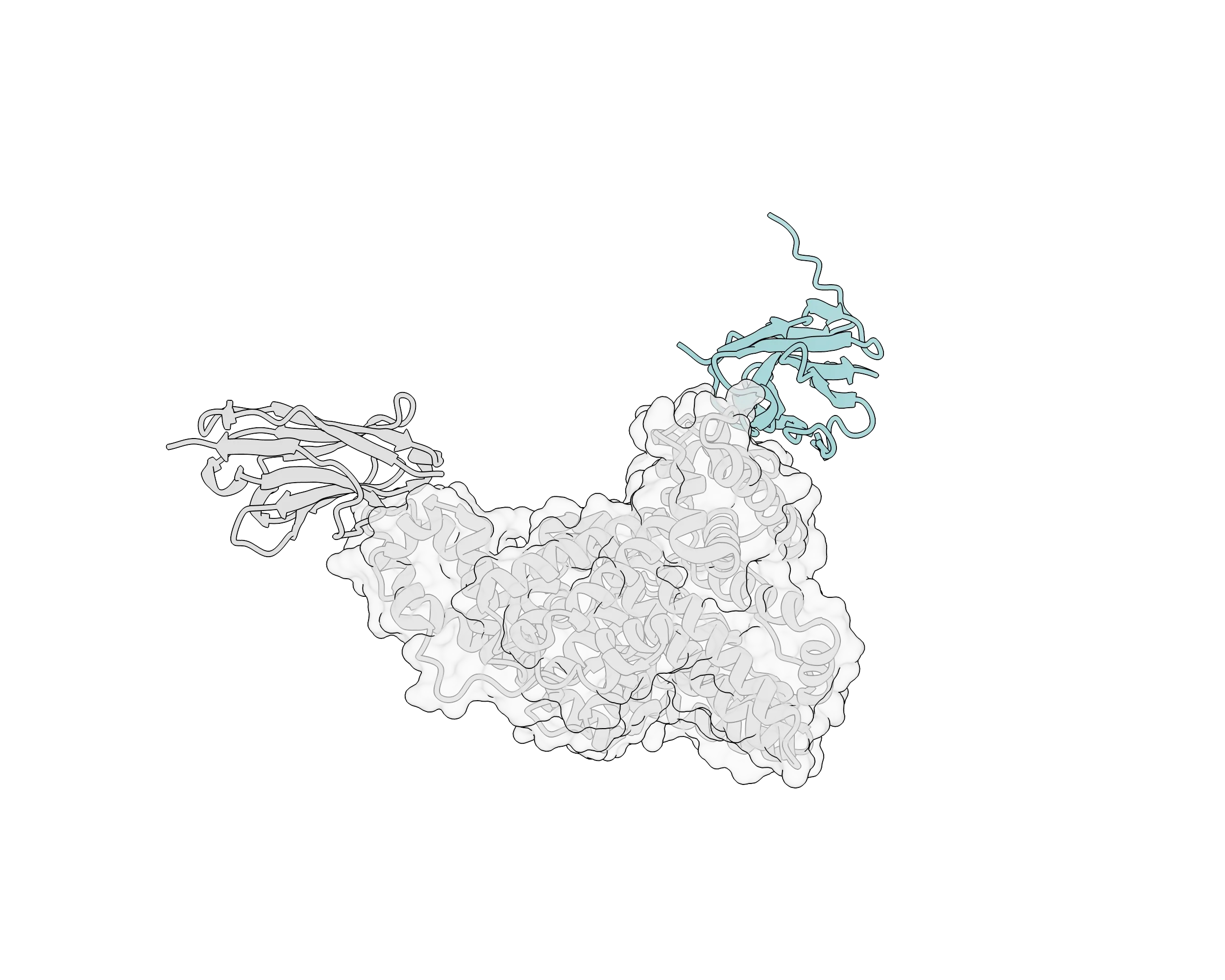
Think of a massive cookbook: each recipe is a protein, and the finished dish is its job in the cell. To whip up a complex treat, you often need to mix several ingredients and let them 'set' into the right shape. Until now, scientist-chefs could only guess how someone else's recipes would fold. The new program OpenDDE acts like an experienced head chef: it doesn't just read the recipe: it immediately sees how proteins 'fold' together (co-folding) and how that affects their function.
The key innovation is that OpenDDE isn't just a shape-prediction tool. It's a foundation for building systems to create new drugs: from computer-aided 'invention' of molecules to assessing their effectiveness. The authors identified two ways to improve such models — by increasing data and computational power. It's like finding a secret ingredient and a more powerful stove, which together make dishes tastier and tastier. Now any researcher in the world can download this 'culinary engine' and start cooking up their own drugs. So the shared recipe book that started it all is turning into a living kitchen where every chef adds their own touch.
Original abstract
as written by the authors arXiv:2607.03787
Accurately modeling biomolecular interactions is a central bottleneck in biology and therapeutic discovery. Here, we introduce Open Drug Discovery Engine (OpenDDE), an open-source, all-atom biomolecular foundation model that uses co-folding as the entry point to a scalable AI-driven drug discovery engine. Rather than treating structure prediction as an isolated endpoint, OpenDDE is designed as a shared structural reasoning layer for modeling sequence-structure-function relationships across biomolecular complexes, enabling complex structure prediction today while providing a foundation for de novo design, affinity estimation, structure-conditioned optimization, and more. OpenDDE integrates advances in all-atom architecture, atomic latent reasoning, inference optimization, and large-scale data processing to achieve IsoDDE-level co-folding accuracy within a reproducible and openly accessible framework. We also identify two scaling-law directions for co-folding models, revealing practical routes for continued improvement through data, model, inference, and training scaling. By releasing training code, inference pipelines, checkpoints, and benchmarks, OpenDDE aims to democratize access to frontier biomolecular intelligence, accelerate global collaboration, and lay an open foundation for next-generation drug discovery systems that can move from predicting molecular structures toward designing, scoring, and optimizing therapeutic candidates for human health.
Proteins in our bodies fold into complex three-dimensional structures in fractions of a second, but misfolding can lead to diseases like Alzheimer's.
In the movie 'I Am Legend,' a scientist searches alone for a cure to a virus; OpenDDE brings us closer to a world where such searches become a global network of researchers.