Thunderstorms Can Be Heard in Advance: The Ocean Hints When Lightning Will Strike
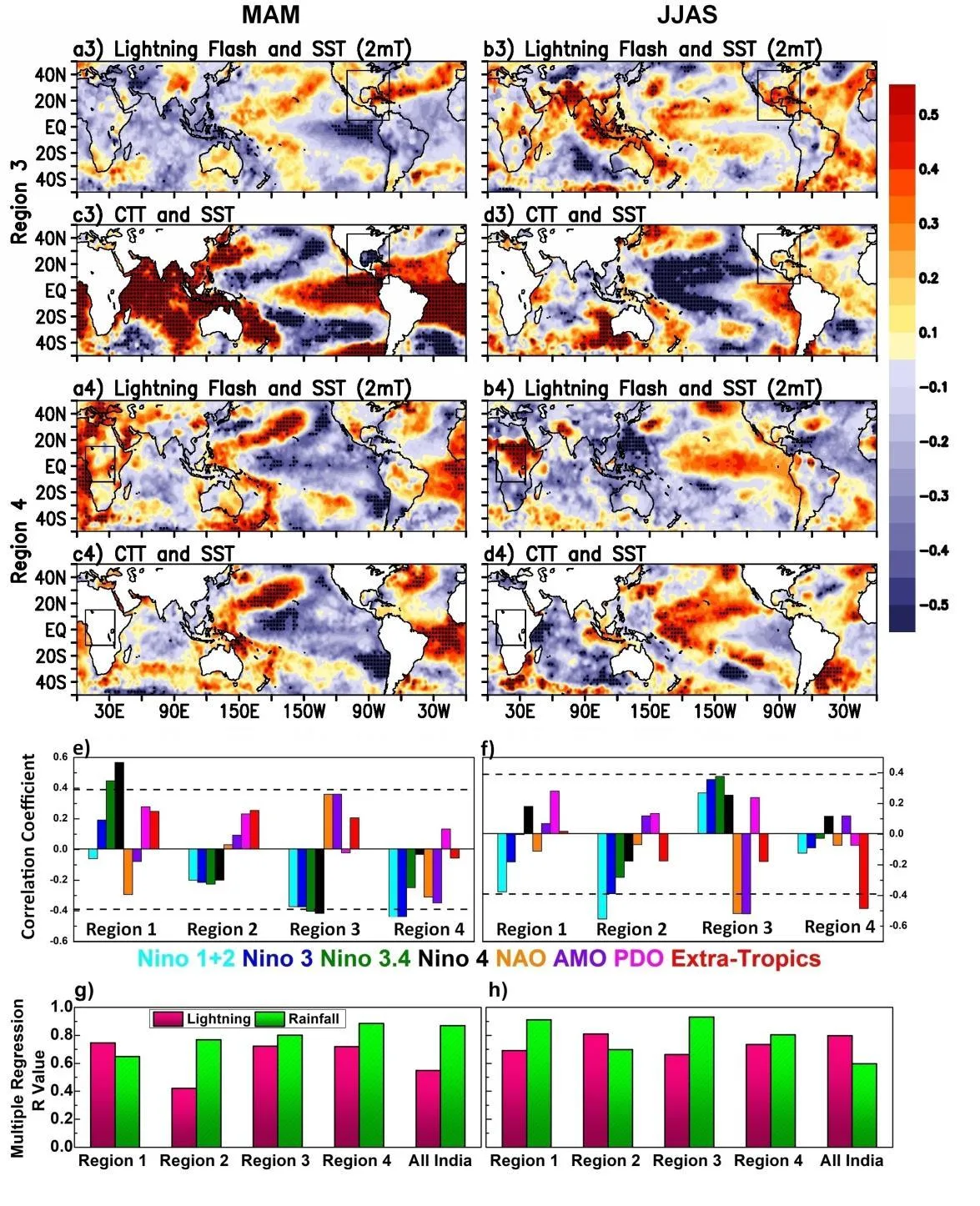
Lightning strikes fast and without warning. But if you look not at individual flashes but at an entire season, a slow oceanic rhythm emerges in the storms. For 17 years, satellites recorded lightning over India, North America, and Africa. It turns out that the number of lightning strikes in a season is linked to what happens in distant oceans.
The ocean acts like a giant battery: it slowly stores heat and then releases it to the air. The warm El Niño current and the cold La Niña change wind and moisture patterns across the globe. So in some years, eastern India sees more lightning, and in others, less. Scientists have found that ocean temperatures can predict how many lightning strikes will occur several months ahead, with accuracy nearly as good as for rainfall.
This means weather services could warn of thunderstorm danger in advance, just as they already do for rain. Farmers, pilots, and energy companies would gain time to prepare. Lightning remains instantaneous, but its seasonal echo travels from distant oceans. And if we learn to listen to that echo, we can hear the storm long before the first thunderclap.
In India, lightning kills more people than cyclones and floods combined, and this share is growing every year.
In Ray Bradbury's story 'A Sound of Thunder', a change in the distant past leads to unpredictable consequences in the present. Here it is the opposite: distant slow processes in the ocean help predict local thunderstorms.