Why a Bad Harvest Reduces Violence
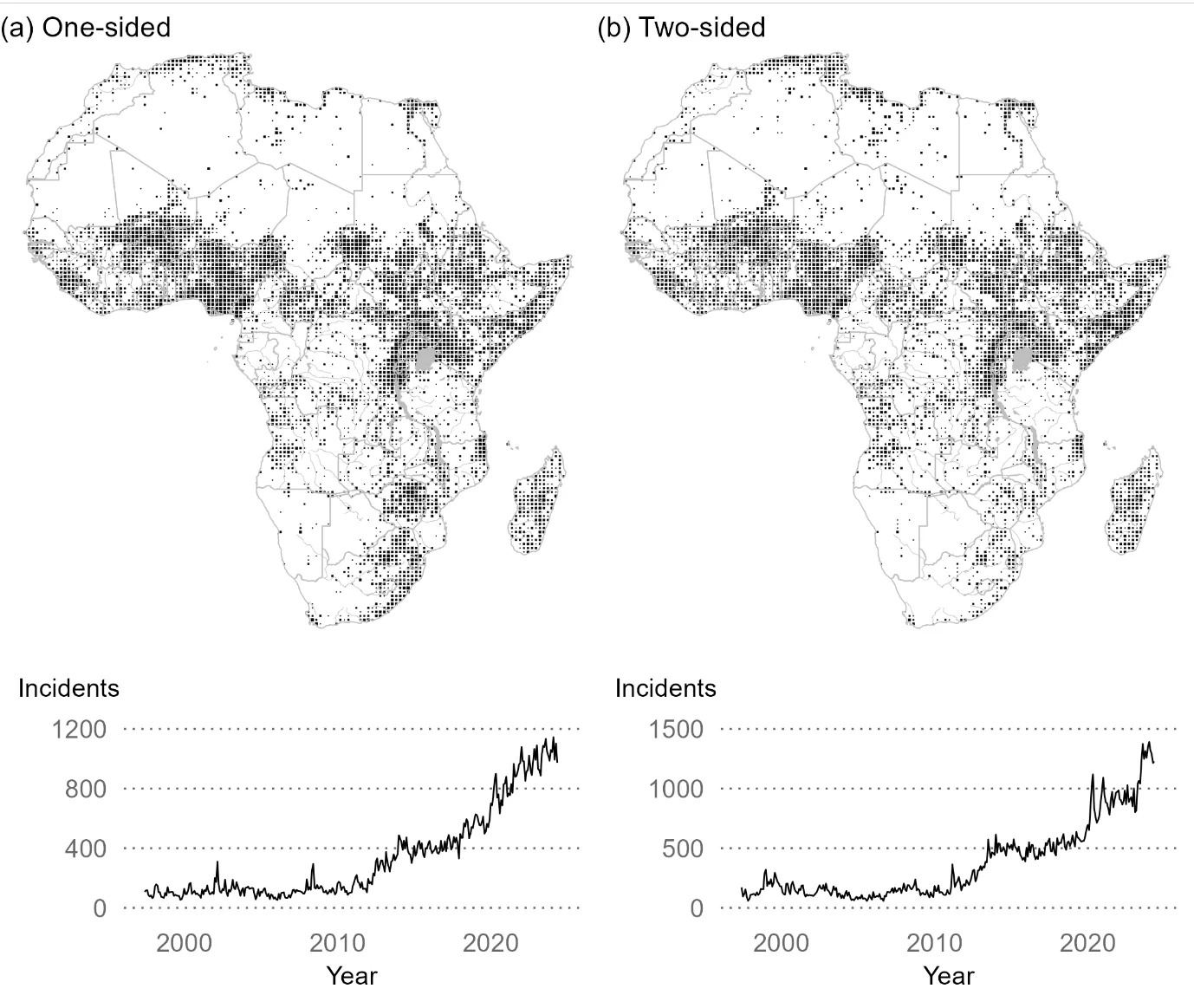
Imagine you're a farmer in an African village. You've grown maize and just gathered it into sacks. Now you have food, but armed people also have a reason to come: they want to take your grain. If the year has been dry and there's almost no maize, they have nothing to take. So they probably won't come.
The researchers tested this using 27 years of data from across Africa. They divided the continent into small squares and, for each square, identified which crops grow there and when they are harvested. Then they compared the number of attacks in the first three months after harvest during El Niño years versus normal years. It turned out that a moderate El Niño reduces violence against civilians by 3.4%. That's modest, but in regions particularly sensitive to ocean conditions, a strong El Niño brings reductions of up to 15%.
The opposite phenomenon, La Niña, brings good rains and abundant harvests. And then attacks increase: there is something to take. So the harvest acts as bait. No bait, no predators. And since El Niño can be predicted months in advance, humanitarian organizations can prepare early and protect people in high-risk areas.
In 1876–78, a strong El Niño caused droughts and famine in India, and a significant portion of the scarce grain harvest was exported to Europe to stabilize markets, exacerbating the suffering of the local population.
In Kim Stanley Robinson's novel 'The Ministry for the Future,' climate disasters, including heat waves linked to climate change, lead to political upheaval. This study resonates with that theme, showing how climate anomalies can influence conflicts even today.