How the Ocean Warns of Heat ✛
The Pacific Ocean works like a conductor. When it warms near the coast of South America, that's called El Niño. When it cools, it's La Niña. These shifts affect weather worldwide, even in Russia.
In 2024, warm water gave way to cold. Scientists looked at 125 years of weather records and spotted a pattern: after such a shift, European Russia almost always gets a hot summer. In eight out of nine cases, temperatures were above normal. Droughts occurred in two out of three cases.
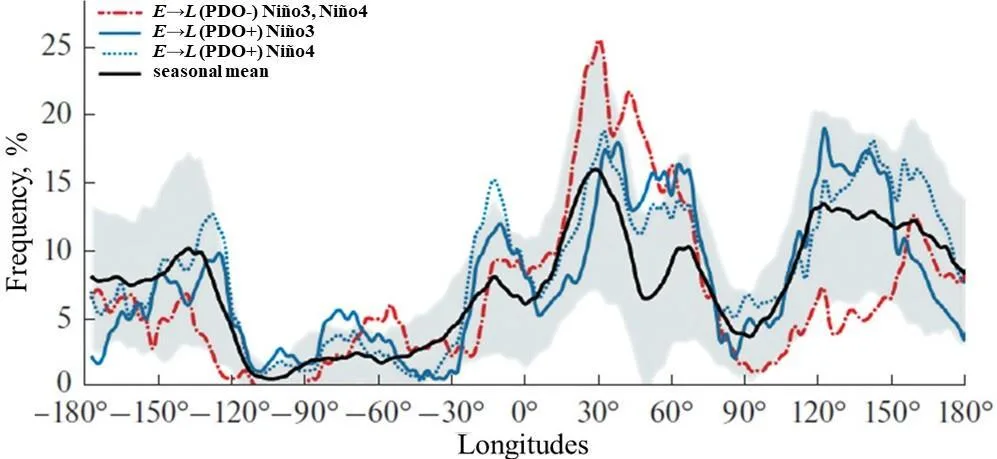
But the ocean isn't the only thing steering the weather. There's also a slow temperature oscillation in the northern Pacific. When that's cold and El Niño transitions to La Niña, air blocks form more often over Eastern Europe. It's like a traffic jam: air can't move through, and the heat just sits there.
Scientists also noticed that it matters where exactly you measure the ocean's temperature. If you look at the eastern part, the drought probability is 67 percent. If you look at the central part, it's 17 percent lower. So the forecast depends on which part of the ocean you're watching. For farmers and firefighters, that matters: whether to prepare for drought or not.
In the summer of 2010, European Russia experienced a record-long atmospheric blocking of about two months, leading to anomalous heat and fires. That very scenario was considered the most likely for 2024.