The Pacific Ocean Conducts the Heat Over Eurasia ✛
Every few years, the Pacific Ocean changes its character. Sometimes it warms up off the coast of South America, which is called El Niño, and sometimes it cools down, bringing La Niña. For someone on the other side of the planet, this is not just a weather report item. The ocean acts as a conductor, setting the tempo for heat and drought over Eurasia.
In 2024, the orchestra moved from a fast movement to a slow one: from El Niño to La Niña. Scientists studied weather archives spanning 125 years and found that this particular transition most often ends with a hot summer in European Russia. In eight out of nine cases following such a transition, temperatures rose above normal. And the probability of a true drought, when dryness covers a large area, reached 67 percent.
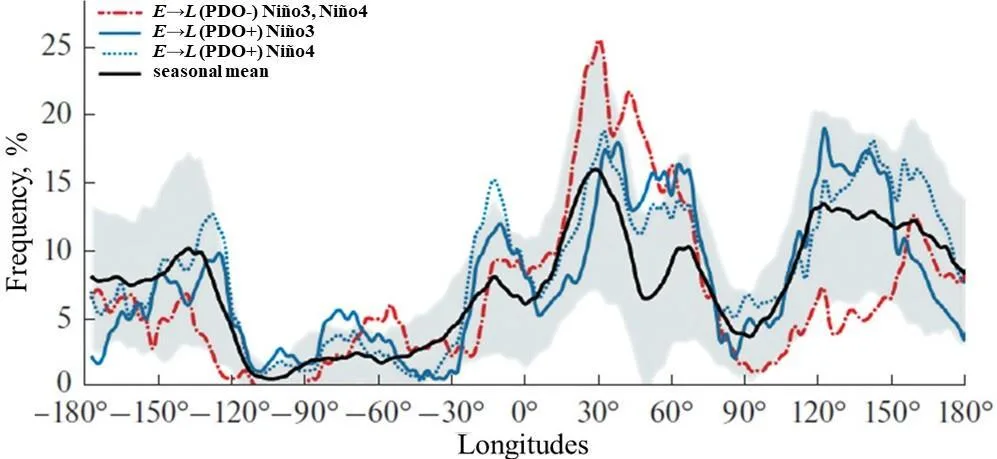
But it is not that simple. The ocean is not the only conductor; it has an assistant: a slow temperature oscillation in the northern Pacific known as the Pacific Decadal Oscillation. When this oscillation is in its cold phase and El Niño gives way to La Niña, persistent vortices tend to stall over Eastern Europe, keeping heat in place for weeks. Such a vortex sat over Russia in the summer of 2010, when forests burned and asphalt melted.
The scientists compared three different ways to measure El Niño: by temperature in the eastern, central-eastern, and central parts of the Pacific. It turned out that the numbers change. If you look at the eastern index, the drought probability is 67 percent. If you look at the central one, it is 17 percentage points lower. In other words, the forecast depends on which part of the ocean the observer is looking at.
This means that the conductor does not always wave the baton the same way. Sometimes the gesture is visible only from one angle. For agriculture, fire services, and water management, such details determine whether to prepare for drought or an ordinary summer. The ocean sends a signal, but to hear it accurately, you need to know where to look.
In the summer of 2010, European Russia experienced a record-long atmospheric blocking of about two months, leading to anomalous heat and fires. That very scenario was considered the most likely for 2024.