Gravitational Waves to Test the Quantum Graininess of Space ✛
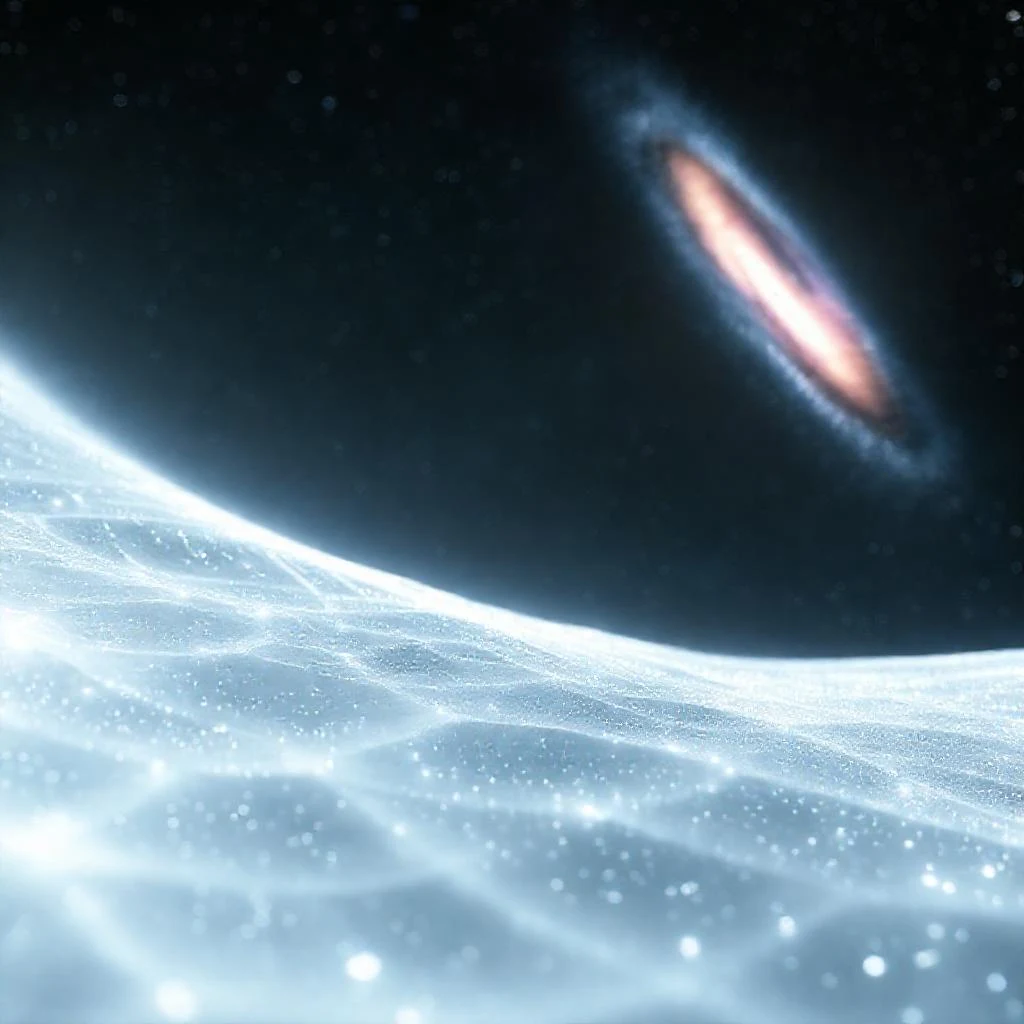
Space is not smooth; it consists of tiny 'pixels' — quantum cells, smaller than which nothing can be measured. This limit is called the generalized uncertainty principle. Because of it, even familiar laws for black holes change: the Bekenstein–Hawking formula for their entropy, i.e., information capacity, now depends on the size of the spatial 'pixel'.
Future observatories will be able to catch this amplified ripple and measure the 'pixelation' parameter β with record precision. For scale: if an atom were enlarged to the size of the entire observable universe, the smallest quantum of space would be about as tall as a tree.
If an atom were enlarged to the size of the entire observable universe, the Planck length would be merely the height of an average tree.
Grainy space resembles the 'quantum foam' of science fiction — the basis for wormholes and time travel.