Quantum Data Centers: The Future of the Internet ✛
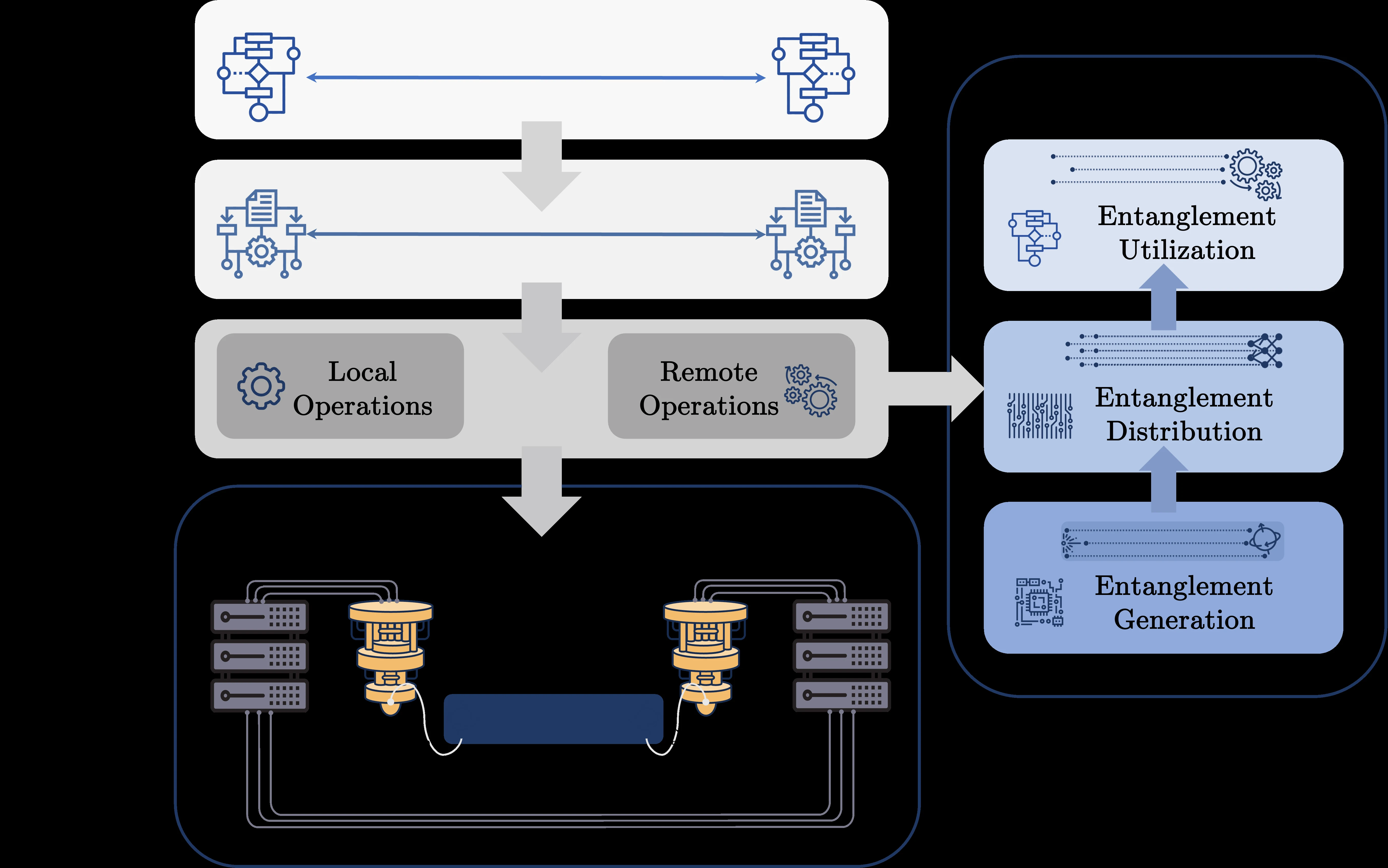
Quantum computers are like music boxes: each can play only a few notes and stops quickly. To perform a complex melody, you need an orchestra. In quantum data centers, dozens of processors connect through entanglement — an invisible synchronization where particles behave as one system no matter the distance. Quantum teleportation, proposed by Charles Bennett, helps transfer states between them.
The conductor of such an orchestra is an entanglement orchestrator. It hands off connections from tired modules to rested ones, much like a conductor cues orchestra sections to take turns. This helps sidestep the noise of current devices (which John Preskill dubbed noisy intermediate-scale quantum devices). Data inside the center travels at the speed of light along optical channels.
A surprising fact: entanglement itself doesn’t transmit information faster than light: it’s merely synchronization of random outcomes. A true quantum internet will still need a regular internet for setting up connections. When quantum data centers run at full capacity, they’ll let us design materials atom by atom and predict climate decades ahead. These networks will become like the Standard Model in physics, a common language for all quantum devices.
Today’s record processor has about 100 qubits — fewer keys than a piano. To crack modern encryption, millions are needed, so scientists are teaching lone wolves to work together.