Quantum Switch Breaks the Usual Flow of Time ✛
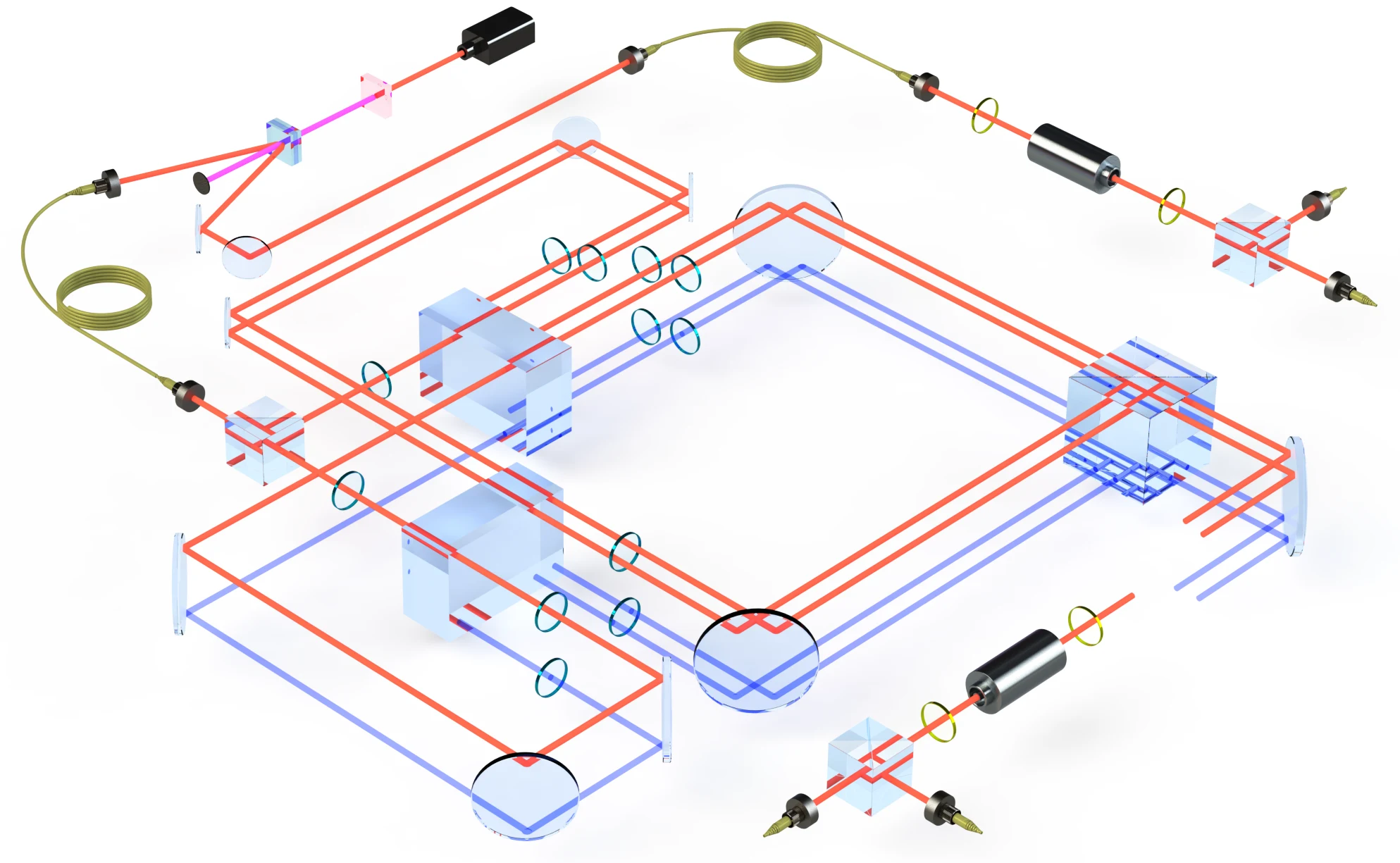
A food processor can make cream in two ways: first flour, then water — or the other way around. A regular appliance performs steps strictly in order. But a quantum processor mixes both options at once — as if time inside it splits in two. Physicists call this 'time bend' a quantum switch. In the experiment, they separated light beams so far apart that they couldn't exchange signals. One photon became the switch, the other a witness.
The idea of such analysis was first proposed by John Bell to test quantum entanglement. Now it's been applied to causality. By analyzing the information chaos in the data, physicists saw a violation of temporal order with a confidence 24 times higher than the random threshold. This isn't just a trick: quantum technologies will gain the ability to encrypt the very sequence of operations — making it impossible to hack.
Schrödinger's famous cat is both alive and dead at the same time. Now add time confusion: that same cat eats dinner either before or after its walk — depending on how time turns out.
Sci-fi writers have often played with the confusion of past and future: in Ted Chiang's 'Story of Your Life,' knowledge of the future changed the past. The quantum switch shows that for particles, such confusion is routine.