Wind in the Sails of a Heat Engine: How Motion Bypasses the Carnot Limit ✛
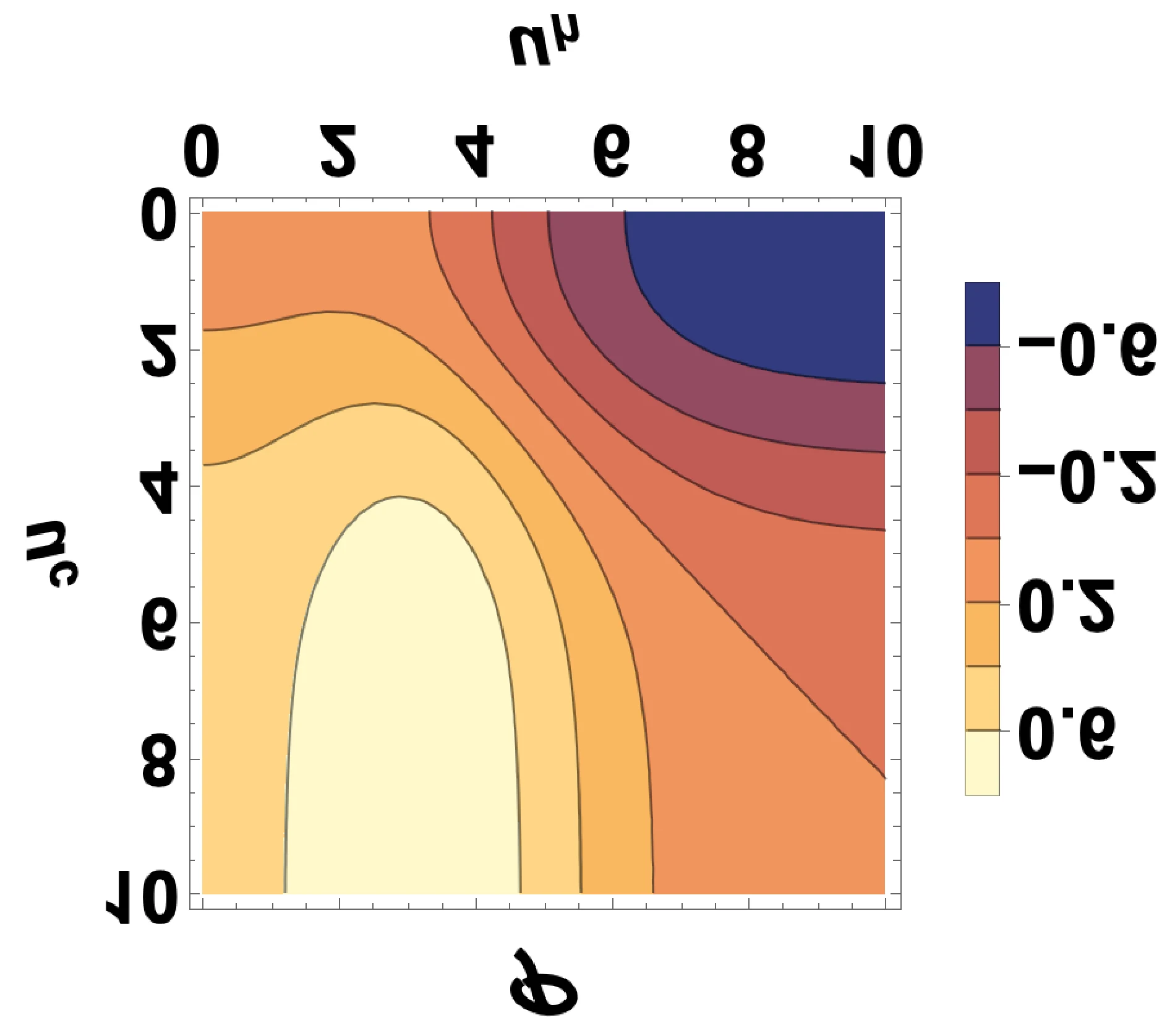
A heat engine is like a sailboat: to move forward, it needs a difference. Usually that means a temperature difference between hot and cold reservoirs. But what if the reservoir itself starts moving? The wind that fills the sails is created not only by a pressure difference but also by the motion of air masses. New work shows that relativistic motion of the reservoirs acts on a quantum heat engine like such a wind, allowing it to bypass the classical Carnot limit.
At the heart of the study is a three-level maser continuously interacting with two thermal reservoirs. The reservoirs are modeled as quantum fields in thermal states, and the coupling is described by the Unruh–DeWitt Hamiltonian. When a reservoir moves at constant velocity, its rapidity u leads to a Doppler redistribution of photon populations. A hot reservoir moving toward the engine "compresses" the radiation, while a receding cold reservoir "stretches" it. This asymmetry is the wind: it changes the rates of energy exchange and makes the engine work even without a temperature difference.
Numerical scanning of the parameter space reveals a generalized efficiency bound: \(\eta_{\mathrm{up}} = 1 - \frac{T_c}{T_h} \frac{u}{\sinh u}\). At zero rapidity, it reduces to the standard Carnot limit. The efficiency at maximum power can exceed the classical limit over a wide range of parameters, while remaining below the generalized bound. Motion of the cold reservoir favors the engine regime, while motion of the hot reservoir favors the refrigerator regime. At equal temperatures, positive work is extracted solely due to motion.
This work fills a gap in quantum thermodynamics: for the first time, an analytical form of the generalized Carnot bound is obtained for a continuous engine with moving reservoirs. Relativistic motion becomes not merely a perturbation but a control parameter that changes operating regimes. For now, this is pure knowledge: no immediate applications are in sight, but the results can guide experiments that simulate reservoir motion in quantum platforms such as trapped ions or superconducting qubits. The next step is to formulate a thermodynamic uncertainty relation for relativistic heat engines, linking power, fluctuations, and entropy production. The sailboat of quantum thermodynamics has caught a new wind, and now it is important to understand how far it can go.
Even when the hot and cold reservoirs are at the same temperature, the machine can still produce useful work: it suffices that one reservoir moves at a relativistic speed.