A perpetual motion machine is a hypothetical device that operates indefinitely without an external energy source, either by producing more energy than it consumes (perpetual motion of the first kind) or by perfectly converting heat into work without losses (perpetual motion of the second kind). Such machines violate the laws of thermodynamics—specifically, the conservation of energy and the increase of entropy. Despite centuries of attempts, no perpetual motion machine has ever been built, and their impossibility is a cornerstone of modern physics.
History
The idea dates back to at least the 8th century in India, with designs like the overbalanced wheel. Formal impossibility was established in the 19th century through the work of Sadi Carnot, Rudolf Clausius, and Lord Kelvin, who formulated the laws of thermodynamics. The U.S. Patent Office has famously refused to examine perpetual motion applications since 1918.
How it works
Proposed designs often involve clever arrangements of magnets, wheels, or fluids that seem to create a self-sustaining cycle. For example, a wheel with magnets might be arranged to pull itself around, or a capillary action might be used to lift water indefinitely. However, analysis always reveals hidden energy losses—friction, air resistance, or the energy required to reset the system—that prevent net energy gain. In the case of the second kind, even a perfect mechanical system cannot extract heat from a single reservoir and convert it entirely to work without a colder reservoir to dump entropy.
In practice
None—perpetual motion machines are impossible. However, the study of why they fail has led to a deeper understanding of thermodynamics and energy efficiency, inspiring research into heat engines and refrigeration cycles.
Fun fact
The U.S. Patent Office requires working models for perpetual motion applications, but no such model has ever been submitted that actually works.
In 1934 Jean Leray proved that the Navier–Stokes equations always have solutions "in a generalized sense". Whether a solution stays smooth or can break down into a singularity he could not tell, and nobody could for ninety years. In 2000 the Clay Institute made the question one of its seven Millennium Prize problems.
In classical thermodynamics, heat engines are like a virtuoso musician on stage: the closer to perfection in performance (Carnot efficiency), the slower the tempo (power).
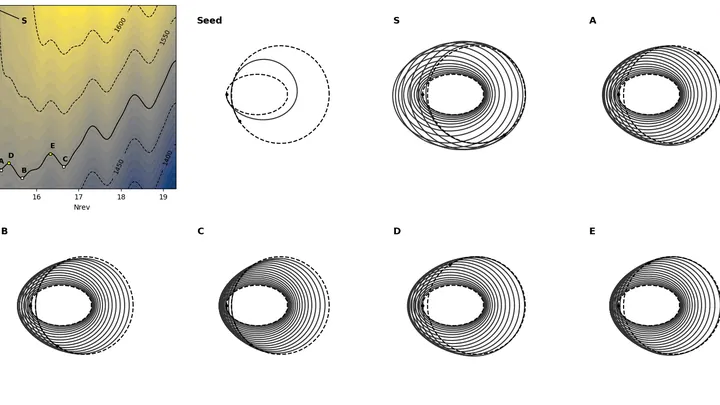
A space tug with an ion engine accelerates slowly, but it sips fuel. To get from one orbit to another, you have to solve a tricky problem: how long to fire the engine and where to point it. Usually, the goal is to find the fastest transfer for a given spacecraft mass.
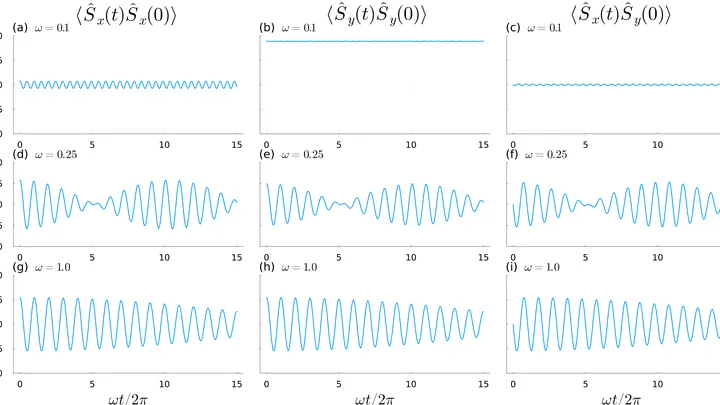
Two quantum particles are linked by an invisible thread: one loses energy, the other gains it, but the total remains unchanged. If you watch only the first, its oscillations don't fade — the rhythm is steady, like that of a cosmic pulsar, even though it seems that entropy and chaos are increasing.
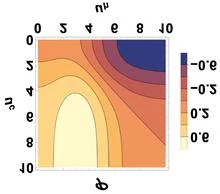
A driver turns the steering wheel to make the car turn. The quantum world also has its own "steering wheels"—external parameters that are slowly varied to shuttle particles from one place to another.
A kettle cools on the table. Heat escapes into the air, and is wasted. Yet you could squeeze a bit of electricity out of it. Devices that can do this are called thermomagnetic generators. Inside them, there are no pistons or turbines — only a material that changes its magnetic properties when heated and cooled.
When servers in a data center run at full tilt, they get as hot as a forgotten iron. That heat goes to waste, and cooling them eats up even more energy. Engineers in Germany have proposed putting that heat to work: let it drive liquid through thin tubes all by itself, with no motors or pumps.
Their device looks like a flat box with an asymmetric bottom.
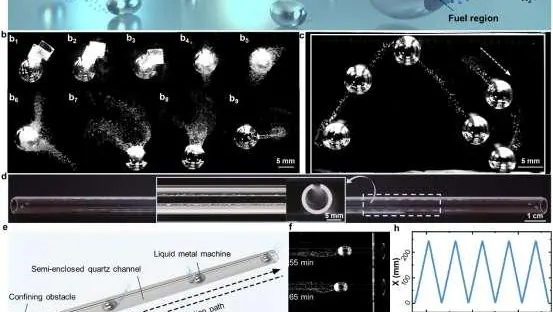
A droplet of liquid metal glides along a narrow channel like mercury from a broken thermometer. It needs no motor — the fuel is a chemical reaction with the surrounding liquid. But what happens when the droplet hits a wall? Previously, such machines were studied in open spaces, and in tight channels they behave differently.
The idea of a expanding universe, proposed by Georges Lemaître, finds an unexpected analogy. Space behaves like a piston in a cylinder: dark energy pushes it, much like steam. The relationship between pressure and volume in this 'engine' is strikingly similar to that of a steam boiler.
A heat engine is like a sailboat: to move forward, it needs a difference. Usually that means a temperature difference between hot and cold reservoirs. But what if the reservoir itself starts moving? The wind that fills the sails is created not only by a pressure difference but also by the motion of air masses.
Two qubits, quantum bits, two-level systems, glide through hot and cold thermal baths. One moves at 0.8 times the speed of light. At that moment, familiar thermodynamics cracks: a moving qubit senses temperature differently than a stationary one. For it, the cold bath can feel hotter, and the hot bath colder.