Simple

Heat capacity catches quantum entanglement in time ⚡ экспресс

Original: "Complex Heat Capacity as a Witness of Spatio-Temporal Entanglement"
· Mia Stamatova, Vlatko Vedral
arXiv:2508.15728 · 2025-08-21 · CC BY 4.0 · ⏱ 1 min · Quantum Physics
A simple measurement of thermal response revealed a quantum link between past and future.
Abstract

Scientists have found a way to detect quantum entanglement in time — when events are linked not across space but across different moments. Just as the echo of a gunshot reveals its source, the unusual behavior of a material's heat capacity points to temporal quantum links. This paves the way for testing time-based effects in ordinary materials. Can the past secretly influence the present?

Links in the knowledge graph 1

A pot of soup remembers being stirred. When heated, the temperature rises with a lag—the soup seems to glance back at the past. This thermal inertia opens a window into quantum connections between events at different times. At its root lies entropy, but the quantum world adds a layer of memory where particles influence each other across time.

The delay in thermal response is measured as imaginary heat capacity. It's a real parameter captured by calorimeters, showing how much the system "ponders" the past.

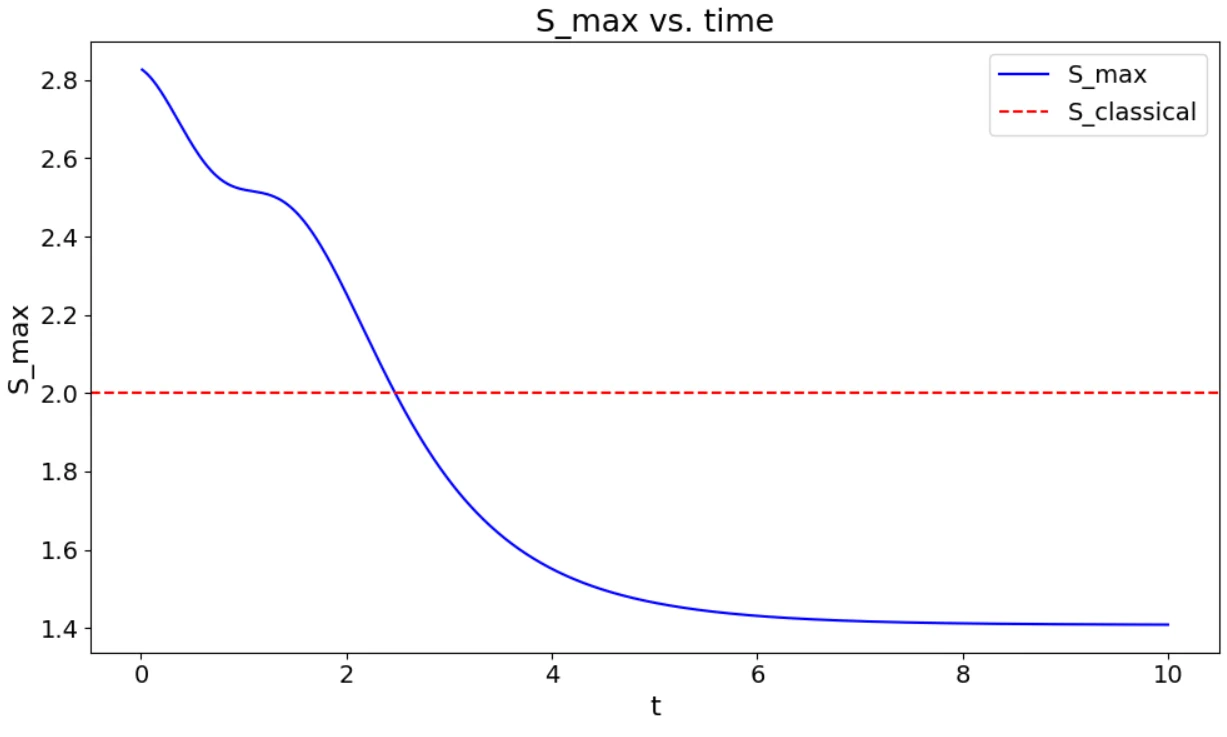
Physicists found a way to decode this memory by adapting the criterion from the ClauserAspectZeilinger inequality for time. When thermal lag becomes large and uneven, it proves temporal quantum entanglement. Surprisingly, detecting it doesn't require microscopic particles—even ordinary water will do. This method takes quantum physics beyond the standard models of the microworld.

🎯 Usually heat capacity is just a number, but with uneven heating an imaginary component appears—a sign that the material is "oscillating" between past and present. A familiar kitchen experience: a cast-iron skillet responds slowly to the flame, and hidden in that lag is a quantum subtext.

🎬 The thermal memory of soup isn't a metaphor, but a physical bridge between "before" and "after," like in the best science fiction novels.

Scientists
Emmy NoetherJacob BekensteinStephen HawkingLudwig BoltzmannWolfgang PauliWilhelm Wien
Tags
entropy Standard Model Water
Laws
second law of thermodynamicsNoether's theoremBekenstein-Hawking entropyBoltzmann distributionfirst law of thermodynamicsspin–statistics theorem
Original: arXiv:2508.15728 · CC BY 4.0 · bridge42worlds