Simple

Quantum Particles Can Flow Backward ⚡ экспресс

Original: "General quantum backflow in realistic wave packets"
· Tomasz Paterek, Arseni Goussev
arXiv:2511.10155 · 2025-11-13 · CC BY 4.0 · ⏱ 1 min · Quantum Physics
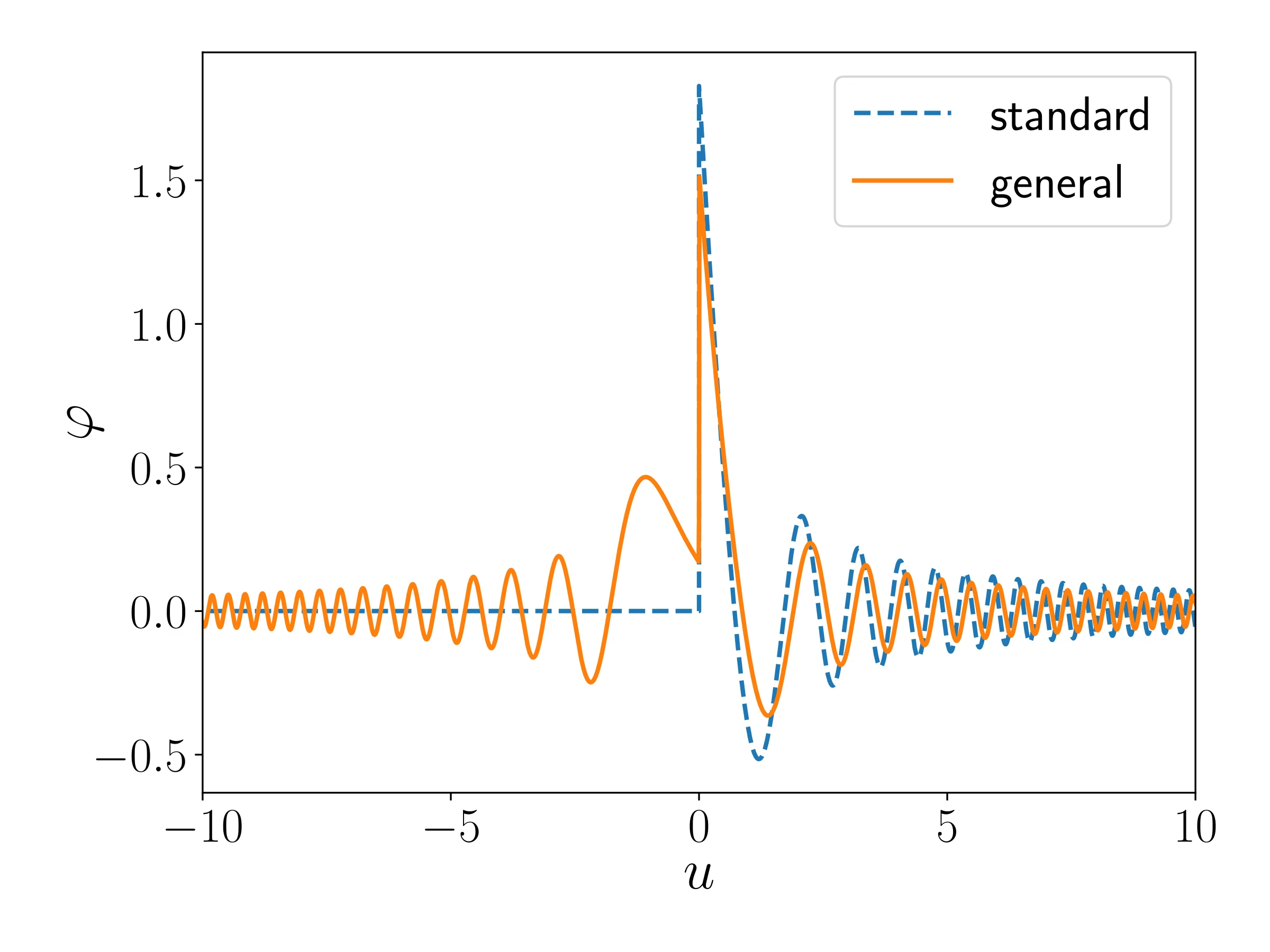
A new approach allows particles to move backward nearly three times more often — up to a 13% probability.
Abstract

Quantum backflow is when part of a particle's motion probability goes against its momentum, like a river flowing backwards in places. Previously, this effect maxed out at 4%, but scientists found a way to boost it to 13%, making observation feasible. Maybe soon we'll see a particle "glancing" back for a moment?

Links in the knowledge graph 1

A quantum particle of the microworld quantum particle can move backward even if overall it's flying forward. It's like a river, where individual currents suddenly turn against the flow, creating disorder. Previously, it was thought that such backflow didn't exceed 4% — as if only a small part of the water in a river moves backwards.

Now scientists realize: under real-world conditions, when the particle is not perfectly directed, the proportion of backward motion grows to nearly 13%. That's three times higher than the previous estimate. This discovery simplifies experiments — you don't need flawless particles, just ordinary ones. For almost a century, physicists have known about backflow's existence, but they haven't been able to directly observe it. Perhaps now this strange effect will become visible.

Related to backflow is quantum "return": a particle can reappear where it already was. Both phenomena break conventional logic.

🎯 Backflow is one of the most elusive effects in quantum mechanics. Although it follows from the equations, it hasn't been directly observed in almost a hundred years.

Scientists
Emmy NoetherJacob BekensteinStephen HawkingLudwig BoltzmannWolfgang PauliWilhelm Wien
Tags
Standard Model Water entropy
Laws
second law of thermodynamicsNoether's theoremBekenstein-Hawking entropyBoltzmann distributionfirst law of thermodynamicsspin–statistics theorem
Original: arXiv:2511.10155 · CC BY 4.0 · bridge42worlds