Quantum Particles: When Moving Backward Becomes Reality express
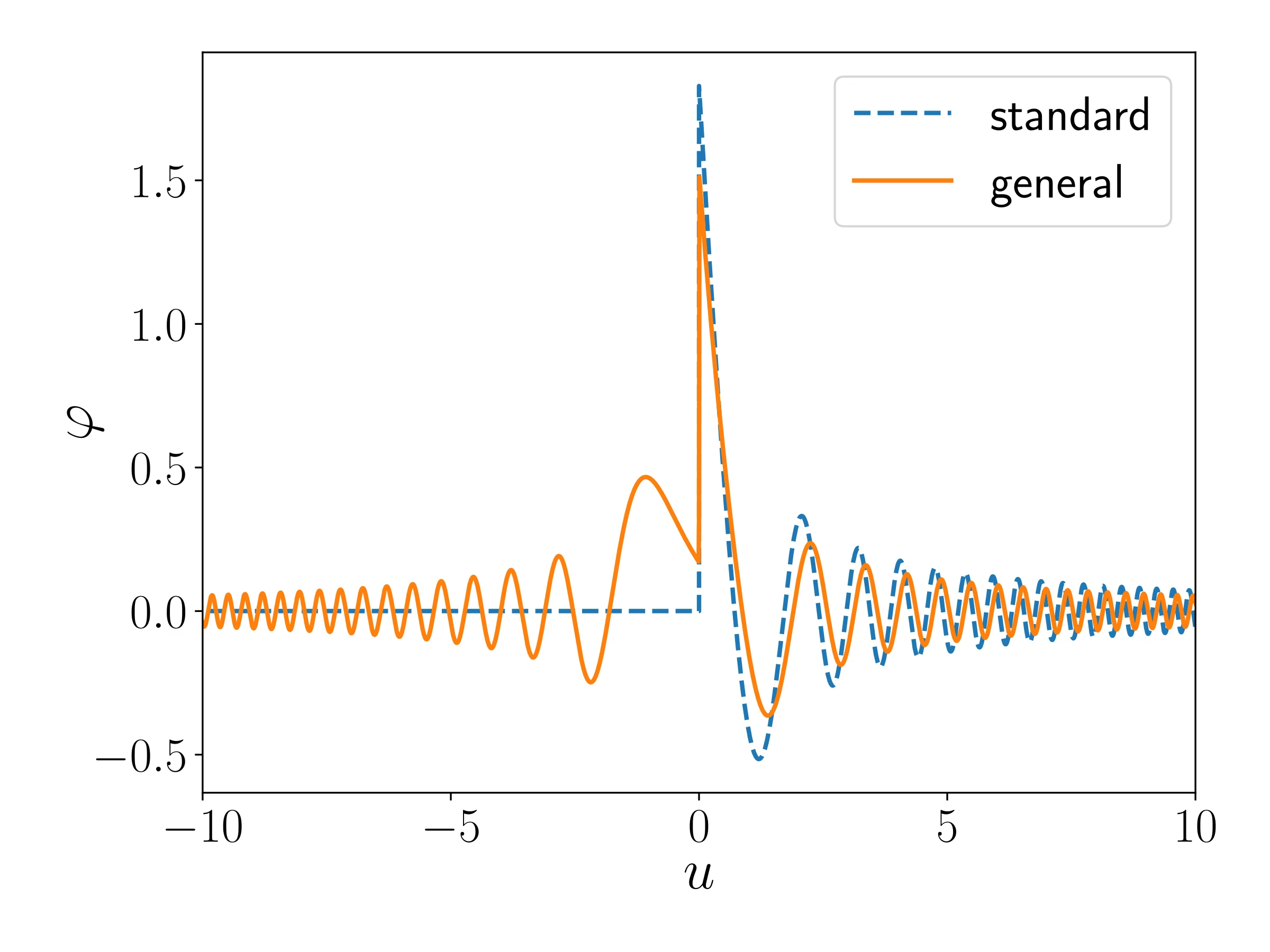
A quantum particle quantum particle can exhibit backward motion even if its overall direction is forward. Imagine a river: the main current rushes toward the mouth, but individual currents suddenly swirl and momentarily dart against the flow, creating local disorder. For a long time, it was believed that such backward flow, the quantum analog of return currents, did not exceed 4%, as if only a small fraction of water in the river goes upstream.
Now, however, scientists have found that under real conditions, when a particle lacks perfect directionality, the fraction of backward motion grows to nearly 13%. That is three times the previous theoretical estimate. How exactly did physicists arrive at this conclusion? They analyzed the behavior of quantum particles, dropping the assumption of their perfect 'focusing'—a parameter that previously tightly constrained calculations. It turns out that the natural imperfection of particles, the very kind that experimenters encounter in the lab, sharply increases the probability of backward flow. Paradoxically, this discovery makes experiments easier: now you don't need to create perfectly prepared particles; ordinary, 'imperfect' ones suffice.
For nearly a hundred years, physicists knew of backward flow as a mathematical consequence of quantum mechanics, but direct observation was elusive — mainly because the expected effect was so small. Now that the predicted magnitude has grown, this strange phenomenon may become accessible to direct measurements.
Backward flow is one of the most elusive effects in quantum mechanics. Despite being a consequence of the equations, it has not been directly observed for nearly a hundred years.