An anomaly is a deviation from what is expected or standard. In science, anomalies are not merely errors; they are often the first hints of new physics, overlooked variables, or flawed assumptions. When measurements consistently disagree with theoreticalpredictions, the discrepancy is called an anomaly. Famous examples include the anomalous precession of Mercury's perihelion, which was explained by general relativity, and the anomalous magnetic moment of the muon, which may point to particles beyond the Standard Model. Anomalies drive scientific progress by challenging the status quo and motivating new experiments and theories.
History
The term 'anomaly' comes from the Greek 'anomalia' meaning 'unevenness' or 'irregularity'. In physics, the concept gained prominence in the 19th century with the discovery of anomalies in the orbit of Uranus that led to the prediction and discovery of Neptune in 1846.
How it works
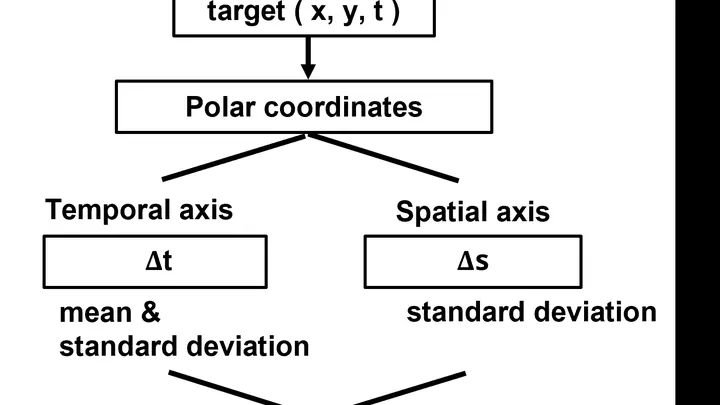
An anomaly is identified by comparing observations with a well-established theoretical model. If the deviation exceeds the expected statistical fluctuations and systematic uncertainties, it is flagged as anomalous. Scientists then investigate possible sources: instrumental errors, unaccounted background effects, or genuine new phenomena. The process is iterative — an anomaly may be resolved by refining the model, or it may persist and eventually lead to a paradigm shift. In data-driven fields like astronomy, machine learning algorithms are now used to automatically flag anomalous objects for human inspection.
In practice
Anomaly detection is widely used in cybersecurity to identify unusual network traffic that may indicate an attack, and in medical imaging to flag suspicious lesions that warrant closer examination.
Fun fact
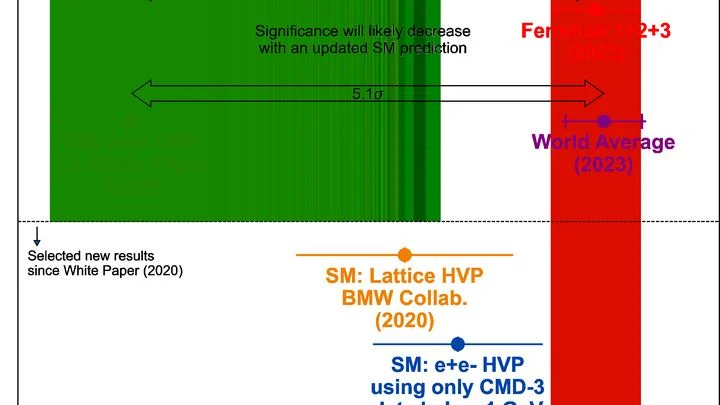
The 3.5-sigma anomaly in the muon's magnetic moment, if confirmed, would be a 1-in-500,000 chance of being a statistical fluke — but physicists typically require 5-sigma (1-in-3.5 million) before declaring a discovery.
In some quantum theories, symmetries intertwine in an unusual way, as if a lock had two keys, but turning one slightly shifted the other. Such intertwined symmetries are called 2-groups. One is an ordinary symmetry acting on point particles (0-form), and the other is a 'linear' symmetry (1-form) governing extended objects like strings or lines.
Assembling the puzzle of the Universe, astronomers are used to every new detail fitting perfectly into the already completed picture. But sometimes there are pieces that seem cut from another jigsaw. Twenty thousand active galactic nuclei, and eleven percent of them the neural network confidently rejects as alien.
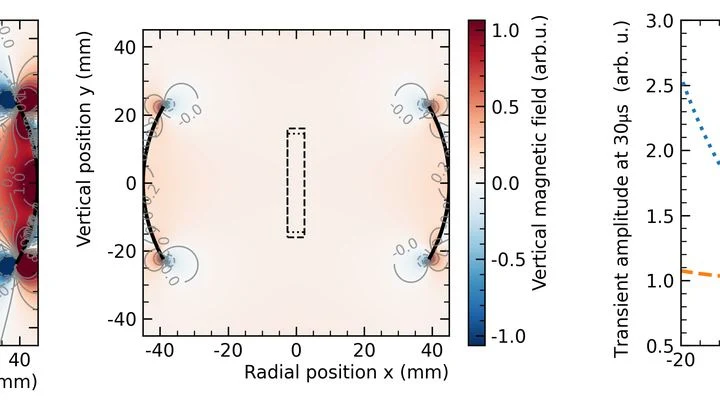
In a giant ring of magnets outside Chicago, muons whirled like figure skaters on an ice rink. But instead of music, there's a magnetic field, and instead of spinning, there's a barely perceptible wobble of the spin. Physicists call this wobble the anomalous magnetic moment.
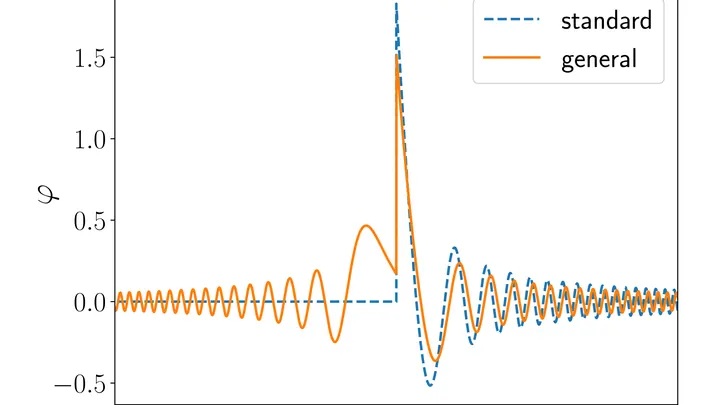
Imagine an orchestra tuning up: the violins rise in pitch: that's the familiar 'chirp' of black hole mergers in LIGO detectors. Now picture a funeral march: a sound that descends, like a fading siren. That's exactly the gravitational-wave signature a system with one negative mass should leave.
Astronomers occasionally spot interstellar objects — rocky chunks or comets from other star systems. Most look ordinary, but some puzzle us with their shape, speed, or shine. To stop guessing, scientists applied the Loeb scale: from 0 (plain rock) to 5 (technosignature — an artificial signal from space).
Eyes follow a dot that smoothly traces a complex curve on the screen. For most people, the gaze stays close to it, but for some, it seems to slip or lag behind. Previously, such peculiarities drowned in average numbers: if you add everyone up and divide, the difference almost disappears.
Instead of looking at averages, the scientists decided to examine each person individually.
In the quantum world, there are rules that seem to be broken. One of them is the conservation law: if in classical physics symmetry guarantees the conservation of charge, then in the quantum description this guarantee can disappear. This phenomenon is called a quantum anomaly.
Science is like a city where residents pave the streets themselves. Where paths are already worn, new houses go up, while untouched vacant lots go unnoticed — not because building there is impossible, but because no one ever looks.
The trace of a short-lived particle is like a signature left in the detector. The particle is born and decays in an instant, but from its trace you can reconstruct its character — whether it's compact like a stone or fluffy like a snowball. That's exactly what this work is about: the authors propose a new way to read such signatures.
They noticed that each particle has an angle that links its mass and lifetime.
At Hungary's Institute for Nuclear Research, ATOMKI, physicists noticed something odd: in the decays of excited atomic nuclei, pairs of electrons and positrons sometimes fly apart at an unusual angle. It's as if an invisible mediator particle briefly appears and disappears between them.
The universe is a pie baked from a single recipe, but the teaspoon and the kitchen scale stubbornly show different amounts of sugar. That’s how it is with the expansion of the universe: measurements from nearby stars (the spoon) give one number, while those from the ancient light of the Big Bang (the scale) give a completely different one.
The muon is a tiny spinning top, twirling in the turbulent sea of the vacuum. Its magnetic axis points slightly away from what the Standard Model predicts. The deviation is just a couple of parts per million, but for physicists, it's a full-blown mystery.
The vacuum is not a dead calm.
A quantum particle quantum particle can exhibit backward motion even if its overall direction is forward. Imagine a river: the main current rushes toward the mouth, but individual currents suddenly swirl and momentarily dart against the flow, creating local disorder.
The cosmic electron spectrum is like fingerprints at a crime scene. Particles arriving from the depths of the Galaxy carry in their energies the traces of those that produced them. For a long time, the picture was blurred: instruments with wide energy bins, like out-of-focus photographs, did not reveal details.