Superconductivity and 'liquid-crystal' electrons express
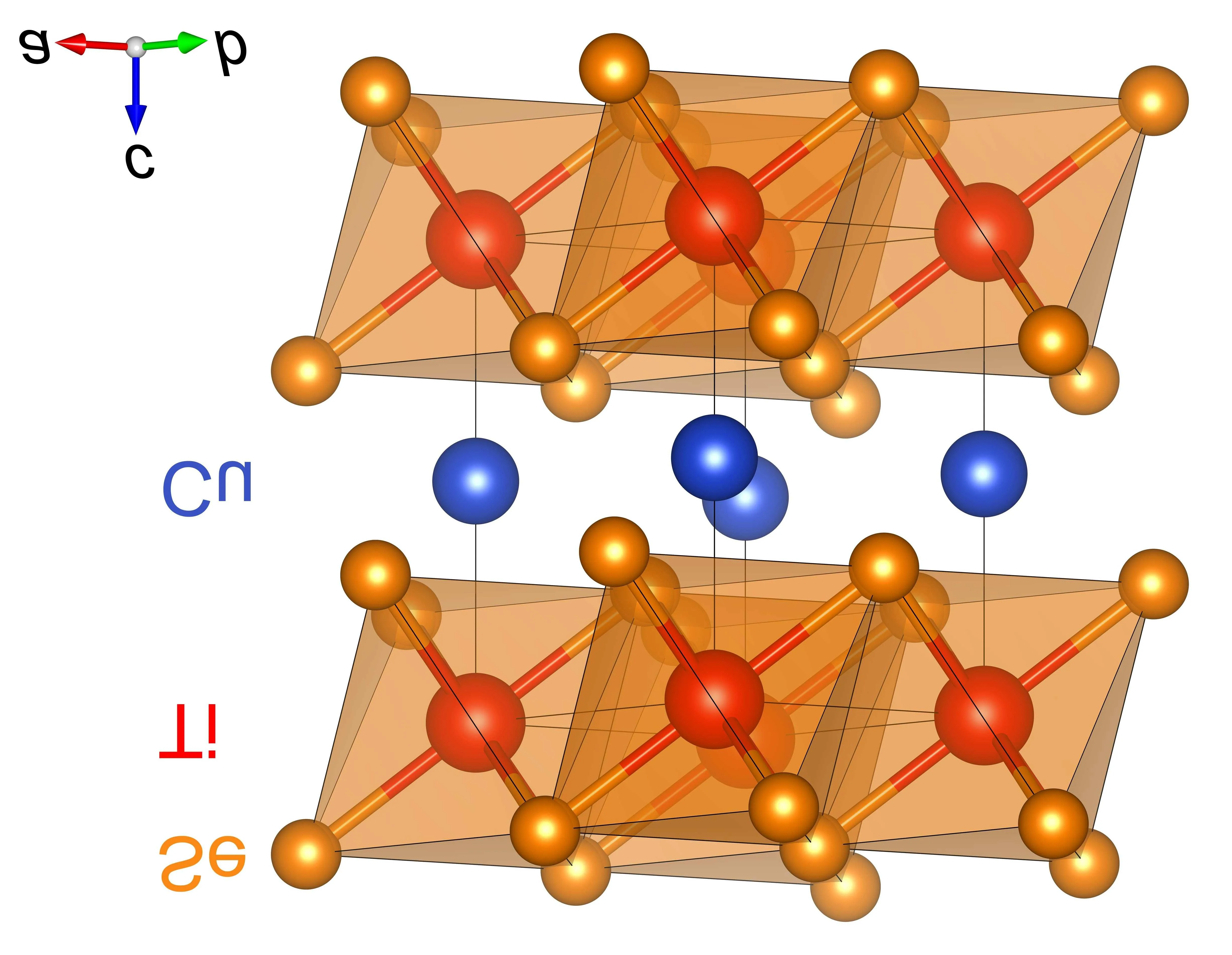
In the TiSe2 crystal, electrons behave like compass needles that suddenly start pointing in the same direction. This is called a nematic state — by analogy with liquid crystals, where molecules align along a common direction even though the material itself remains liquid.
Researchers measured how the crystal's electrical resistance changes when stretched in different directions. It turned out that at high temperatures, the electron 'needles' fluctuate, but upon cooling, these fluctuations intensify, as if the system is about to pick a single direction. The temperature at which this happens is denoted T*. Adding copper shifts T* downward, and when T* approaches zero, superconductivity becomes maximal. If more copper is added, T* changes sign, and superconductivity disappears.
It turns out that nematic fluctuations are not just a side effect but a possible 'glue' that helps electrons pair up and flow without resistance. The CuxTiSe2 crystal becomes a unique platform for studying such superconductivity.
The word 'nematic' comes from the Greek 'nema'—thread: molecules in a nematic liquid crystal align like threads in fabric.