How Bottom Friction Reshapes Vortices in Shallow Water express
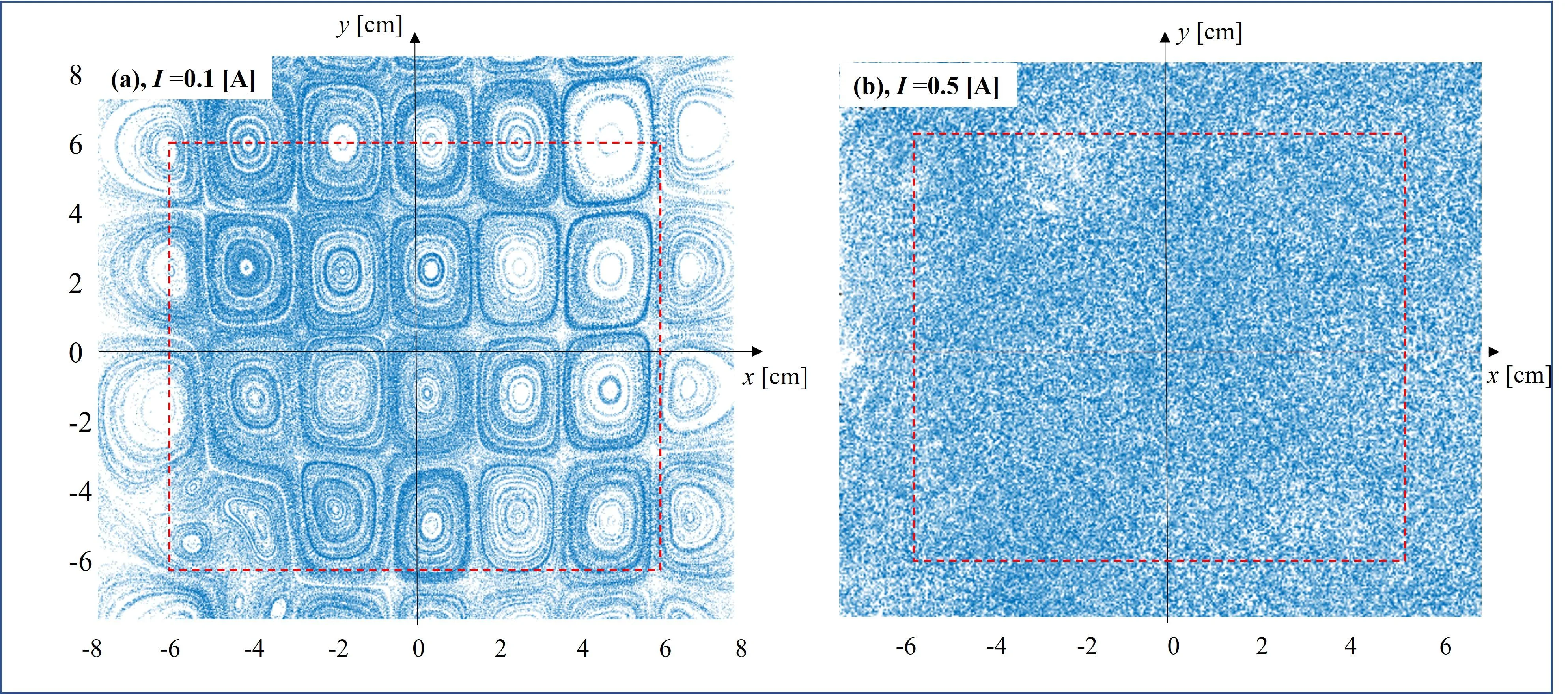
Water in a puddle after rain swirls differently than in a deep lake. A thin layer of fluid feels the bottom, and that changes the nature of its vortices. Scientists created such a layer in the lab: they poured in an electrolyte, ran a current and a magnetic field, and the fluid began to move. Then, using cameras and tiny particles, they tracked the motion down to the smallest swirls, just a fraction of a millimeter across.
Away from the bottom, vortices turned out to be the same in all directions, like snowflakes in a perfect pattern. But right at the bottom, the picture breaks: friction slows motion along the flow, while across it, it barely interferes. This difference, like a crack in glass, creeps from small vortices to large ones. Energy flows from small swirls to big ones, and the big ones gradually lose their symmetry.
This transfer of asymmetry matters for weather forecasts and ocean currents. After all, the atmosphere and the ocean are also thin layers on the planet's surface, and friction with the ground or seabed affects large vortices such as cyclones. Understanding this mechanism helps improve climate models and predictions of water movement in narrow straits.
In the experiment, the vortices were smaller than a millimeter, and their speed changed within fractions of a second. To capture this, cameras shot thousands of frames per second.